
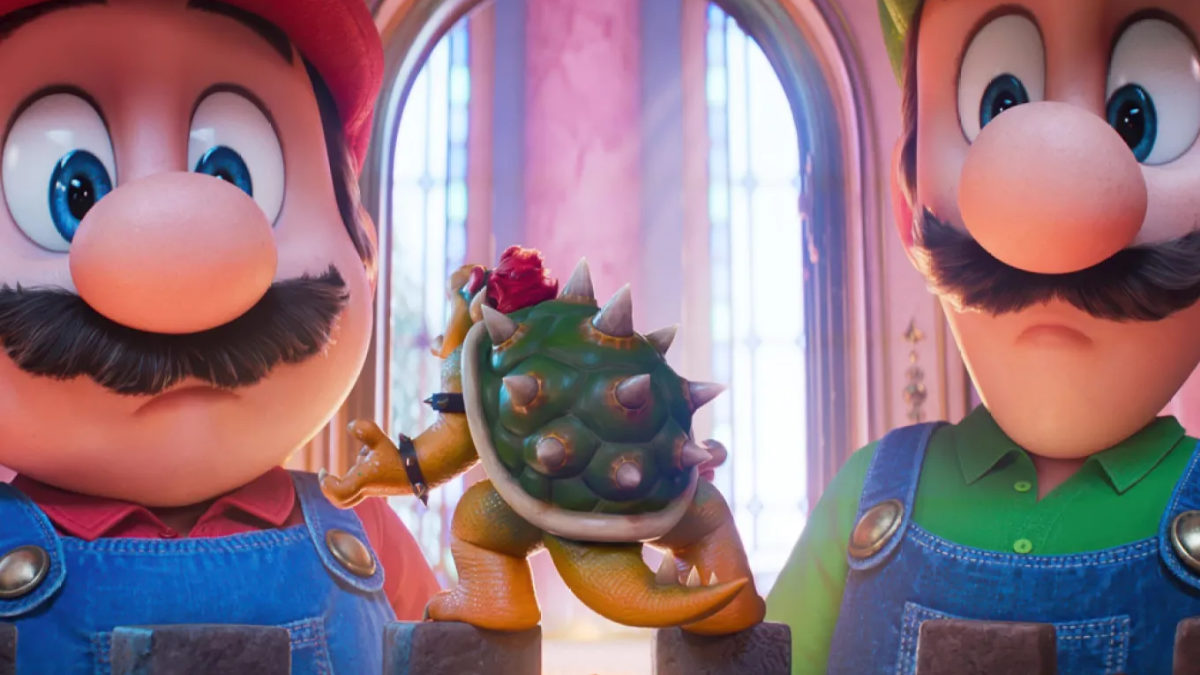
The global box office found its rhythm again this weekend, and at the center of that momentum sits The Super Mario Galaxy Movie, continuing its dominant run with a powerful $69 million second weekend. A drop of just 48% from its debut is not just a statistic, it is a signal. In a market that has struggled with consistency in recent years, this kind of hold reflects something deeper than just brand value. It reflects trust. With $308 million domestically and a massive $629 million worldwide in just under two weeks, the film has already overtaken Project Hail Mary as the highest-grossing movie of the year.
But what makes this story more interesting is not just the numbers, it is what those numbers reveal about the current state of entertainment consumption. Audiences are showing up again, and they are doing so with intent. Theaters are no longer just a weekend option. They are becoming event spaces again. The success of a film like this, rooted in a globally recognized IP, shows how familiarity combined with spectacle continues to drive mass turnout. It is not just nostalgia. It is engineered engagement.
At the same time, the market is not one-dimensional. While Mario dominates, films like You, Me and Tuscany quietly entered the conversation with an $8 million opening. It may not seem massive, but for a mid-budget romantic film, it represents a steady and targeted win. The audience here is defined, largely female, largely young, and highly responsive to storytelling that feels personal rather than explosive.
Then there is The Drama, which continues to build momentum through conversation rather than scale. With an $8.7 million second weekend and a modest production budget, it is proving that word-of-mouth remains one of the most powerful drivers in modern cinema. People are not just watching it, they are discussing it. That distinction matters more than ever.
Even Hoppers, though slowing down, reinforces the idea that theatrical performance is no longer the only metric of success. Studios are now designing content with multi-platform lifecycles in mind. A film may plateau in cinemas but thrive on streaming, merchandise, and long-tail engagement.
What is unfolding is a layered ecosystem. Blockbusters drive footfall. Mid-budget films capture niche audiences. Indie projects fuel conversation. Each serves a different purpose, but together they create momentum. And that momentum is what the industry has been chasing since the post-pandemic slump.
The real takeaway here is not just that audiences are back, but that they are more segmented and intentional than ever before. A single weekend can cater to families, couples, and cinephiles simultaneously. The phrase “something for everyone” is no longer a cliché. It is a strategy.
From a broader perspective, this also reflects how entertainment is being positioned today. Films are no longer just products, they are experiences designed to extend beyond the screen. Marketing begins weeks before release, peaks during opening weekend, and then transitions into sustained digital conversation. The theatrical window is just one phase in a much longer lifecycle.
CinemaCon arriving at this moment only amplifies the narrative. Studios are walking into Las Vegas not with uncertainty, but with proof. Proof that audiences are willing to return, provided the offering feels worth their time and money. That last part is crucial. The value equation has changed. Viewers are no longer passive consumers. They are decision-makers.
And that is exactly why a film like “The Super Mario Galaxy Movie” matters. It is not just a hit. It is a benchmark. It shows what happens when scale, familiarity, and timing align with audience expectations. It also sets the tone for what the rest of the year could look like if studios continue to understand the balance between spectacle and substance.
The box office is not just recovering. It is evolving. And this weekend made that clear.