
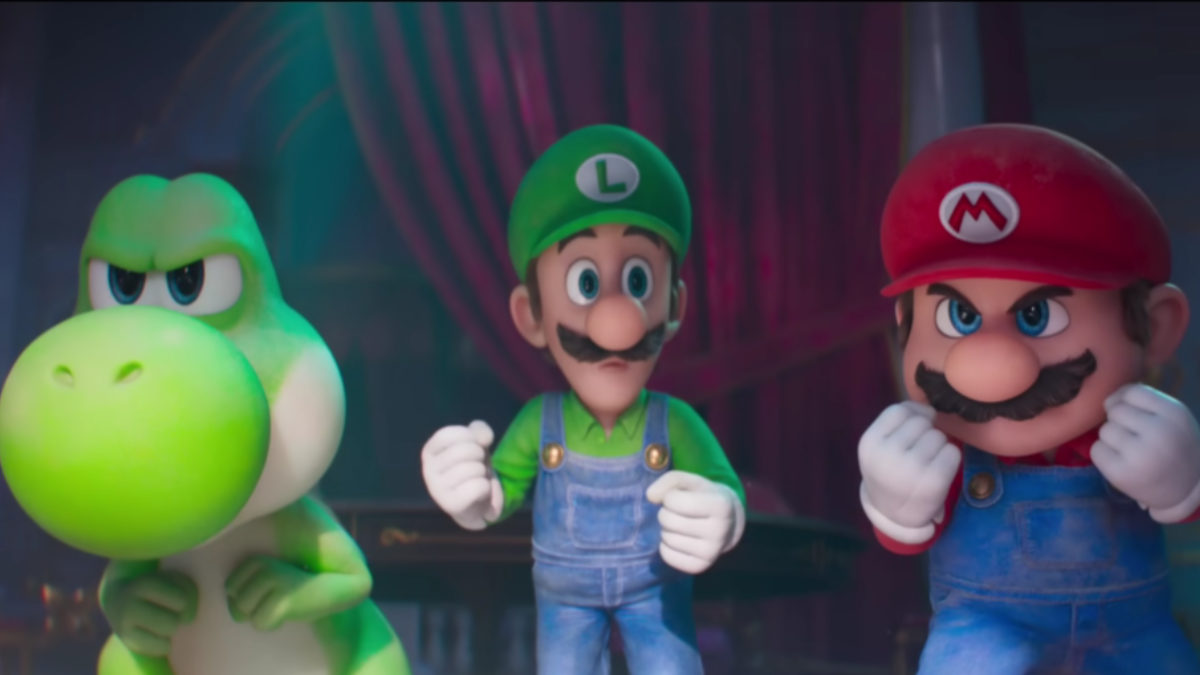
There was a time when original storytelling felt like it could take over Hollywood. That time lasted about two weeks. Because what just happened at the box office is not just a win. It is a reminder of how the industry actually works. The Super Mario Galaxy Movie did not just perform well. It completely dominated, pulling in a staggering $372 million globally in its opening weekend and leaving everything else behind. And the most interesting part is not the number. It is what the number represents.
Just two weeks ago, Project Hail Mary felt unstoppable. It opened big, held steady, and had the kind of word-of-mouth momentum studios dream of. It looked like one of those rare films that could carry itself without relying on nostalgia or an existing fan base.
And then Mario showed up.
Suddenly, the conversation changed. Not because Hail Mary underperformed, but because Mario overperformed at a scale that completely shifts perspective. $131 million domestically. $372 million globally. These are not just good numbers. These are franchise numbers.
And that is the difference. Because Mario is not just a movie. It is decades of familiarity, gaming history, childhood memory, and global recognition packaged into one cinematic experience. You are not selling a story. You are selling something people already love.
That is a huge advantage.
The film, featuring voices like Chris Pratt, Anya Taylor-Joy, and Charlie Day, builds on the success of its 2023 predecessor and pushes it even further. Bigger scale. Bigger world. Bigger audience.
And clearly, it worked.
But what makes this moment even more telling is what is happening around it.
Films like The Drama are still finding their space, pulling in respectable numbers and even recovering budgets. Hoppers continue to hold its ground. Even an Indian film like Dhurandhar: The Revenge is making its presence felt globally.
But none of them are touching Mario. And that is not because they are weaker films. It is because they are competing with something that operates on a completely different level of audience connection. This is where the real conversation begins.
Because every time a film like this dominates, it quietly reinforces a pattern. Studios notice. Investors notice. And slowly, the industry shifts even more toward what feels “safe.” Known characters. Established universes. Recognizable brands.
It is not about creativity disappearing. It is about risk becoming selective.
And audiences, whether consciously or not, are part of that cycle.
We say we want original films. We say we want new stories. But when it comes to buying tickets, familiarity often wins. It is easier. It is guaranteed entertainment. It is something you already trust.
Mario is that trust. And that is why this win matters beyond just numbers.
Because it tells us that Hollywood is still, at its core, driven by recognition. By nostalgia. By intellectual property that can travel across generations and borders without needing introduction.
That does not mean films like Project Hail Mary lose their value. In fact, its $420 million total so far proves that there is still space for strong storytelling. But it does mean that when a giant like Mario enters the race, the rules change instantly.
Now the question is not whether Mario will continue to dominate next weekend. It probably will.
The real question is what comes after. Will studios double down even more on IP-driven storytelling? Or will they find a balance where original films and franchises can coexist without one constantly overshadowing the other? Because right now, the message is very clear.
If you want guaranteed success, build something people already love.
And right now, nothing fits that formula better than Mario.