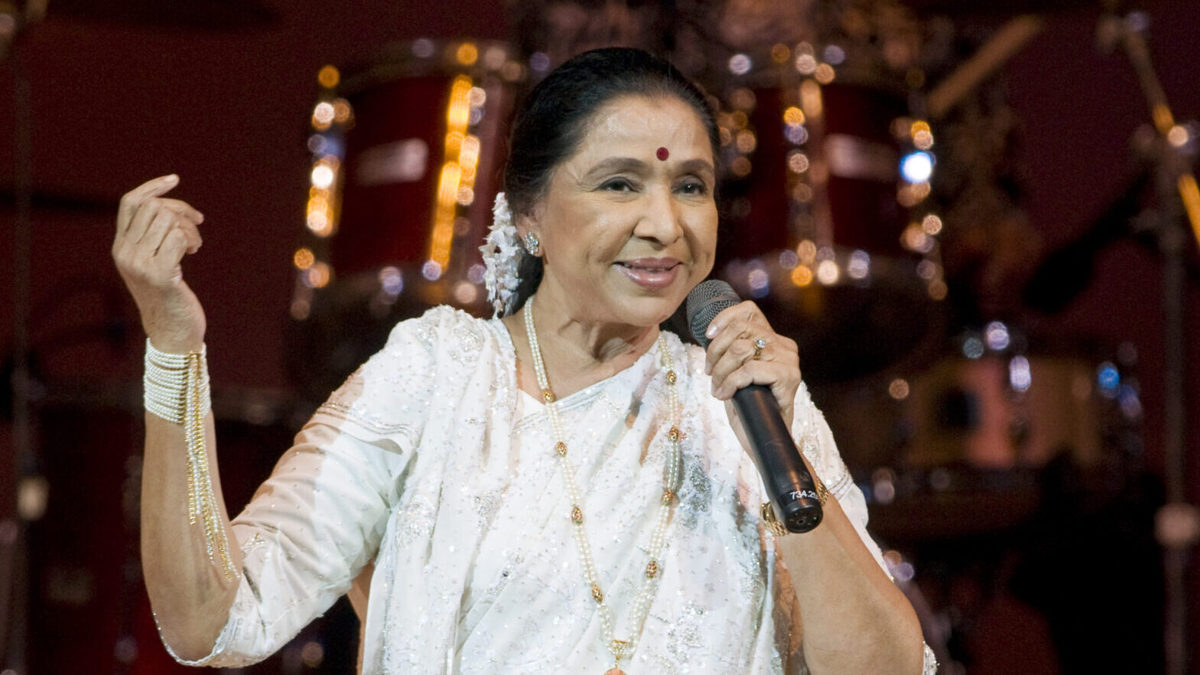
There are some voices you grow up listening to, and then there are voices that grow along with you. Their meaning changes as your life changes. Asha Bhosle was one such voice. It feels like she was the last one standing, and yet even in that stillness, her voice never really leaves us.
She was never just a singer from a certain time. In many ways, she became time itself, stretching across generations. For nearly eight decades, she did not just sing songs, she changed the way songs could feel. If Indian music had rules, she broke them. If it had boundaries, she blurred them. If it had comfort zones, she walked out of them with ease. She was rebellion, but always wrapped in melody.
In an industry that often tried to put artists into boxes, she quietly slipped out of every label. She could express desire without hesitation, heartbreak without self-pity, and move from playful to emotional to seductive in a single breath. When people tried to limit her as a certain kind of voice, she did not argue. She simply expanded that space until it lost meaning.
Songs like Aao Huzoor Tumko were not just sung, they were performed through her voice. The little nuances, the teasing tone, the balance between control and freedom did not feel forced. They felt natural. Even today, trained singers hesitate before attempting such songs because with her, technique alone was never enough. You had to become the character, and she always did.
Even when a new generation of singers started taking over in the 1990s, she proved she was far from done. In Rangeela, she sang Yayi Re Yayi Re, with an energy that did not match her age at all. She was over sixty, yet she sounded fresh, almost like she belonged to the future. It may have surprised younger voices at the time, but she was not competing. She was simply reminding everyone of her place, while still allowing others to grow. That was her strength. She did not compete, she endured.
For younger listeners today, even if they did not grow up in her era, they have still grown up within her influence. Every expressive performance, every song that blends emotion with precision, every singer who performs rather than just sings carries something of her legacy. She did not just leave behind songs, she left behind possibilities. She was not ahead of her time, she existed beyond it.
Her collaborations were never just professional, they created something new. With R. D. Burman, she found a space to experiment and play, creating music that felt far ahead of its time. Years later, when she worked with A. R. Rahman, she adapted effortlessly, not like a legend trying to stay relevant, but like an artist still curious and evolving. That was her real strength. Experience never slowed her down, it kept her moving.
She did more than sing for characters, she gave them depth. In songs like Dil Cheez Kya Hai, she brought dignity and emotion to roles that were often seen in a limited way. Her voice carried grace and strength together. She did not wait for stories to change, she changed them herself.
There is a small story that says a lot about her impact. A young boy, inspired by Kishore Kumar, chose to sing an Asha Bhosle song at his first school performance. It was unexpected, but he won, and something sparked within him. That boy grew up to become KK, one of the most loved voices of his generation. That is what she did. She crossed preferences and reached people who did not even realise they were being influenced by her. She did not just inspire singers, she helped create them.
There is also a quiet weight in outlasting your own era. One by one, the voices she shared magic with faded away. The duets stopped, the laughter behind studio doors became memories. But she remained. She kept singing, experimenting, showing up. Not because it was easy, but because it was who she was. Her journey carried both beauty and loneliness, to keep creating while carrying the echoes of the past.
Now, it feels like she has stepped into another space, one where every unfinished melody finds its place again. It does not feel like a farewell, just another beginning. Because voices like hers do not end, they continue in different ways.
What she leaves behind is not silence. It is a feeling. A habit of going back to her songs late at night, a pause when a familiar tune plays, a sense of something deeper in every note. Whether it is Yeh Mera Dil or Kisi Nazar Ko Tera Intezaar, or even when a modern singer surprises you, you can still feel her presence.
Some journeys can be understood, some can be revisited, but hers is something you simply experience again and again. The last one standing has not really left. She has become a voice that generations will keep trying to understand and recreate, even though they never fully will.
Asha Bhosle: The Voice That Will Never Say Goodbye
Asha Bhosle’s voice lives on through her iconic songs and unmatched legacy, continuing to inspire generations of music lovers across India and beyond.