
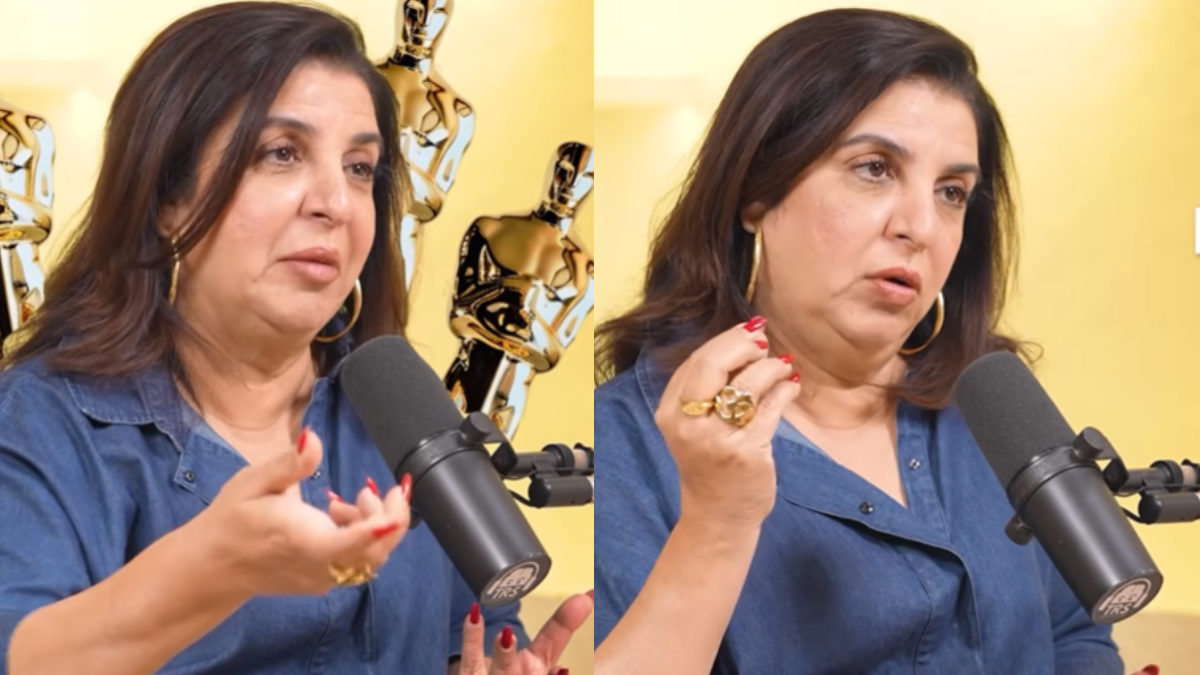
Farah Khan, widely recognized for her contributions as a choreographer and filmmaker in the Hindi film industry, has once again spoken candidly about her early life, challenging the perception that she benefited from privilege. In a recent conversation with Ranveer Allahbadia, she addressed the often-used “nepo kid” label and explained why she believes it does not apply to her circumstances.
Farah described her childhood as one marked by instability and financial hardship, particularly after the decline of her father Kamran Khan’s career. Once a filmmaker with a promising trajectory, Kamran Khan invested heavily in an ambitious project titled Aisa Bhi Hota Hai. The film’s poor performance at the box office had severe consequences for the family. According to Farah, the financial fallout was immediate and devastating, reversing their fortunes within a matter of days.
She recalled that her father had put nearly all of his resources into the film, even mortgaging their home. When the project failed commercially, the family’s financial stability collapsed. Farah described the experience as a sudden transition from relative comfort to extreme difficulty, emphasizing how quickly their circumstances changed. The impact extended beyond finances, affecting the emotional atmosphere at home as well.
Farah also spoke about how her father struggled to cope with the aftermath of the failure. She revealed that he turned to alcohol during this period, which further complicated family life. Evenings became particularly stressful, as the uncertainty surrounding his behavior created an environment of fear and anxiety. The situation reflected not only financial strain but also the psychological toll of professional setbacks.
In the years following the film’s failure, Kamran Khan reportedly withdrew from work entirely. Farah shared that he did not take on projects for over a decade, partly due to the shame associated with their changed circumstances. This prolonged period of inactivity contributed to the family’s continued struggles and limited opportunities for recovery. She also mentioned that their personal life became increasingly isolated, as they avoided inviting others into their home.
Adding to the complexity of her upbringing, Farah discussed the separation of her parents, which was not openly acknowledged at the time due to social norms. This created an additional layer of secrecy and emotional strain within the household. She explained that such experiences shaped her perspective and influenced her ambitions later in life.
Farah also reflected on her relationship with her younger brother, Sajid Khan, noting that she often felt overlooked during childhood. She described how the attention in the family shifted after his birth, leading to feelings of being sidelined. While she acknowledged that her father cared for her, she also indicated that these experiences contributed to her desire to assert herself and succeed independently.
Her early exposure to cinema played a significant role in shaping her career aspirations. Despite the challenges at home, films remained a constant presence in her life. Discussions about movies and frequent visits to the cinema fostered her interest in storytelling and direction. Over time, this interest translated into a professional path that began with choreography and later expanded into filmmaking.
Farah eventually established herself as a successful director with films such as Main Hoon Na and Om Shanti Om, both of which starred Shah Rukh Khan. She continued her directorial work with projects like Happy New Year and Tees Maar Khan, featuring Akshay Kumar. Her journey reflects a transition from personal hardship to professional achievement, driven largely by persistence and adaptability.
Today, Farah remains active in the entertainment space, including digital content creation through her vlog. Her reflections on her past provide context to her career, offering insight into how early challenges influenced her determination to succeed. By sharing these experiences, she has sought to clarify misconceptions about her background and highlight the complexities behind her journey.