
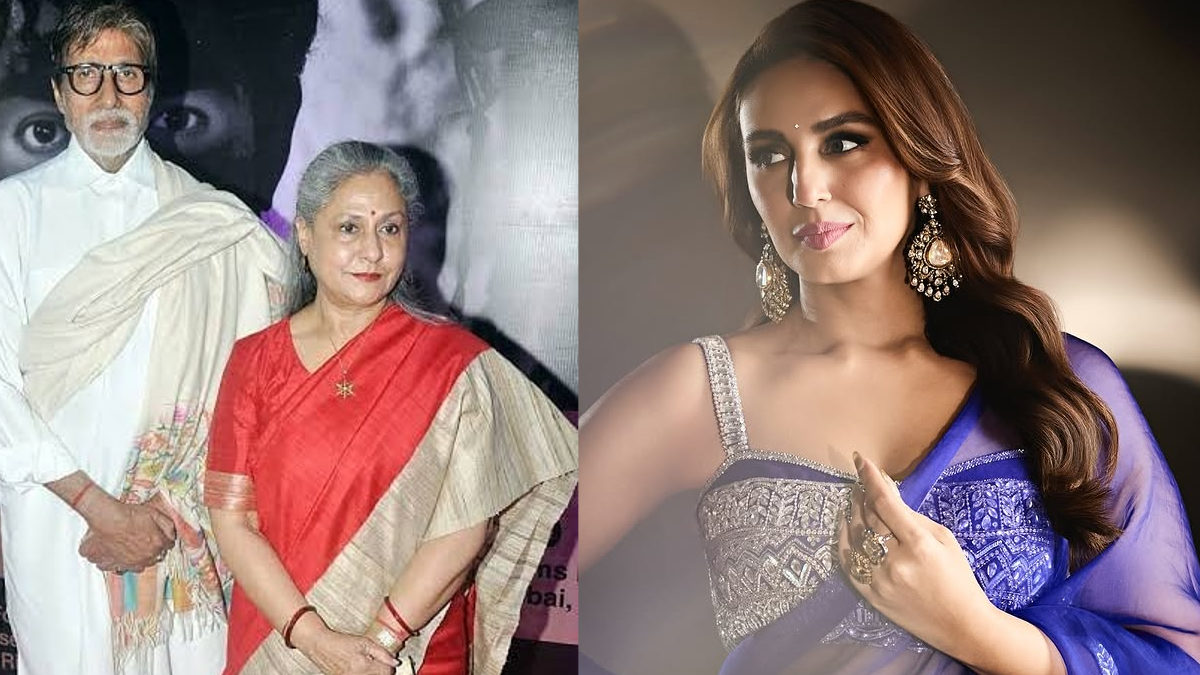
Days after Jaya Bachchan’s sharp criticism of paparazzi culture sparked debate across the film industry, actor Huma Qureshi has shared a more balanced and nuanced perspective, calling the paparazzi an important part of the entertainment ecosystem while acknowledging the need for clear boundaries and mutual respect.
Speaking to India Today, Huma described her relationship with the paparazzi as “very healthy” and admitted that celebrities themselves often rely on photographers for visibility—especially during film promotions. According to her, blaming paparazzi alone for intrusion or overexposure ignores the reality that the system works both ways.
“I think they are also important,” Huma said candidly. “I won’t lie, but we use them when we need to promote our films or bring a certain aspect of our lives into the public eye.” She explained that there have been several occasions when celebrities actively invite paparazzi to film premieres, events, or public appearances to ensure media attention. “When we want to be spotted somewhere, we call them. I don’t want to put all the blame on them,” she added.
Huma’s remarks come in the wake of Jaya Bachchan’s controversial comments, where the veteran actor strongly questioned the legitimacy, professionalism, and conduct of paparazzi photographers. While Huma did not directly contradict Jaya, she offered a more pragmatic view shaped by her own experiences over the years.
Reflecting on how her equation with paparazzi has evolved, Huma said communication has played a key role. She revealed that when she isn’t feeling camera-ready or simply doesn’t want to be photographed, she politely asks photographers to refrain—and most of the time, they respect her wishes.
“Maybe it hasn’t been the same for others,” she acknowledged. “There have been times when they’ve taken pictures of me from bad angles. But now I stop them and tell them not to do that.” According to Huma, asserting oneself has helped establish clearer boundaries and fostered mutual understanding.
However, she was also honest about the darker side of public scrutiny, especially for women in the industry. Huma pointed out that paparazzi intrusion crosses a line when it becomes invasive or disrespectful—whether through inappropriate questions, uncomfortable angles, or violations of personal space.
“If you want to intrude on my privacy, you will ask questions that I won’t find appropriate,” she said. “Or I might be wearing a certain dress, and you’ll try to capture it from a particular angle, which isn’t right.” She stressed that while limits should never be crossed, the reality is that such lines are often breached.
Speaking from personal experience, Huma highlighted how female actors disproportionately face such issues. “As a female actress, I have experienced all of this,” she said, recalling an incident where she was asked an inappropriate question during a press conference. For her, the issue goes beyond photographers to a larger conversation about respect, consent, and professionalism.
Summing up her approach, Huma said, “My philosophy is simple: don’t misbehave and don’t let others misbehave.” Her stance reflects a middle ground—acknowledging the role paparazzi play in celebrity culture while firmly advocating for dignity and ethical conduct.
In contrast, Jaya Bachchan’s views on paparazzi have been far more uncompromising. In an interview with Barkha Dutt, the veteran actor made it clear that while she respects journalism, she does not recognize paparazzi as legitimate media representatives.
“You know, it’s very strange,” Jaya said. “My relationship with the media is fantastic. I am the product of media. But my relationship with paparazzi is zero. Who are these people? Are they trained to represent the people of this country?” She emphasized her deep respect for traditional journalism, noting that her father was a journalist and that she grew up valuing the profession.
Jaya went on to sharply criticize paparazzi for what she described as their lack of training, professionalism, and accountability. Using blunt language, she questioned their backgrounds, education, and authority. “They think just because they have a mobile, they can take your picture and say what they want,” she remarked, adding that the comments passed by some photographers are often offensive and unacceptable.
Her comments ignited a wider conversation within the industry, with opinions divided between those who support stricter regulation of paparazzi behavior and those who, like Huma, believe the culture is deeply intertwined with modern celebrity life.
Together, these contrasting viewpoints highlight the complexity of paparazzi culture in Bollywood—where visibility and intrusion often exist side by side. While Huma Qureshi calls for cooperation, consent, and self-regulation, Jaya Bachchan’s remarks underline growing frustration with unchecked access and declining standards.
As the debate continues, one thing remains clear: the relationship between celebrities and paparazzi is evolving, and finding a balance between public interest and personal dignity has never been more urgent.