
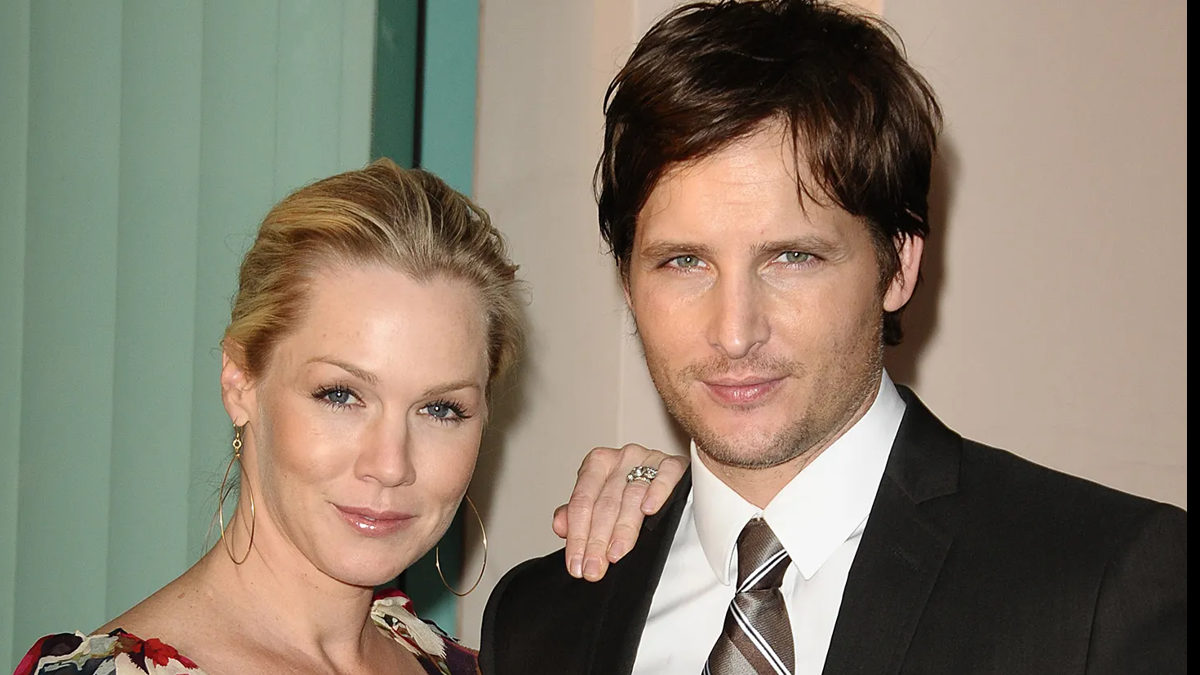
For someone the world once saw as effortlessly perfect on screen, Jennie Garth is now opening up about a chapter of her life that was far from perfect. Known for her role in Beverly Hills 90210, she was once the face of confidence, beauty, and teenage stardom. But behind that image was a reality that very few people saw, one that involved anxiety, emotional breakdowns, and a slow loss of self that crept in over time. She recently revealed how the pressures of fame began affecting her much earlier than people would assume. Being in the spotlight at such a young age brought expectations that were impossible to maintain.
There was constant pressure to look a certain way, behave a certain way, and live up to an image that was never entirely real. Instead of feeling empowered, she found herself becoming increasingly anxious and isolated. Even at the peak of her career, surrounded by success and attention, she felt disconnected from herself.
That internal struggle only intensified as her personal life began to unravel. Her marriage to Peter Facinelli, which lasted for over a decade, eventually came to an end. What followed was not just heartbreak, but a deeper emotional collapse that affected her sense of identity. She described how the pain from the divorce did not just stay in one corner of her life, it spread everywhere. It affected how she saw herself, how she interacted with others, and how she coped with everyday emotions.
During that period, she turned to unhealthy coping mechanisms. What may have started as occasional relief slowly became something much more serious. She admitted that there was one night where things went too far, when she mixed alcohol with pills to a point where she needed medical intervention and had her stomach pumped. It was a moment that could not be ignored, a point where everything became too real to brush aside. It was not just about making a mistake, it was about realizing how far she had drifted from who she once was.
What makes her story hit harder is the way she describes that realization. She said she could literally see her own light dimming. It was not just a feeling, it was something visible, something she could recognize when she looked at herself. She noticed that she was no longer putting out positive energy, that the grief and anger she was holding onto were changing her as a person. That kind of self-awareness does not come easy, especially when you are already struggling, but for her, it became the turning point.
Instead of continuing down that path, she made a conscious decision to change. She chose to let go of the anger she was carrying, to forgive, and to take responsibility for her healing. That decision led her to seek professional help and eventually check into rehab, where she worked on breaking the cycle of self-medication and learning healthier ways to cope with her emotions. It was not a quick fix, and it was not easy, but it was necessary.
Over time, she began rebuilding her life from a place of honesty rather than expectation. She spoke about how much of her life had been spent trying to meet other people’s standards, trying to be what others wanted her to be. But once she started focusing on what she truly needed for herself, things began to shift. The chaos slowly turned into clarity, and the constant pressure gave way to a sense of calm that she had not felt in years.
Today, she describes herself as being in a much better place, both mentally and emotionally. She is living a sober life and has found stability in her relationship with her husband Dave Abrams. Her relationship with Peter Facinelli has also evolved into a healthy co-parenting dynamic for their daughters, showing that even relationships that end can still find a way to exist peacefully.
What stands out the most in her story is not just the struggle, but the honesty with which she talks about it. There is no attempt to sugarcoat what happened or make it seem less serious than it was. She acknowledges the pain, the mistakes, and the consequences, but also the effort it took to come back from that place. It is a reminder that even people who seem to have everything together can be going through something deeply personal and difficult.
Her journey is not just about recovery, it is about rediscovering herself after losing that sense of identity for a long time. It is about recognizing when something is not right and having the courage to face it instead of hiding from it. And most importantly, it is about choosing yourself, even when it feels uncomfortable or unfamiliar.
In a world that constantly pushes people to appear perfect, stories like hers feel necessary. They bring a level of reality that is often missing from the way we look at celebrity lives. Because at the end of the day, what she went through is something that many people can relate to in different ways, the feeling of losing yourself, hitting a breaking point, and then slowly finding your way back.
Jennie Garth did not just survive that phase of her life, she understood it, learned from it, and rebuilt herself through it. And that is what makes her story not just emotional, but powerful.