
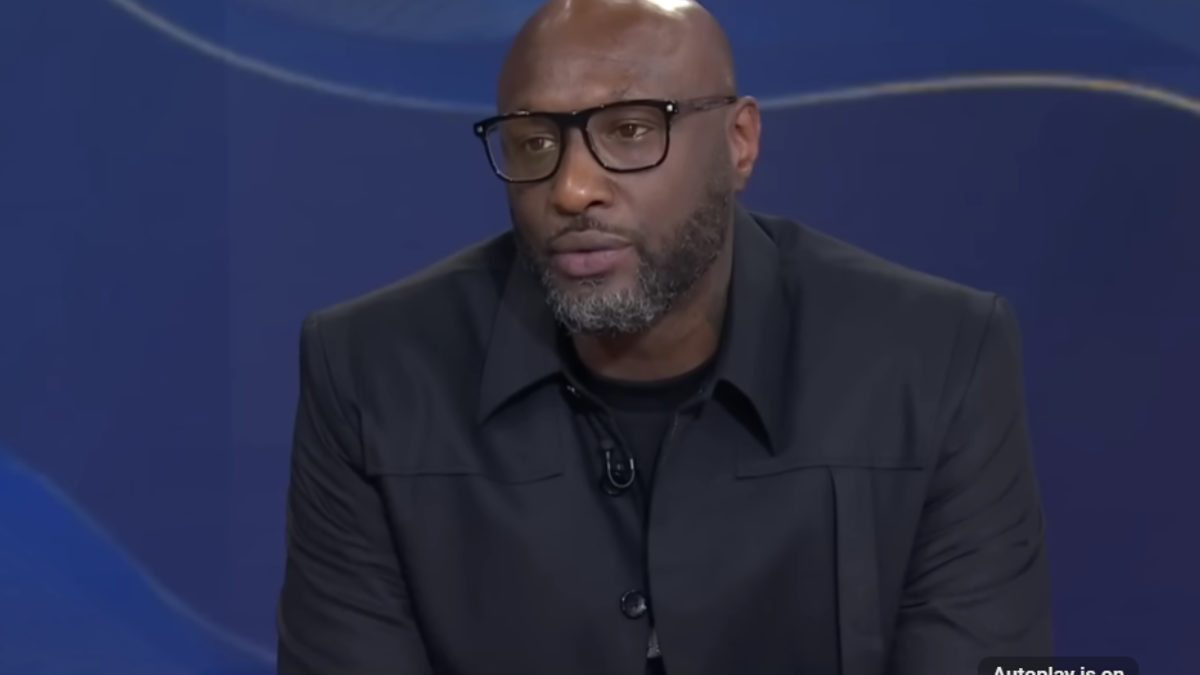
When near-death stories get told in public, they rarely stay simple. And now, years after one of the most shocking celebrity medical emergencies, Lamar Odom is reshaping the narrative that the world thought it understood. In a recent interview, Odom addressed the long-standing belief that Khloé Kardashian “saved his life” during his 2015 overdose. His response was calm, but it changed everything. “In some ways,” he said. “God saved my life.” Not Khloé. Not doctors. Not circumstances. God.
That one statement shifts the entire emotional framing of the story. For years, the public narrative was clear. Khloé stayed by his side. She delayed their divorce. She took control of his care. She fought for his survival when things looked impossible.
And to be fair, even Odom acknowledges that. “She took care of me,” he admits. But what he is doing now is separating care from credit.
And that distinction matters.
Because celebrity stories often get simplified into heroes and victims. Into saviors and survivors. Into clean narratives that audiences can easily consume.
But real life is never that clean. Odom’s comments also push back on one of the most controversial claims from the documentary.
Khloé had alleged that Odom’s father wanted to pull the plug on him during his coma, and only backed off after she intervened. Odom doesn’t believe that. He says that version of events does not match the father he knew. And suddenly, the story becomes less about what happened and more about who controls the narrative. That is where things get complicated.
Because both versions can exist emotionally, even if they conflict factually. Khloé’s experience was that of someone holding everything together during chaos. Odom’s experience is that of someone who came back from the edge and attributes that survival to something bigger than everyone involved.
Neither cancels the other. But they do challenge the idea that there is only one truth. There is also something deeper here. Odom is not just correcting facts. He is reclaiming agency.
By saying “God saved me,” he takes back ownership of his survival. He moves the story away from dependency and toward belief, resilience, and personal meaning.
And that is powerful. But it also leaves the audience in an uncomfortable space.
Because if Khloé was not the sole reason he survived, then what does that mean for everything we thought we knew?
Was it exaggerated? Misinterpreted? Or simply a different perspective shaped by trauma? This is the reality of modern celebrity culture.
Stories are told in real time, across interviews, shows, documentaries, and social media. And over time, those stories evolve.
Sometimes, they contradict each other. What remains undeniable is this. Lamar Odom survived something that very few people do. And Khloé Kardashian was part of that journey, whether as caretaker, support system, or simply someone who refused to walk away.
But survival stories are never owned by just one person. They are lived, remembered, and retold differently by everyone involved. And this time, Odom is telling it his way.