
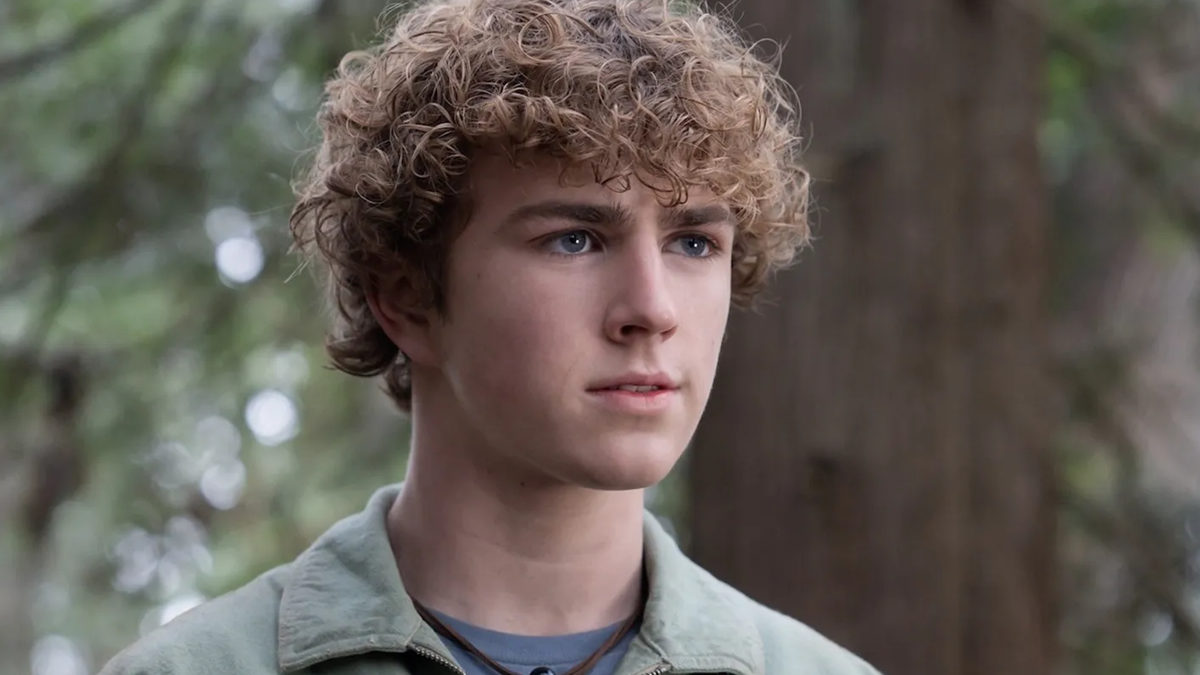
What should have been a normal teenage milestone has turned into something far darker. Walker Scobell, the young star of Percy Jackson and the Olympians, recently revealed that he will not be attending prom. The reason is not scheduling, not work, not even personal choice in the usual sense. It is fear. Not for himself alone, but for the people around him. In a candid message shared online, Scobell called out the disturbing reality he is dealing with. Teenage girls, simply for being associated with him or living nearby, have reportedly been receiving death threats. The situation escalated to a point where a high school event, something as ordinary as prom, became unsafe.
It is easy to dismiss such incidents as isolated or exaggerated. But this is not a one-off moment. It is part of a larger pattern that has been quietly growing across fandom culture. What begins as admiration quickly mutates into entitlement. And entitlement, when amplified by anonymity and algorithms, often turns into aggression.
The unsettling part is not just the threats themselves. It is how normalized this behavior has become. The idea that fans feel they have a say in a celebrity’s personal life, especially someone as young as Scobell, reflects a deeper issue with how audiences engage with public figures today. There is a growing inability to separate the character from the person, the performance from reality.
The irony is hard to ignore. Scobell plays a demigod navigating monsters and chaos, yet off-screen, he is dealing with a far more unpredictable threat. Not mythological creatures, but real people behind screens, driven by obsession and emboldened by distance.
This is not the first time boundaries have been crossed within this fandom either. His co-star Aryan Simhadri previously spoke about an uncomfortable public encounter where a fan physically invaded his personal space. Moments like these are often brushed aside as awkward or unfortunate, but together they paint a pattern that is far more concerning.
What we are witnessing is the collapse of boundaries. Social media has blurred the lines between access and ownership. Fans no longer just follow celebrities, they feel connected to them in a way that can quickly become possessive. The parasocial relationship, once harmless, now carries the potential for real-world consequences.
There is also a broader cultural layer to this. The internet rewards intensity. Outrage spreads faster than appreciation. Extreme reactions get amplified, while normal, respectful engagement fades into the background. In that ecosystem, even a small group of toxic voices can dominate the narrative.
For young actors like Scobell, the impact is even more severe. They are still figuring out their own identity, navigating adolescence, and suddenly find themselves under a microscope that does not switch off. Every interaction is scrutinized, every association questioned, every rumor weaponized.
The decision to skip prom might seem small in the larger scheme of things. But it represents something much bigger. It is a reminder that the cost of fame is no longer limited to privacy or pressure. It now extends to safety, not just for the individual, but for anyone connected to them.
At its core, this is not just about one actor or one incident. It is about the direction fandom culture is heading in. When admiration turns into control, when support turns into surveillance, and when engagement turns into harassment, the entire ecosystem begins to break down.
There is a need to recalibrate. To remember that behind every screen is a real person. That celebrities, especially young ones, are not characters existing for public consumption, but individuals with lives that deserve respect.
Scobell’s message was simple. Stop sending threats. Stop crossing lines. Stop turning something meant to be positive into something harmful.
The fact that such a message even needs to be said tells us everything we need to know.