
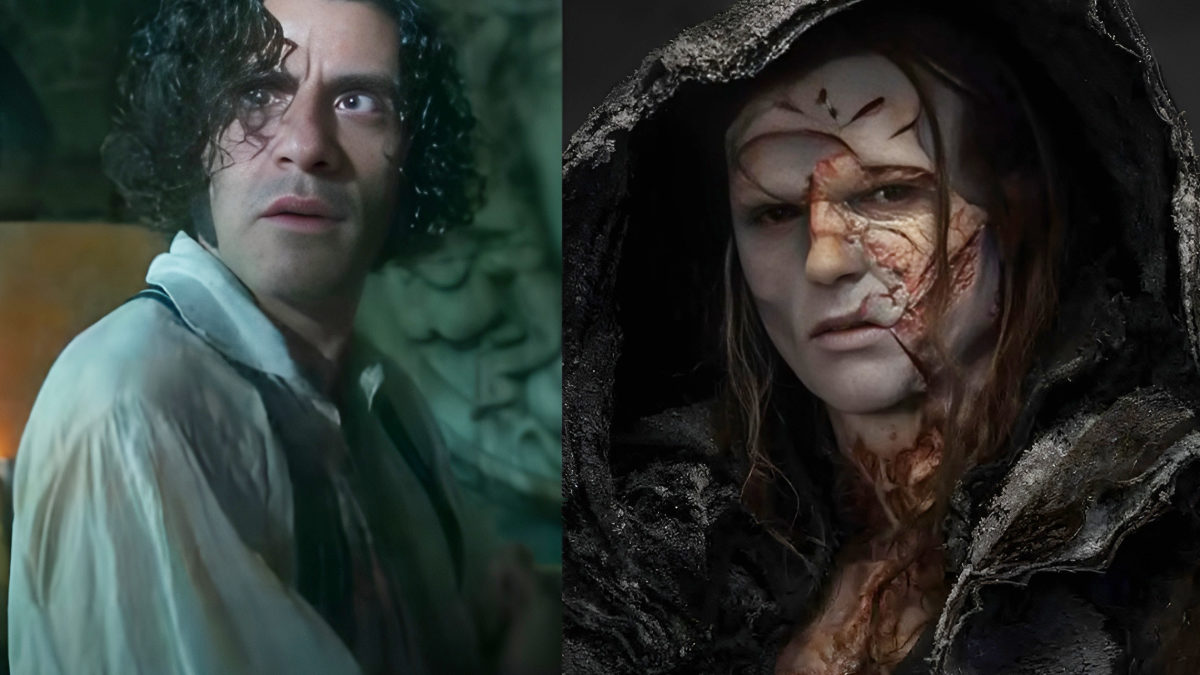
Guillermo del Toro’s ambitious adaptation of Frankenstein brings a dramatically different emotional ending compared to the original novel by Mary Shelley. The director’s version of the story focuses heavily on forgiveness and humanity rather than revenge. The Netflix film, directed by Guillermo del Toro, stars Oscar Isaac as Victor Frankenstein and Jacob Elordi as the Creature. The film has gained major awards attention and is nominated for nine Academy Awards including Best Picture, highlighting how the classic horror story has been reimagined for modern audiences.
In del Toro’s interpretation, Victor’s obsession with defeating death begins during childhood after the traumatic loss of his mother and resentment toward his abusive father. As an adult, Victor dedicates himself to mastering the forces of life and death, eventually assembling a living being from the body parts of dead soldiers and executed criminals.
The Creature initially appears to be a failed experiment. Victor becomes frustrated with its slow intellectual development and eventually attempts to destroy the laboratory tower along with the Creature trapped inside. Unknown to Victor, the Creature survives and escapes into the wilderness.
While living near a remote farm, the Creature learns to speak and read with the help of a blind elder. Through letters found in Victor’s ruined laboratory, it eventually learns the truth about its creation. Feeling isolated and immortal, the Creature returns to Victor with a request. It asks Victor to create a companion so it will not have to face eternity alone.
Victor refuses, terrified of what might happen if the Creature reproduces. The conflict escalates and leads to tragedy when Victor accidentally shoots Elizabeth, played by Mia Goth, while attempting to kill the Creature.
The film’s final act shifts to the Arctic where Victor chases the Creature in a desperate attempt to destroy it. Wounded and freezing, Victor eventually confronts the Creature one last time aboard a frozen ship. It is here that del Toro’s story diverges most strongly from the original novel.
Rather than ending in pure vengeance, Victor recognizes his mistakes and asks the Creature for forgiveness. The Creature accepts, addressing Victor as “father” and encouraging him to rest. This moment transforms their relationship from creator and monster into something closer to father and son.
This message of forgiveness is central to del Toro’s interpretation. Instead of hatred destroying both characters, the film presents forgiveness as a form of liberation.
After Victor dies, the ship’s captain allows the Creature to leave peacefully. In a final act of compassion, the Creature helps free the ship from the surrounding ice before walking alone toward the rising sun.
The closing image mirrors an earlier moment in the film when Victor tells the Creature that the sun represents life. At the beginning of their relationship the Creature recoils from sunlight, but in the final scene it steps forward into it, symbolizing a new acceptance of life.
According to Entertainment Weekly, this hopeful ending is one of the most significant departures from Mary Shelley’s original novel, where the Creature remains trapped in grief and plans to destroy itself.
Del Toro’s version instead suggests that even beings created in darkness can choose humanity, redemption, and the possibility of living on.