
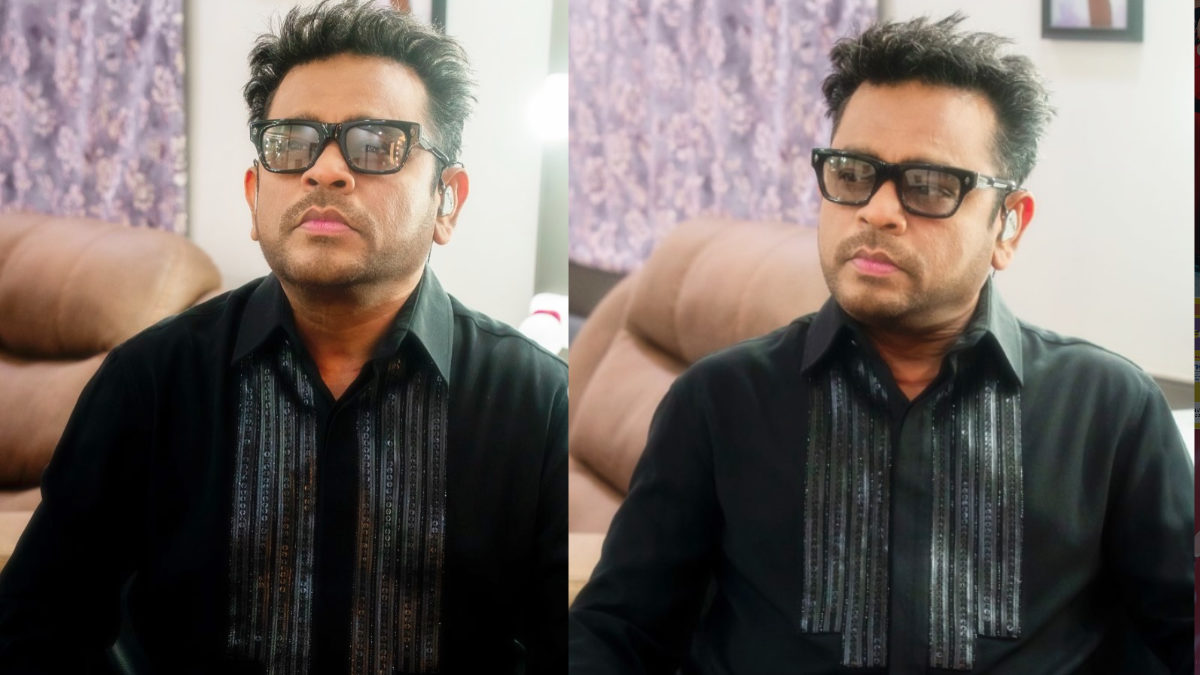
Oscar-winning composer A.R. Rahman has spoken candidly about a quieter and more introspective phase in his Bollywood journey, revealing that he has received significantly less work in Hindi cinema over the past eight years. Despite being one of India’s most celebrated music composers, Rahman believes that shifting power structures in the film industry may have contributed to the slowdown in opportunities.
In a recent interview with BBC Asian Network, Rahman reflected on the changing nature of Bollywood, suggesting that creative decision-making is no longer always in the hands of artists. “A power shift has happened, and now people who are not creative have the power,” he said. He hinted that certain biases might exist but added that they often appear indirectly, like “Chinese whispers,” rather than open discrimination.
However, Rahman made it clear that the lack of projects has not affected his self-belief or peace of mind. Instead of chasing assignments, he prefers to let work come naturally. “I don’t want to go in search of work. I want work to come to me. My sincerity should earn me what I deserve,” he said. Recalling missed opportunities, Rahman shared that some projects initially approached him but later hired multiple composers instead. Rather than feeling bitter, he sees it as a blessing that allows him more time with family.
Rahman also addressed how Bollywood’s music culture has evolved in recent years. With the rise of trend-driven soundtracks and multi-composer albums, he feels the industry now prioritizes speed and commercial formulas over distinct musical vision — a shift that has altered how music is created and valued.
Reflecting on his early Bollywood days, Rahman admitted that acceptance did not come instantly, despite landmark albums like Roja, Bombay, and Dil Se... “I was still an outsider,” he said. It was the 1999 film Taal that truly made him a household name across North India, bridging cultural and linguistic gaps.
Language was one of Rahman’s biggest early challenges. Coming from Tamil cinema, he initially struggled with Hindi. Encouraged by filmmaker Subhash Ghai, he not only learned Hindi but also studied Urdu, which he calls the foundation of classic Hindi film music. Later, he picked up Punjabi through collaborations with singer Sukhwinder Singh, leading to timeless hits like Chaiyya Chaiyya, Ramta Jogi, and the Oscar-winning Jai Ho.
Despite acknowledging industry changes, Rahman maintains a calm detachment from film politics, choosing instead to focus on family, international projects, and music that aligns with his artistic integrity — proving that true creativity remains beyond trends and power shifts.