
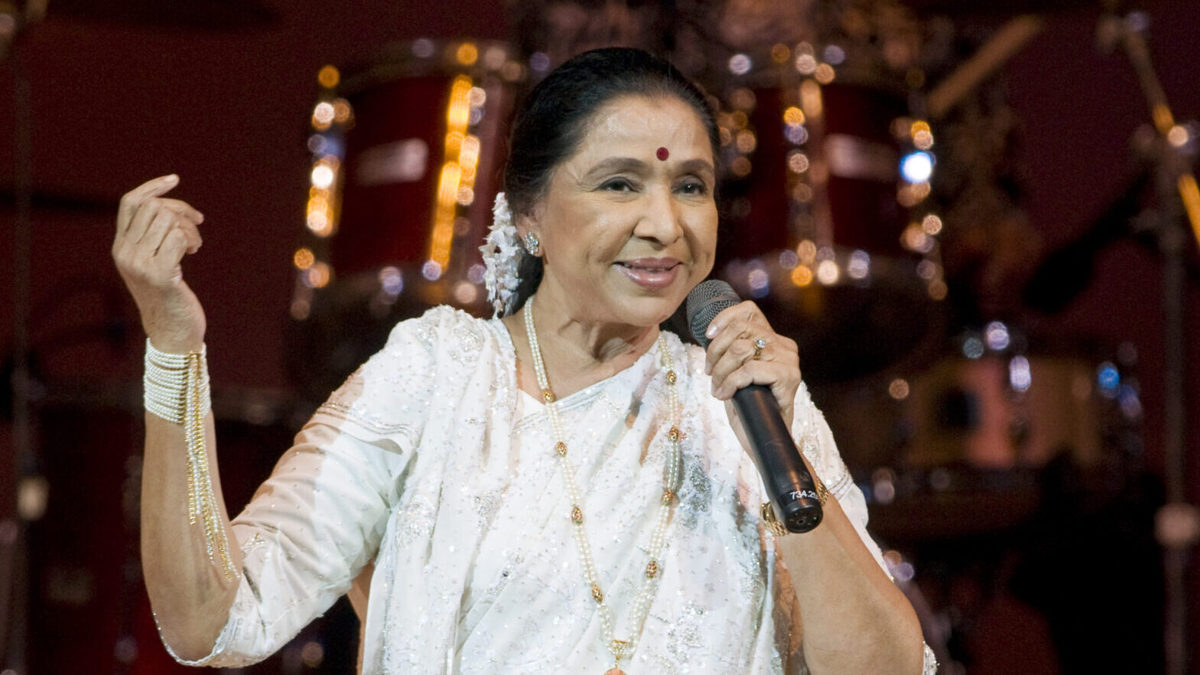
To understand Asha Bhosle is to understand how Hindi film music itself evolved across decades. Her journey does not begin with stardom or instant recognition but with survival. As a teenager stepping into the industry in the 1940s, she recorded her first song “Chala Chala Nav Bala” for a Marathi film, at a time when the ecosystem of playback singing was still taking shape. The industry had already begun to lean towards a certain kind of voice, one that would soon be defined and dominated by her elder sister Lata Mangeshkar. In that landscape, Asha’s voice did not immediately fit the mould, and that early mismatch would shape the most fascinating aspect of her career.
Through the late 1940s and early 1950s, she was often assigned songs that others would pass on. These included cabaret numbers, playful tracks, or songs picturised on side characters rather than leading heroines. In trade terms, she was not the first choice but a dependable alternative. Yet what seemed like a limitation quietly became her training ground. She learned to adapt, to experiment, and to bring character into her singing in ways that went beyond conventional melody.
The turning point came with films like Naya Daur, where her voice began to find a stronger footing in mainstream cinema. However, the real transformation happened when she collaborated with R. D. Burman. Their partnership did not just produce hit songs, it reshaped the sound of Hindi film music. Songs like “Aaja Aaja Main Hoon Pyar Tera,” “Piya Tu Ab To Aaja,” “Dum Maro Dum,” “Chura Liya Hai Tumne Jo Dil Ko,” “O Haseena Zulfon Wali,” “Yeh Mera Dil,” “Do Lafzon Ki Hai Dil Ki Kahani,” “Jaane Jaan Dhoondta Phir Raha,” “Bhali Bhali Si Ek Surat,” and “Mera Kuch Saamaan” together form a body of work that can comfortably be called among the ten most defining collaborations between Asha and R D Burman. These songs were not just chartbusters, they introduced a new rhythm, a new sensuality, and a certain modernity that Hindi cinema had not fully embraced until then.
As her career expanded, so did the range of songs that came to define her legacy. If one were to trace her ten most iconic songs across decades, they would naturally include “Aaiye Meherbaan,” “Yeh Hai Reshmi Zulfon Ka Andhera,” “Parde Mein Rehne Do,” “Piya Tu Ab To Aaja,” “Dum Maro Dum,” “Chura Liya Hai Tumne Jo Dil Ko,” “Yeh Mera Dil,” “Dil Cheez Kya Hai,” “Mera Kuch Saamaan,” and “Rangeela Re.” Each of these songs captures a different shade of her voice, from seductive and playful to poetic and deeply introspective, reflecting not just her versatility but also the changing taste of audiences over time.
What strengthens her position further is the recognition these songs brought her. Among the songs most associated with major awards and honours are “Dil Cheez Kya Hai” and “Mera Kuch Saamaan,” both of which earned her National Film Awards, along with widely celebrated tracks like “Parde Mein Rehne Do,” “Piya Tu Ab To Aaja,” “Dum Maro Dum,” “Yeh Mera Dil,” “Chain Se Humko Kabhi,” “In Aankhon Ki Masti,” “Justuju Jiski Thi,” and “Tan Tana Tan.” These songs are not merely popular but repeatedly acknowledged within the industry, either through awards or through their enduring cultural impact, making them part of what can be considered her most awarded and decorated repertoire.
Her professional journey also runs parallel to the presence of Lata Mangeshkar, and while the narrative of rivalry has often been overstated, their occasional duets remain culturally significant. When the two voices came together, it felt less like competition and more like a rare confluence of two distinct musical identities. Lata brought purity and stillness, while Asha introduced playfulness and unpredictability. Together, they reflected the full emotional range that Hindi cinema aspired to capture.
As the decades progressed, Asha Bhosle did something very few artists manage to achieve. She did not fade with changing trends, she adapted to them. In the 1990s and beyond, she collaborated with composers like A. R. Rahman, lending her voice to a new generation of sound while retaining the essence that made her distinctive. She also explored independent music, international collaborations, and live performances across the world. By this stage, she was no longer just a playback singer but a global musical figure.
Her list of awards, including multiple Filmfare Awards, National Awards, and the Dadasaheb Phalke Award, only tells part of the story. In trade language, her real achievement lies in longevity and reinvention. She recorded over ten thousand songs across languages, genres, and eras, a feat that reflects not just productivity but an extraordinary ability to remain relevant.
There is no single “last song” that defines the end of her journey, and perhaps that is fitting. Asha Bhosle’s career does not feel like it concludes in the traditional sense. Instead, it stretches across time as a continuous influence, a voice that adapted to every shift in the industry without losing its individuality.
From a enthusiast’s perspective, if Lata Mangeshkar represented the ideal of melody in its purest form, Asha Bhosle represented its evolution. She entered the industry without a defined space, created multiple spaces for herself, and ultimately expanded what playback singing could mean. Her story is not just about success, it is about resilience, reinvention, and the courage to sound different in an industry that initially did not know what to do with that difference.