
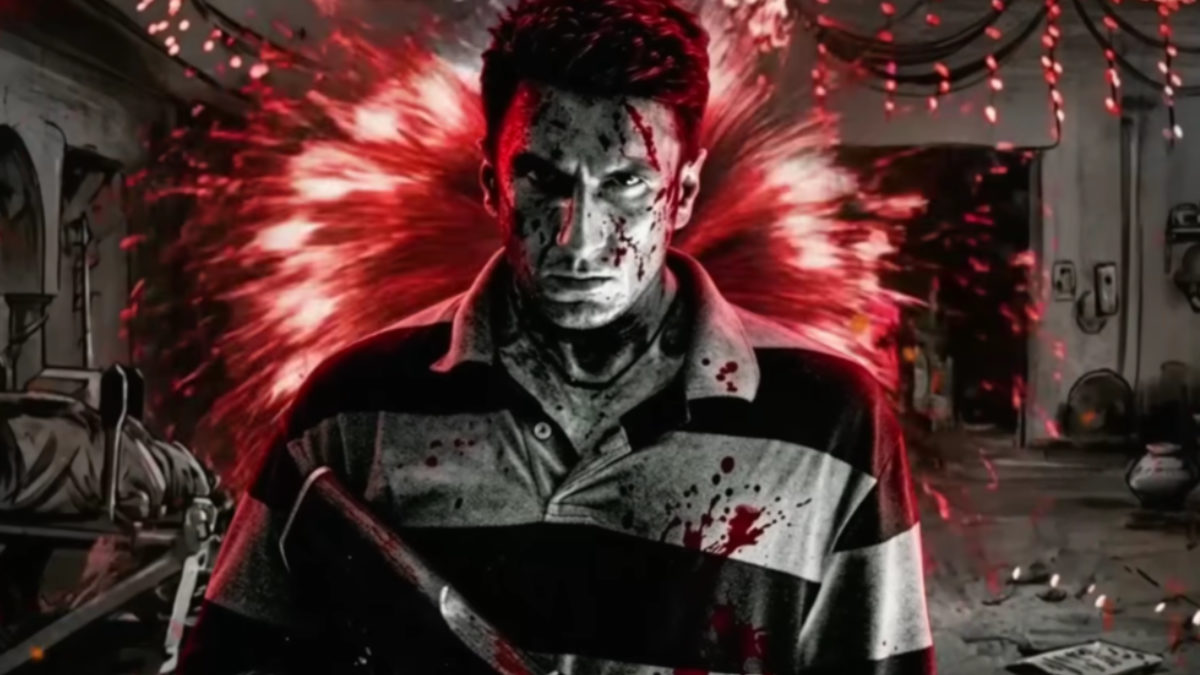
In the conversations around Dhurandhar, one thing is clear. The film may belong to many, but the spotlight belongs to one. Ranveer Singh is everywhere. In the posters, in the discussions, in the reactions that follow every trailer drop and every still that surfaces. His presence is the entry point. His performance is what people are waiting to judge. And then there is Aditya Dhar. The director. The architect. The one shaping the world in which that performance exists. But rarely the first name in the audience’s mind.
This is not new. It is how cinema has always worked. We attach films to faces. We remember expressions, not decisions. We recall moments, not the process behind choosing those moments.
And that is where the real story begins. Because what we eventually watch on screen is not simply a performance delivered by an actor. It is a performance that has been filtered, selected, and constructed before it reaches us.
Every scene you see in Dhurandhar has lived multiple versions. There are several takes of the same moment. Slight variations in tone. Different emotional intensities. Sometimes even completely different readings of a line.
The actor explores within the scene. The director decides which version becomes the film.
When a director says “cut” and then “okay,” it is not just about moving on. It is about choosing. Choosing what emotion stays. Choosing what truth defines that moment. Choosing what the audience will eventually feel. And that process does not end on set.
In the edit room, performances are reshaped again. A reaction shot can change the meaning of a scene. A pause can be extended to create depth or shortened to create distance. A particular take can be picked over another, quietly altering how a character is perceived.
The audience never sees these choices. They only experience the outcome.
So when viewers say Ranveer Singh was exceptional or underwhelming, they are reacting to a version of his performance that has already been curated.
And yet, the credit and the criticism both land on him.
Why?
Because cinema is experienced through presence. The actor is the most visible layer of storytelling. The most human connection point. You don’t see the discarded takes. You don’t see the debates in the edit room. You see the face that carries the emotion.
But stopping the conversation there would be unfair. Because actors are not just vessels for a director’s vision. Two actors can be given the same direction and still produce very different results. One might stay within the brief. Another might stretch it. Some bring unpredictability. Some bring precision. Some bring layers that were never explicitly written.
Ranveer Singh, in particular, has built a reputation for pushing beyond the obvious. For offering variations, for leaning into extremes, for giving a director multiple emotional routes to choose from.
Which means the director’s job is not just to guide. It is to recognise. To select the version that best serves the story, not just the performance. That relationship is where a film either finds its rhythm or loses it.
A strong actor with weak selection can feel inconsistent. A strong director with limited material can only elevate so much. But when both align, the result feels seamless. Effortless. Complete. And that is when we call it a great performance.
Even though what we are really witnessing is a collaboration that has worked in perfect sync. Still, when the film ends and the conversation begins, it circles back to the same place. The actor.
Because the face stays. The process disappears.
So in a film like Dhurandhar, when Ranveer Singh becomes the centre of both praise and scrutiny, it is not entirely misplaced. It is simply incomplete.
What we are applauding is not just what he performed. It is what was chosen, shaped, and finally presented to us.
The actor makes you feel something. The director decides exactly how that feeling reaches you.
But in the end, cinema has never been about what is most accurate. It has always been about what is most visible.
And the most visible part of a film will always be the person standing in front of the camera.