
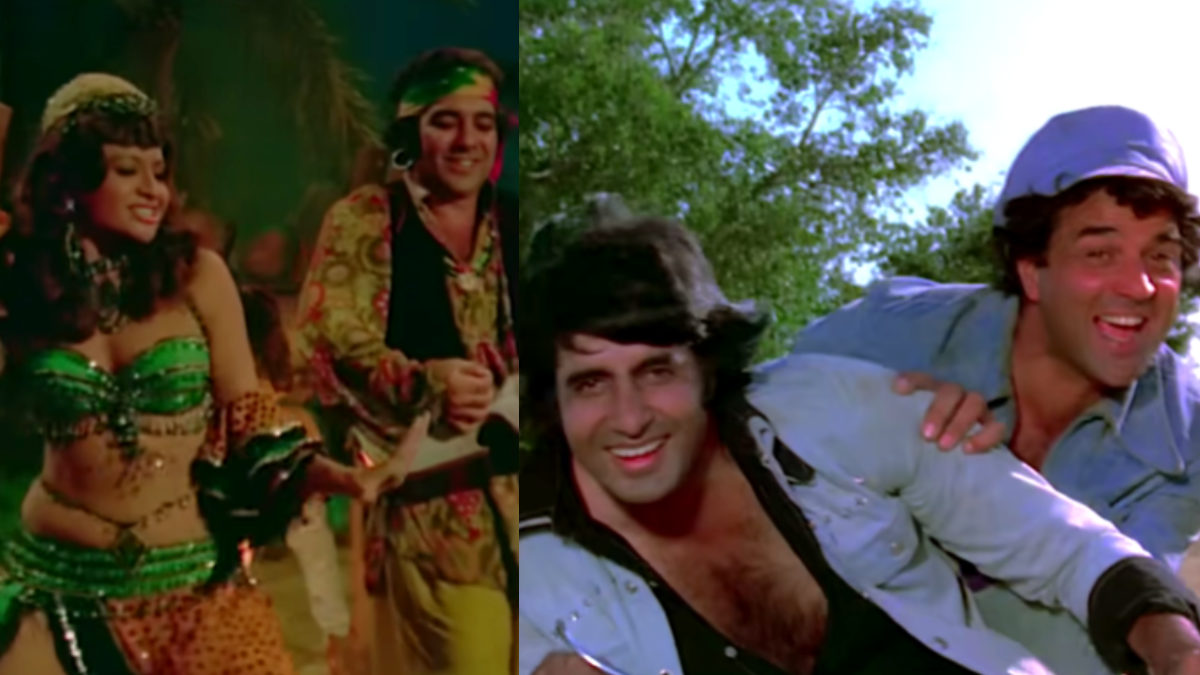
Even before the story was fully locked, R.D. Burman began shaping the film’s musical soul. He wasn’t just composing songs; he was building an atmosphere. There’s an often-retold moment when Burman da stood in front of the team, playing the early drafts of “Mehbooba Mehbooba,” strumming on a Greek bouzouki, a sound barely heard in Indian cinema before. People didn’t know whether it was too experimental. Today, it’s impossible to imagine the film without that hypnotic opening.
“Yeh Dosti,” the anthem of Indian friendship, had its own evolution. It was initially more mellow, until Sippy and R.D. Burman decided the song needed to feel like the wind—free, open, and loud. So they added a more upbeat tempo, opening guitar riffs, and the now-iconic harmonica. Decades later, whether it’s played at school farewells, office parties, or 2 a.m. drives, the song still feels fresh.
“Holi Ke Din” was shot and scored like a celebration within a celebration. Burman wanted the rhythm to mimic actual folk celebrations. So he mixed dhol, manjira, and non-traditional orchestral elements to create something that felt both authentic and cinematic. The result was a festival song that continues to be played every single Holi across India—half a century later.
The background score, especially the haunting flute theme for Jai and Radha, deserves its own chapter. Burman crafted it as a musical sigh, a pause amidst the chaos. That delicate melody is still considered one of the most emotionally intelligent pieces in Hindi film music.
What makes Sholay’s music so timeless is not just melody or nostalgia—it’s the emotional truth inside each note. These weren’t songs made to fill time; they were expressions of character, echoes of the story, and sometimes comments on the unsaid.
Like great wine, they grew better with age—not because they changed, but because we did.