
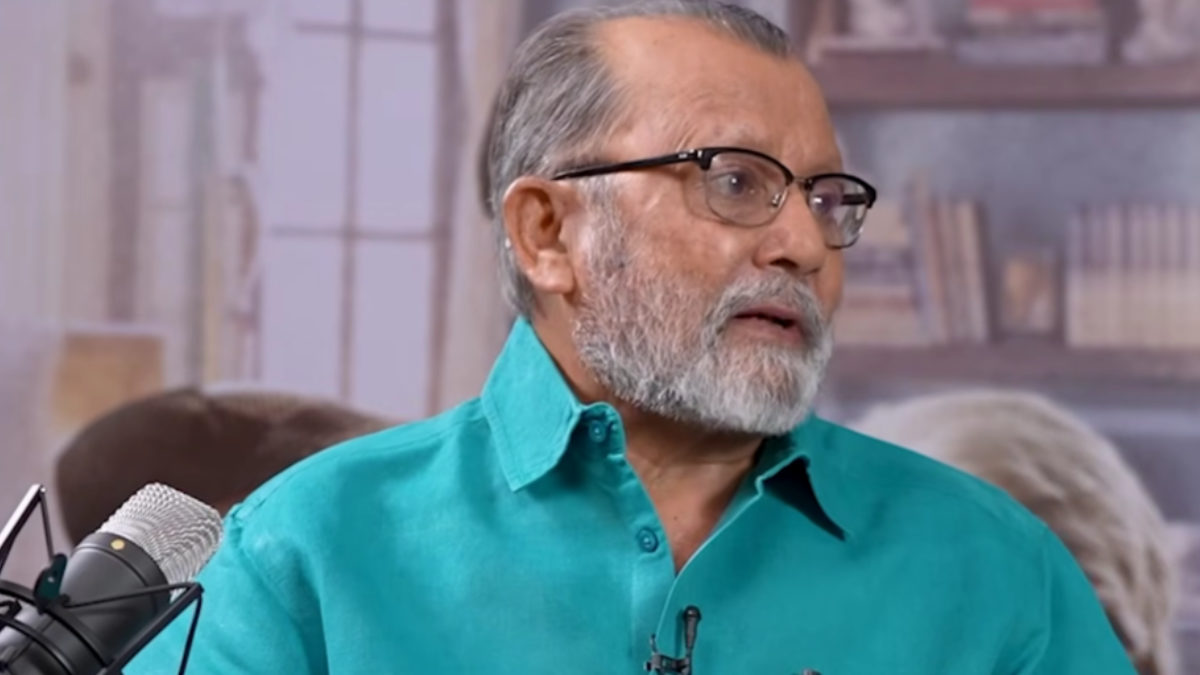
Veteran actor Pankaj Kapur has addressed the long-standing perception within the film industry that he is a “difficult actor,” explaining that the label originated from his insistence on reading a complete script before agreeing to perform a role. Known for his thoughtful approach to acting and careful preparation for characters, Kapur said the perception dates back to the early stage of his career, when such expectations were less common in the industry.
The actor spoke about the issue in a recent interview with Zoom while discussing his latest project, Jab Khuli Kitaab. In the film, Kapur appears alongside Dimple Kapadia. The project is directed by actor and filmmaker Saurabh Shukla, who was also present during the conversation when Kapur elaborated on the origins of the reputation he carried for years.
Kapur explained that the perception began shortly after he moved to Mumbai following his training at the prestigious National School of Drama. At the time, he had just started looking for acting opportunities in the film and television industries. According to the actor, when he was offered roles, he would ask to read the script before agreeing to participate in the project.
While this request may seem routine in contemporary filmmaking, Kapur noted that it was unusual in the industry during that period. He recalled that asking for a script often led to him being labelled as difficult or demanding by some producers and filmmakers.
The actor explained that during earlier decades of the film industry, many performers worked under a very different system. Instead of receiving a full script in advance, actors would often arrive on set and receive their scenes shortly before filming. This approach required performers to prepare quickly and rely on spontaneous performances during the shoot.
Kapur acknowledged the ability of actors who worked within that system, noting that it required significant skill and adaptability. However, he said his own training encouraged a different method of preparation. Having studied acting formally, he believed it was essential to understand the entire narrative and the character’s development before stepping in front of the camera.
According to Kapur, reading the script allowed him to study the structure of the story and analyse the motivations of the character he was expected to portray. Without this preparation, he felt it would be difficult to deliver a convincing performance. He therefore maintained that he would not agree to act in a project unless he had access to the script and sufficient time to understand the role.
Despite the perception that he was difficult to work with, Kapur pointed out that filmmakers who approached projects with detailed scripts rarely encountered any issues collaborating with him. He cited directors such as Basu Chatterjee, Vishal Bhardwaj and Anubhav Sinha as examples of filmmakers whose working methods aligned with his own approach to acting.
Kapur also recalled an experience from the television series Karamchand, one of the most popular shows of its time. While working on the project, he requested that the script for his scenes be provided a day in advance so he could prepare properly. At the time, he said, this request surprised the director because actors were not typically expected to ask for scripts ahead of filming.
Even so, Kapur maintained that such preparation was essential for him to portray a character convincingly. He emphasised that understanding the narrative and the character’s role within it was central to his method as an actor.
His latest film, Jab Khuli Kitaab, featuring both Kapur and Kapadia, premiered on March 6 and is currently available for streaming on ZEE5. The project marks another addition to Kapur’s long career in film, television and theatre, during which he has been widely recognised for his dedication to performance and character-driven storytelling.