
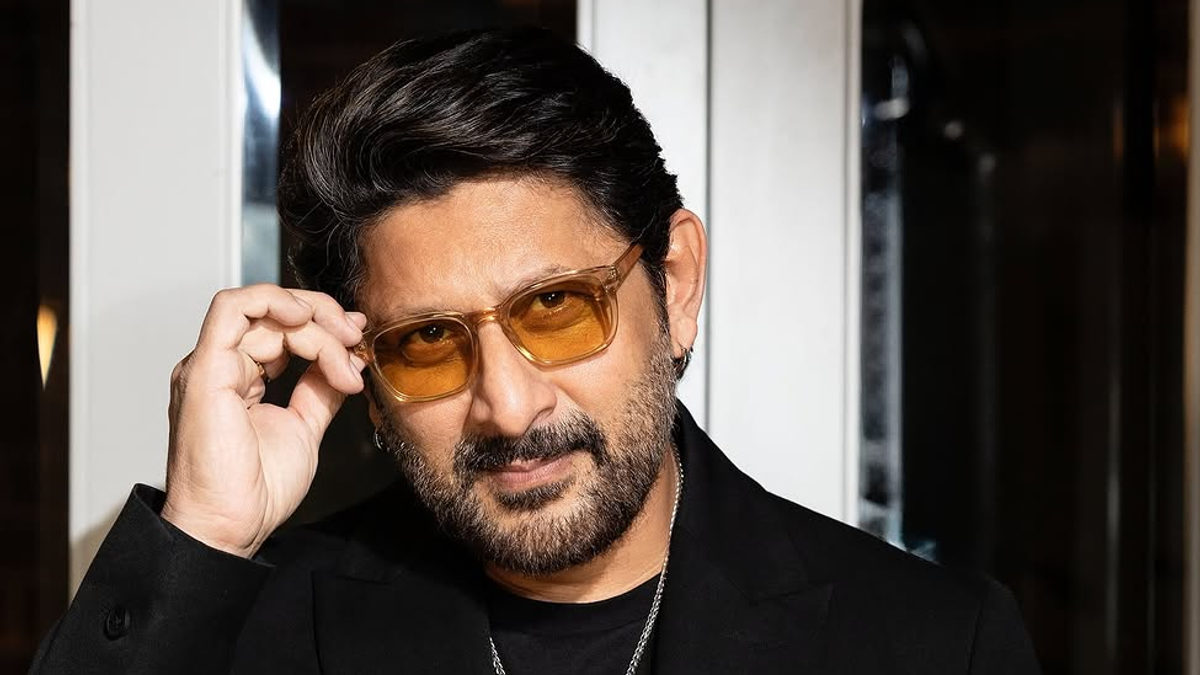
Actor Arshad Warsi has opened up about his inspiring journey of quitting smoking after more than three decades, sharing how he managed to break the long-standing habit in just one week. For many smokers, quitting can feel nearly impossible because cigarettes often become deeply tied to daily routines, stress management, and social interactions. Warsi’s story highlights how determination, the right approach, and behavioural techniques can help overcome even decades of dependence.
Smoking addiction is widely considered one of the most difficult habits to break. Many smokers struggle with cravings triggered by everyday activities such as drinking tea or coffee, taking work breaks, or socialising with friends. Over time, these patterns become deeply embedded in the mind, making the process of quitting both a physical and psychological challenge.
In an interview with Pinkvilla on February 20, Warsi revealed that he had been smoking for about 35 years before finally deciding to quit. He admitted that he initially doubted the method he used but was motivated by a strong desire to give up the habit.
“Anybody with the right mind can say, how can you quit smoking with an app? I have been smoking for the past 35 years. I thought I would never be able to do it, but I was so desperate to give up smoking that I decided to try,” he said during the conversation.
According to the actor, the application he used focused on reshaping behavioural patterns by influencing the subconscious mind. Instead of forcing immediate abstinence, it worked as a structured reminder system that helped him recognise and gradually detach from routine smoking triggers.
Warsi explained that the process involved observing habitual moments when he usually reached for a cigarette. “It kind of rewires your subconscious mind. It’s purely a reminder — ab maine chai pee hai, ab mujhe cigarette… (now I’ve had tea, now I want a cigarette). On the seventh day, it tells you to have your last cigarette,” he shared.
He recalled that when the final day arrived, he still felt sceptical about whether the method would actually work. At the time, he had a full pack of Marlboro cigarettes with him and believed he would eventually return to smoking.
“I had a whole packet of Marlboro, and I was 100 percent sure it wasn’t going to work. I smoked that last cigarette, threw the packet away, and I haven’t touched it since,” Warsi said.
Interestingly, the real test came just a few days later. The actor hosted a gathering at his home where many guests were smoking. Despite being surrounded by cigarettes, he found that he had no urge to smoke again.
“Two days later, we had a party at our house, everyone was smoking, and it didn’t bother me at all,” he said, expressing surprise at how quickly the cravings had disappeared.
Warsi’s experience reflects the importance of mindset when trying to overcome addiction. While physical dependence on nicotine plays a role, experts often emphasise that the psychological component of smoking addiction can be just as powerful.
Warsi’s story serves as a reminder that even long-term habits can be overcome with determination and the right support system. His journey shows that quitting smoking, while challenging, is possible — and the health benefits begin almost immediately.