
In the film trade, we often talk about stars, openings, numbers and pull. We measure actors by their last Friday and their next Friday. But every once in a while, something unusual happens. A film does not just work, it changes the way an actor is seen forever. It reaches a point where the audience stops separating the actor from the character. The name on the poster remains the same, but in people’s minds, it quietly gets replaced.
This is not about success alone. Plenty of films succeed. Plenty of actors deliver hits. This is about something deeper. It is about identity.
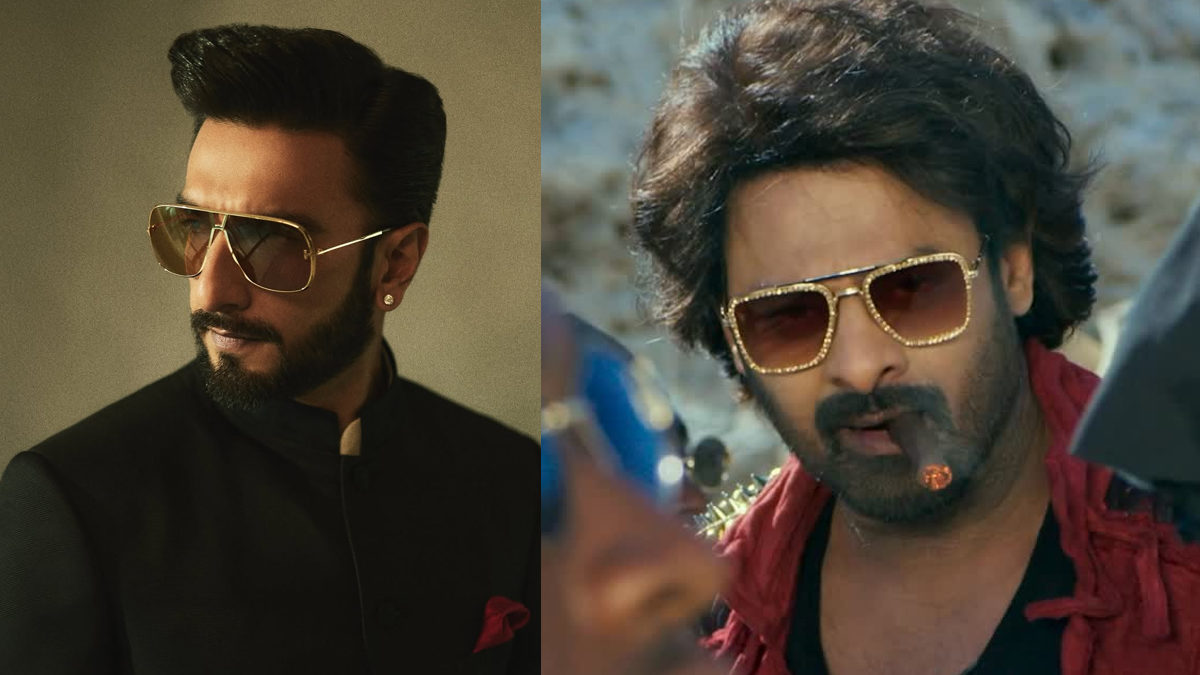
A very recent and relevant example of this shift can be seen with Ranveer Singh and Dhurandhar. Ranveer Singh has always been a performer with range and energy. From his debut to his big screen successes, he has built a strong and dependable career. But Dhurandhar seems to have done something different. The first part set the base and introduced a character that audiences connected with. The second part took that connection to another level altogether. The scale grew, the reach expanded and somewhere along the way, the character began to overshadow the actor. People were not just watching Ranveer Singh anymore. They were watching Dhurandhar.
A similar shift happened with Prabhas through Baahubali: The Beginning and Baahubali: The Conclusion. Prabhas was already a known and respected star in Telugu cinema. But Baahubali changed the scale of that stardom. The first part created curiosity and a world that people wanted to revisit. The second part turned that curiosity into emotion and into a nationwide event. After that, Prabhas was no longer just an actor. For many, he became Baahubali.
The same pattern can be seen with Yash in K.G.F: Chapter 1 and K.G.F: Chapter 2. Before KGF, Yash was a star within his industry. After it, he became Rocky Bhai across the country. The first film built the world. The second film made it larger than life.
With Allu Arjun in Pushpa: The Rise and Pushpa: The Rule, the shift is equally visible. The character’s attitude, dialogue and presence became so strong that it started defining the actor’s public image in a new way.
Hindi cinema has seen this earlier as well with Hrithik Roshan in Koi… Mil Gaya, Krrish and Krrish 3 where a character evolved into a long-standing identity.
Even globally, Keanu Reeves with John Wick and its sequels, and Robert Downey Jr. with Iron Man leading up to Avengers: Endgame show how powerful this phenomenon can be when it clicks.
What is common in all these cases is not just scale or box office. It is the journey from familiarity to ownership. The first part introduces the world and builds recall. The second part expands it to such an extent that the audience becomes emotionally invested. And somewhere along the way, the actor and the character stop being separate.
This is why such moments are rare. They cannot be designed easily. They happen when writing, casting and timing come together in the right way. When it works, it creates something far more valuable than a hit. It creates memory.
In an industry that runs on Friday numbers, these are the few instances that go beyond numbers. Because once a character settles into the audience’s mind, it does not leave easily. And when that happens, the actor is no longer just part of a successful film. He becomes part of something that stays.