
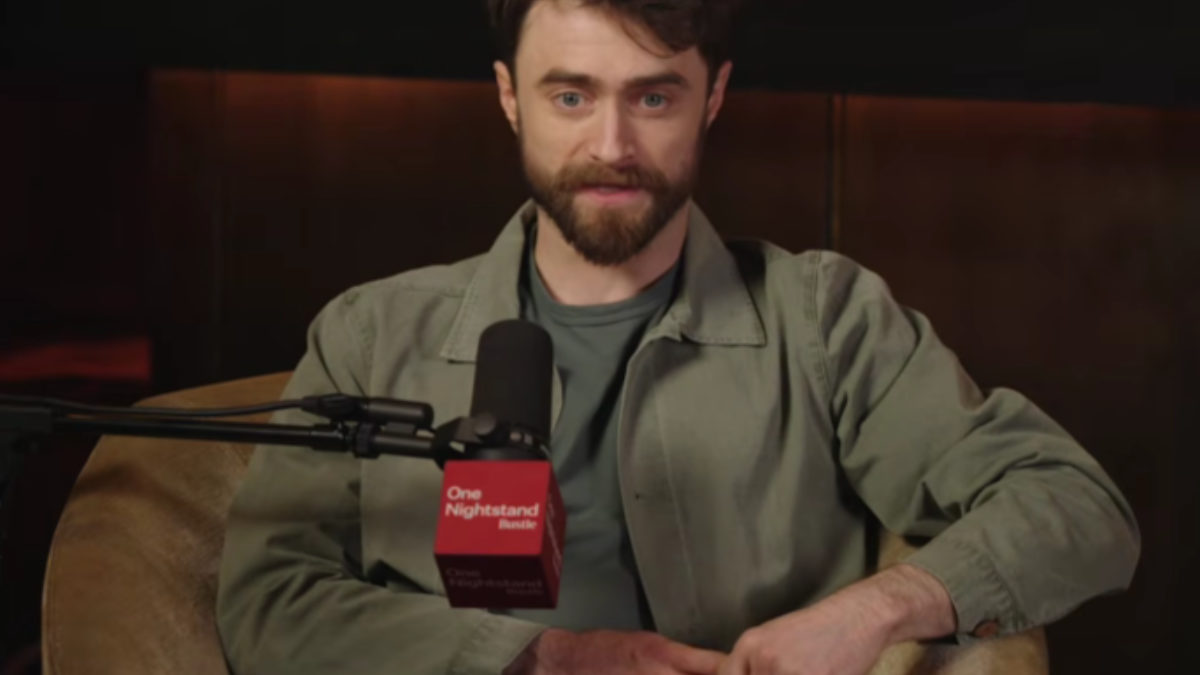
Actor Daniel Radcliffe has spoken about the pressures faced by child actors and why he believes therapy should be a required support system for young performers working in the entertainment industry. During a recent appearance on the podcast One Nightstand With Daniel Radcliffe, the actor discussed how fame at an early age can create emotional and psychological challenges that many young stars struggle to manage without proper guidance or professional help.
Radcliffe explained that public perception often paints a glamorous picture of young actors who achieve fame early in life. According to him, audiences frequently assume that child stars are living an ideal life filled with opportunities and success. However, he noted that the reality behind the scenes can be very different. The intense attention, professional expectations, and sudden changes in lifestyle that accompany early fame can be difficult for young performers to process while they are still developing emotionally.
Speaking about the issue during the interview, Radcliffe said he believes therapy should be normalised and incorporated into the system that governs the employment of child actors. In his view, providing mental health support should not be treated as a last resort when problems arise but rather as a routine and preventative measure. He argued that therapy could help young performers better understand and cope with the pressures associated with working in an industry where public scrutiny and professional demands begin at a very early age.
Radcliffe also referenced several tragic cases involving young actors who faced severe mental health struggles after experiencing early fame. While discussing these situations, he noted that the entertainment industry has witnessed heartbreaking incidents in recent years, including cases where former child stars died by suicide. Such events, he suggested, highlight the importance of providing structured mental health support to those entering the industry at a young age.
The actor emphasised that the idea of child stars living a “perfect dream” can create unrealistic expectations that add to the emotional burden they already face. When the public assumes that a young performer’s life is entirely positive, it can make it harder for them to openly acknowledge the challenges they are experiencing. Radcliffe argued that integrating therapy into the professional framework for child actors would help reduce stigma and encourage them to seek help without feeling ashamed.
Reflecting on his own experience as a child actor, Radcliffe acknowledged that he was fortunate to have strong support during the early years of his career. He gained international fame at the age of 12 after starring as the title character in Harry Potter and the Sorcerer’s Stone, the first installment of the film series based on the books by J. K. Rowling. The movie introduced audiences to the fictional world of Hogwarts School of Witchcraft and Wizardry and launched one of the most commercially successful film franchises in modern cinema.
Radcliffe continued playing the character of Harry Potter across seven additional films released over the following decade. The series followed the journey of the young wizard and his friends Hermione Granger and Ron Weasley as they studied magic at Hogwarts while confronting the dark wizard Lord Voldemort.
Looking back on that period, Radcliffe noted that conversations around mental health were less common in the early 2000s when the first films were being produced. Despite this, he said he was surrounded by supportive colleagues, family members and mentors who helped make his experience more positive than it might otherwise have been. He described himself as fortunate to have had that level of guidance during such a formative stage of his life.
Since completing the Harry Potter series, Radcliffe has pursued a diverse acting career that includes work in film, television and theatre. Among his notable projects are The Woman in Black, Now You See Me 2 and Kill Your Darlings. In 2022, he portrayed musician Weird Al Yankovic in the film Weird: The Al Yankovic Story, a performance that earned him nominations at the Emmy and BAFTA awards.
Through his comments on the podcast, Radcliffe has added his voice to ongoing discussions about the responsibilities of the entertainment industry toward young performers. By advocating for mandatory therapy and early mental health support, he has highlighted the need to address the pressures that often accompany fame at a young age and to create systems that help child actors navigate those challenges more safely.