
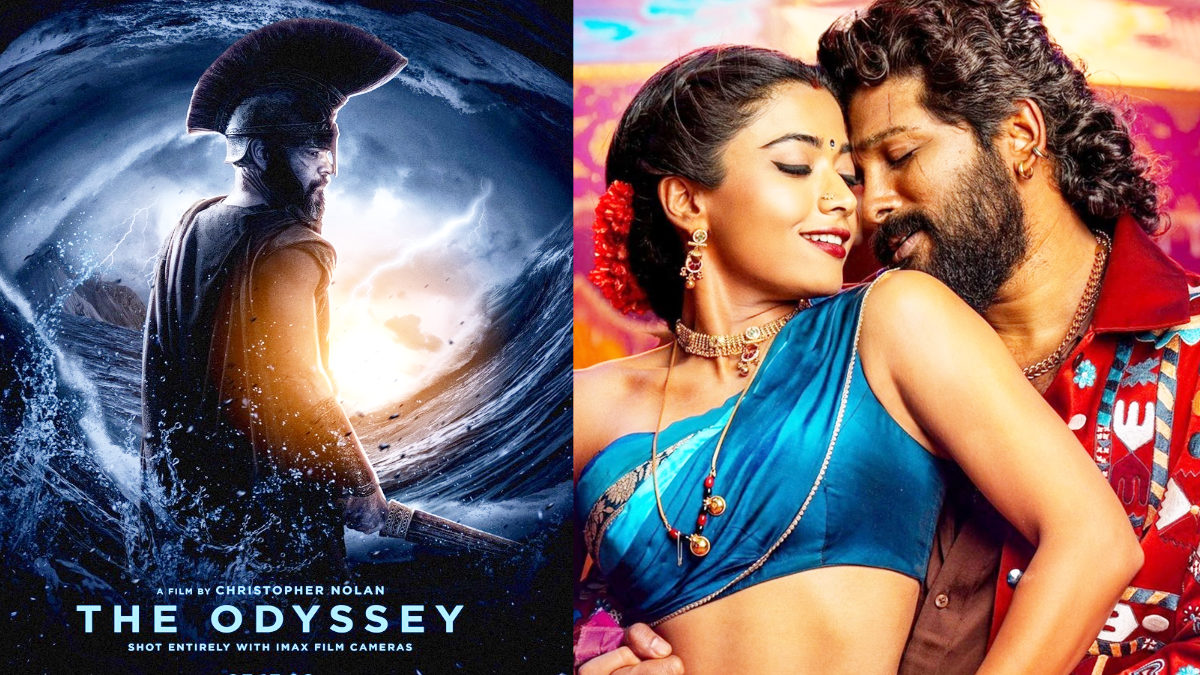
Christopher Nolan’s The Odyssey has done much more than generate record advance bookings and premium ticket prices. It has once again highlighted the level of confidence that some of Hollywood’s biggest filmmakers have in their product even before the first public show begins.
In Mumbai, premium IMAX tickets for The Odyssey climbed to around ₹3,100 and audiences were still willing to pay the price. At the same time, reports suggest Marvel Studios is preparing to put Avengers: Doomsday tickets on sale nearly five months before its release. Whether the reported timeline remains unchanged or not, the very fact that such a strategy is being considered reflects a remarkable level of confidence in the film’s ability to generate demand months in advance.
For the global exhibition business, this is becoming an increasingly important trend. Studios are no longer simply selling movie tickets. They are selling an event that audiences feel compelled to be a part of from day one.
The obvious question for the Indian film industry is whether this offers a lesson closer to home. The answer is yes, but perhaps not in the way many would think.
The lesson is not about charging ₹3,000 for a ticket or opening advance bookings five months before release. Those are outcomes, not strategies. The real lesson lies in creating a film that audiences believe is worth planning their schedules around well in advance.
Hollywood has spent years building that trust. Christopher Nolan has consistently delivered films that are designed for the biggest screen possible. Audiences now associate his name with an immersive theatrical experience, making them willing to spend more for an IMAX ticket without waiting for reviews or word-of-mouth.
Marvel has achieved something similar through franchise building. Every major Avengers film is positioned as a cultural event rather than just another weekend release. Fans do not simply watch these films. They prepare for them.
Indian cinema has shown that it is more than capable of creating similar excitement. Baahubali 2 became a nationwide event because audiences had waited for years to discover how the story would conclude. RRR transformed scale and spectacle into a global theatrical celebration.
KGF Chapter 2, Jawan and Pushpa 2 also demonstrated that when audiences believe a film deserves the big screen, advance bookings become a natural outcome rather than the result of aggressive marketing. The difference is consistency.
Too often, Indian filmmakers market every big-budget film as an event without giving audiences enough reasons to believe that it truly is one. In the post-pandemic era, viewers have become far more selective. They are willing to spend on theatres, but only when the experience promises something that cannot be recreated at home.
That is where filmmakers perhaps need to shift their focus. Instead of asking how to replicate Hollywood’s ticket pricing or booking strategies, the industry should ask how to create films that inspire the same level of confidence among audiences.
The success of The Odyssey and the reported early booking strategy for Avengers: Doomsday are reminders that event cinema cannot be manufactured through marketing alone. It is built over years through consistent storytelling, a filmmaker’s credibility and a theatrical experience that audiences genuinely believe is worth paying a premium for.
For Indian cinema, the opportunity is not to imitate Hollywood’s release models. It is to build films that make audiences feel the same urgency to be part of the first show, regardless of the ticket price or how early bookings open. That is when a film stops being just another release and becomes a true cinematic event.