
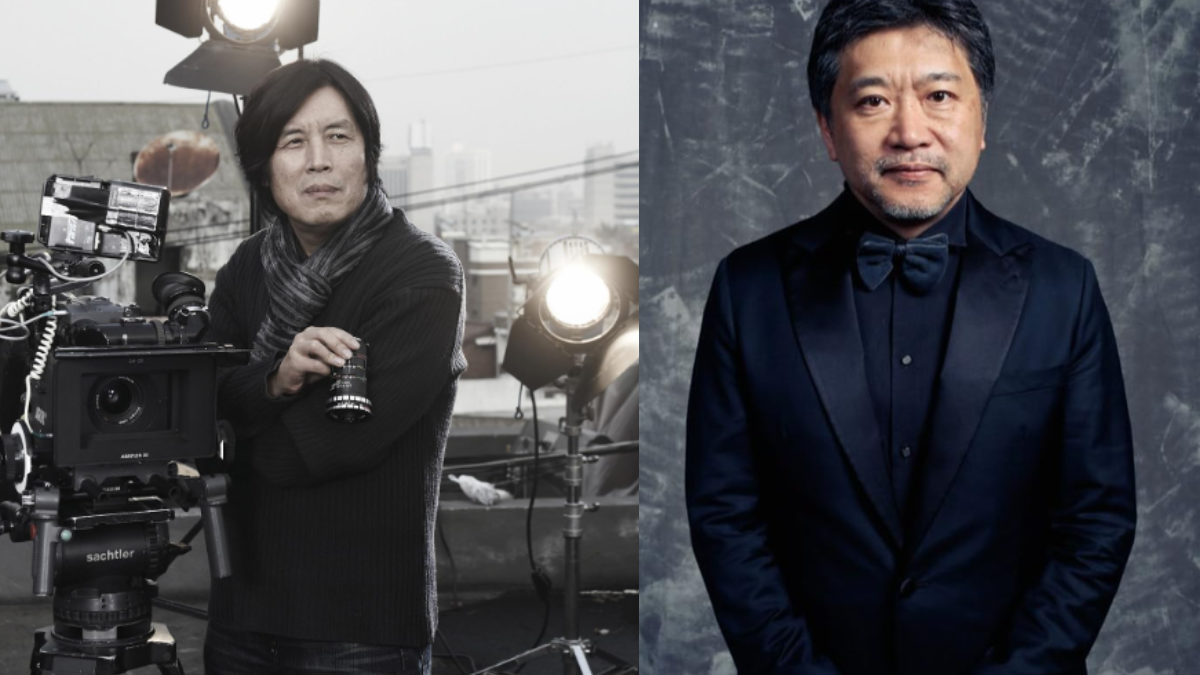
Asian cinema has once again emerged as one of the biggest talking points on the global festival calendar after the 83rd Venice International Film Festival unveiled a Competition lineup featuring two of the continent’s most celebrated auteurs. South Korean master Lee Chang-dong returns with Possible Love, while Japanese filmmaker Hirokazu Kore-eda brings Look Back, reinforcing Asia’s enduring influence on prestige cinema at a time when the international festival landscape is undergoing significant change.
For the global film trade, Lee Chang-dong’s selection is arguably among the most significant developments of this year’s Venice lineup. Possible Love marks the acclaimed South Korean director’s first feature in eight years, ending one of contemporary cinema’s longest waits for a new work from an auteur whose films have consistently defined modern Korean filmmaking. His return instantly elevates the artistic profile of the festival and is expected to become one of the most closely watched titles in the race for the Golden Lion.
Equally noteworthy is the inclusion of Hirokazu Kore-eda’s Look Back. The Japanese filmmaker has become one of the most consistent voices in world cinema over the past two decades, building an extraordinary relationship with Europe’s premier festivals through deeply human stories that transcend cultural boundaries. His latest Competition berth underlines the continued international demand for Japanese auteur cinema and further cements his standing as one of Asia’s foremost cinematic ambassadors.
The selections also reflect a broader industry trend. While conversations surrounding this year’s Venice lineup have largely focused on the relatively lighter Hollywood studio presence, Asian filmmakers continue to occupy some of the festival’s most prestigious slots. Festival director Alberto Barbera himself attributed the reduced American studio participation to wider industry challenges, including escalating production costs, changing release strategies and growing competition from streaming platforms, rather than any shift in Venice’s programming philosophy.
For the Asian film industry, this moment carries importance beyond festival prestige. The simultaneous presence of Lee Chang-dong and Hirokazu Kore-eda demonstrates that Asia continues to deliver filmmakers whose works remain central to the global awards conversation despite evolving market dynamics. Their selection also highlights the growing resilience of Asian storytelling at a time when international festivals are increasingly balancing commercial appeal with artistic excellence.
From a distribution perspective, Competition premieres at Venice often become launchpads for international sales, awards campaigns and worldwide theatrical rollouts. Both Possible Love and Look Back are now expected to attract heightened interest from global buyers, distributors and streaming platforms eager to secure high-profile prestige titles ahead of the upcoming awards season.
For cinephiles and the global trade alike, Venice 2026 has already delivered one clear message: even amid a changing international film business, Asia’s greatest auteurs remain indispensable to the world’s biggest festivals. With Lee Chang-dong ending an eight-year absence and Hirokazu Kore-eda continuing his remarkable international run, the continent once again finds itself at the heart of the global cinema conversation.