
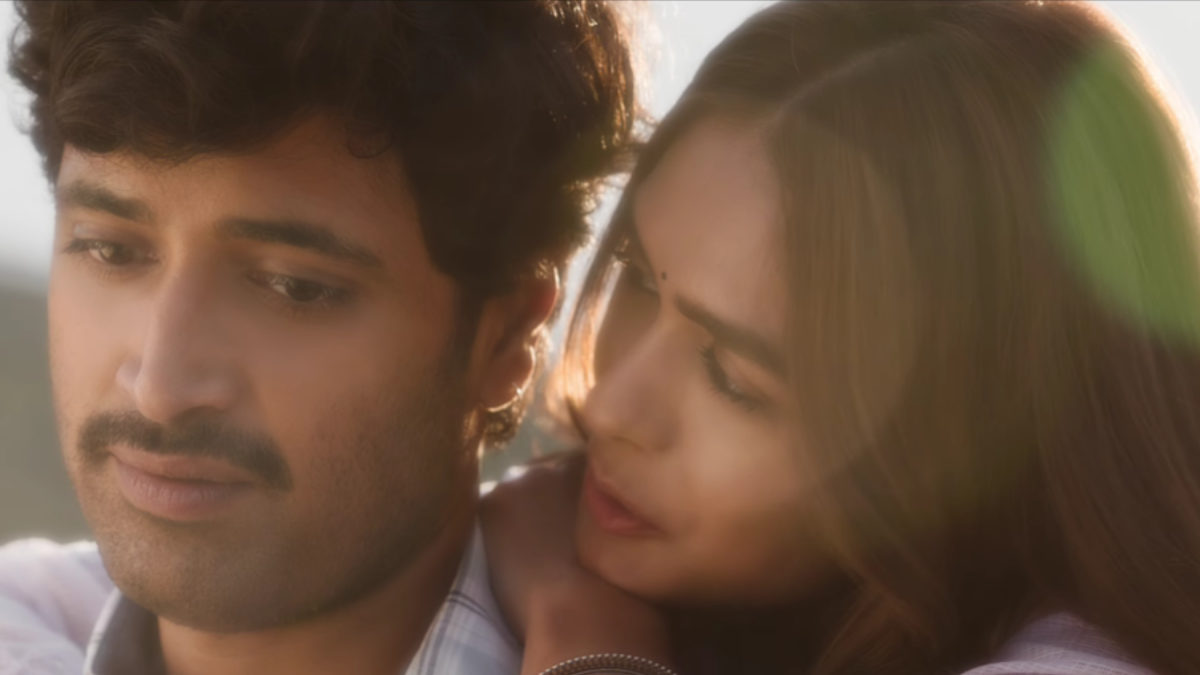
There is something quite unusual about Dacoit: Ek Prem Katha, and it is not really what the title makes you expect. When you first hear the name, you think it will be a typical story about dacoits, love, revenge, and drama set in a rural backdrop. Hindi films have explored this space many times before, often making it larger than life or emotional in a very familiar way. But this film seems to be going in a different direction. Instead of making the dacoit look heroic or larger than life, it is trying to show him as a flawed human being. It is trying to understand his mind, his emotions, and his choices in a more real and uncomfortable way. That simple change in approach makes the film feel very different from what we are used to seeing.
At the center of the film is Adivi Sesh, who has built a reputation for being deeply involved in his work. He is not just acting here. He is also shaping the character and the way the story unfolds. His role is not designed to be a typical hero that the audience easily likes. Instead, it is someone the audience may question and even judge. This is quite different from the usual style where heroes are simplified and made easy to root for.
Opposite him, Mrunal Thakur appears to have a strong and important role. She is not just reacting to what is happening around her. She is actually driving the story forward. Her character is not necessarily meant to be soft or traditionally likeable. She seems to be someone who takes strong decisions, and those decisions shape the emotional journey of the film.
Then there is the director, Shaneil Deo, who comes from a cinematography background. This is important because it usually means the film will focus a lot on visuals and mood. It may tell parts of the story through images rather than long dialogues. While this can make the film feel more real and immersive, it can also be a challenge because audiences often expect clear and direct storytelling.
From a trade point of view, what makes this film interesting is the gap between how it looks and what it actually is. The title sounds simple and massy, something that a wide audience can easily connect with. But the actual treatment of the story seems deeper and more intense. This difference can work in two ways. It can either surprise the audience in a good way or create confusion if expectations are not met.
There is also a bigger trend being tested here. Instead of relying on scale, big visuals, or larger than life storytelling, this film seems to focus on performances, writing, and emotions that are not always comfortable. At a time when pan India films are often associated with grand visuals, this film is asking whether strong emotions and honest storytelling can connect just as well.
The result of this experiment will matter not just for this film but for many others that may follow. Because sometimes the bigger challenge is not making a grand film. The bigger challenge is making a truthful one.