
Sony Pictures Entertainment India is lining up one of its most aggressive and deliberately diversified theatrical slates in recent memory for 2026, with a clear emphasis on franchise strength, filmmaker-driven originals, and a sustained year-long presence across genres and formats. The studio’s calendar is designed less like a traditional “event-heavy summer push” and more like a quarter-by-quarter occupation of the release corridor, ensuring Sony remains a constant theatrical player rather than a seasonal one.
The year opens decisively in January, signalling Sony’s intent to dominate the early calendar with genre-led event cinema. The studio launches with 28 Days Later: The Bone Temple on 16 January, a continuation of the universe created by Danny Boyle and Alex Garland but now reinterpreted by director Nia DaCosta. Headlined by Jodie Comer, Aaron Taylor-Johnson, Jack O’Connell, Alfie Williams, Ralph Fiennes and Edvin Ryding, the film pushes the franchise into darker thematic territory, reframing survival horror around the moral collapse of humanity rather than the infected themselves. The dual-language (English and Hindi) release underlines Sony’s confidence in the franchise’s reach beyond core genre audiences.
Just a week later, Sony pivots sharply into high-concept science fiction with Mercy (3D), directed by Timur Bekmambetov and starring Chris Pratt and Rebecca Ferguson. Positioned as a tense, real-time courtroom thriller set in the near future, the film hinges on a 90-minute countdown in which an AI judge must be convinced of a man’s innocence. The January pairing alone reflects Sony’s early-year strategy: prestige horror followed by commercial sci-fi, both mounted as theatrical experiences rather than streaming-adjacent titles.
February becomes one of Sony’s most densely packed months, reflecting a deliberate attempt to service multiple audience segments simultaneously. On 6 February, the studio brings Scarlet, a Japanese anime feature from Mamoru Hosoda, to Indian screens. The film blends medieval fantasy with time-bending emotional drama and reinforces Sony’s growing confidence in anime as a theatrical proposition. A week later, on 13 February, Sony executes a rare dual release: , an original animated sports action-comedy from Sony Pictures Animation, and Crime 101, a gritty Los Angeles–set crime thriller directed by Bart Layton and led by Chris Hemsworth, Mark Ruffalo and Halle Berry. The counter-programming here is telling — family animation on one hand, adult crime drama on the other — ensuring maximum footprint over the Valentine’s corridor.
March is reserved for scale. Project Hail Mary, releasing on 20 March in IMAX, positions itself as Sony’s first true four-language (English, Hindi, Tamil, Telugu) tentpole of the year. Directed by Phil Lord and Christopher Miller and starring Ryan Gosling and Sandra Hüller, the film leans into cerebral science fiction but is mounted as an emotional, large-format spectacle, reinforcing Sony’s commitment to premium formats rather than volume-driven releases.
After a measured pause in April, Sony returns in May and June with lighter, concept-driven titles. The Sheep Detectives arrives on 8 May, a darkly comic mystery once again directed by Lord and Miller, followed by Masters of the Universe on 5 June. The latter is one of Sony’s most overtly commercial plays of the year, with Travis Knight directing a large ensemble cast led by Nicholas Galitzine, Jared Leto, Idris Elba and Alison Brie. Released in four languages, the film is clearly positioned as a pan-India fantasy spectacle aimed squarely at younger audiences and franchise loyalists.
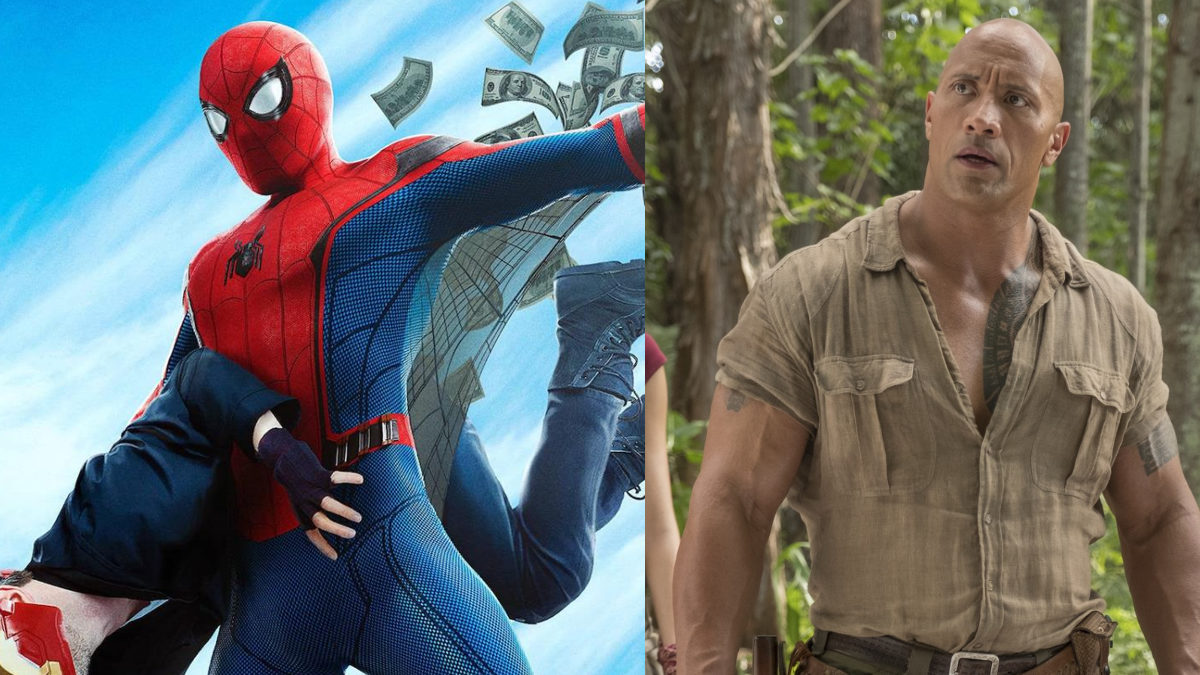
The studio’s most aggressive stretch begins in July, where Sony leans heavily into horror, disaster cinema and superhero IP. Shiver opens the month on 3 July, blending shark horror with extreme weather spectacle. On 24 July, Sony expands its horror footprint further with Evil Dead Burn, directed by Sébastien Vaniček, before shifting gears entirely with Spider-Man: Brand New Day on 31 July. Directed by Destin Daniel Cretton and starring Tom Holland, Zendaya and Sadie Sink, the film is Sony’s biggest mass-market event of the year, releasing in four languages and clearly anchoring the studio’s summer strategy.
August and September continue the genre momentum. An untitled Insidious sequel from Blumhouse arrives on 21 August, reinforcing Sony’s partnership-driven horror pipeline, followed by Resident Evil on 18 September. Directed by Zach Cregger, the film reimagines the franchise through a survival-horror lens, focusing on a courier trapped in an outbreak at a remote hospital — a setup that strongly favours tension over spectacle.
The final quarter shifts decisively toward prestige and franchise closure. The Social Reckoning, directed by Aaron Sorkin and releasing on 9 October, brings politically charged drama into Sony’s slate, examining whistleblowing within Facebook through the lens of an engineer and a reporter. This is followed on 6 November by Archangel, another Sorkin-directed project positioned as a muscular action drama. The year closes with Jumanji 3 in December, returning one of Sony’s most reliable global franchises to the big screen in IMAX, again releasing across four Indian languages.
What stands out is not just the volume but the calibrated rhythm of the slate. Sony is not betting the year on two or three oversized tentpoles; instead, it is spreading risk and reward across horror, animation, anime, sci-fi, superhero cinema and prestige drama. The multilingual strategy is consistent, premium formats are used selectively rather than indiscriminately, and genre films are clearly being treated as theatrical-first assets.
In short, Sony Pictures Entertainment India’s 2026 slate reads less like a content dump and more like a carefully sequenced exhibition strategy — one designed to keep the studio visible, relevant and commercially active across the theatrical year.