
There was a time when Hindi cinema could communicate rage, defiance, heartbreak, or moral collapse without resorting to explicit language. A pause, a look, a sharply written line, or even silence was enough to carry meaning. Today, that cinematic restraint appears to be steadily eroding, replaced by an increasing dependence on cuss words—as if communication itself risks sounding incomplete without them.
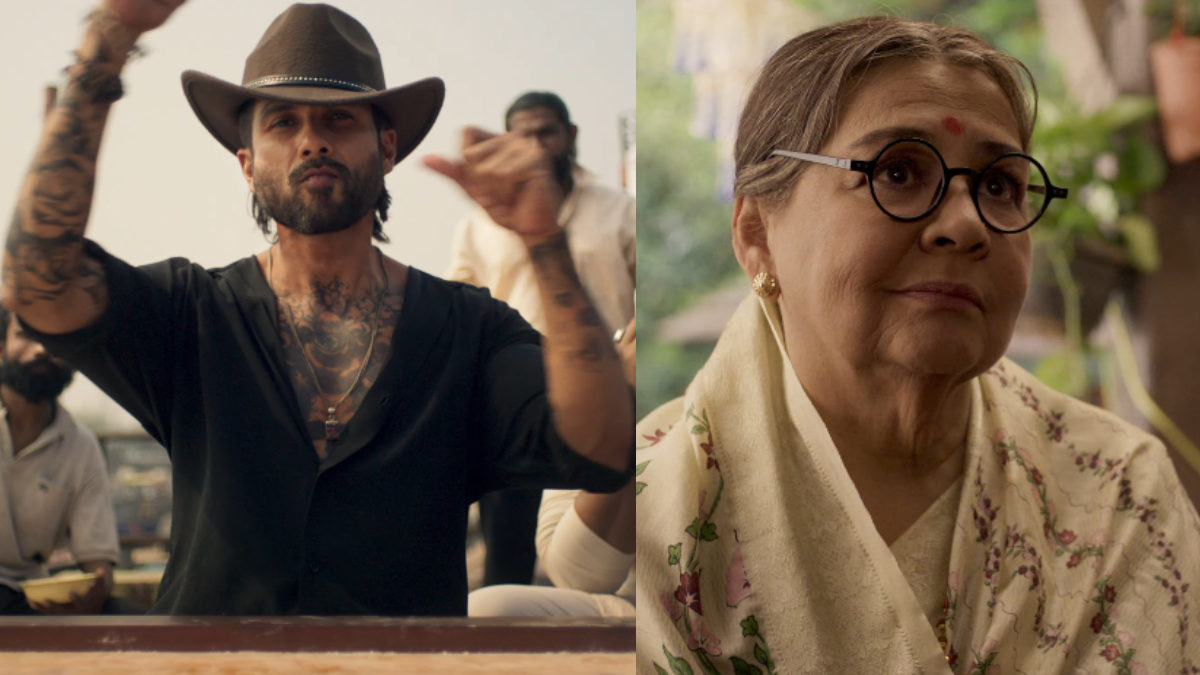
The latest case in point is the teaser of O’Romeo, where a cuss word is delivered by none other than Farida Jalal. The moment stands out not merely for the word used, but for who uses it. Jalal has, for decades, embodied emotional dignity and understated strength on screen. Seeing a veteran of her stature mouth an expletive instantly shifts the conversation from shock value to something deeper: how normalised profanity has become in contemporary Hindi cinema, and how even its most seasoned performers are now expected to adapt to this new tonal grammar.
Filmmakers often justify the rise of abusive language in the name of realism. The defence is familiar—“this is how people speak today.” There is some truth in that claim, particularly in stories rooted in specific social or geographical realities. But the question is no longer about inclusion; it is about excess. When profanity becomes a default setting rather than a deliberate choice, it stops serving the narrative and starts serving attention economics—designed to provoke reactions, trend online, and ensure instant recall.
What makes this shift more telling is that cuss words are no longer confined to characters from the margins—gangsters, rebels, or anti-heroes. They now surface in romantic dramas, family narratives, and supposedly light-hearted stories. The language has moved from being contextual to being cosmetic. It is no longer about who the character is, but about how “current” the film wants to sound.
Farida Jalal’s presence in such a moment also hints at an unspoken industry pressure. When senior actors—who once conveyed emotional depth through restraint—agree to such dialogue, it reflects a wider belief that subtlety may no longer be enough to hold audience attention. The underlying fear seems to be that without sharp, abrasive language, a scene risks being dismissed as dated or toothless.
Streaming platforms have undoubtedly played a role in this shift. Audiences exposed to global content are now desensitised to strong language, and Bollywood is responding to that conditioning. But reaction-driven storytelling comes at a cost. When every emotion is underlined with an expletive, the impact flattens. Loudness replaces depth, and shock replaces substance.
Ironically, some of Hindi cinema’s most enduring and powerful moments remain completely profanity-free. Their strength lies in writing, performance, and emotional honesty rather than verbal aggression. Which brings the debate full circle: is communication in Bollywood truly incomplete without cuss words, or has the industry simply lost faith in silence, nuance, and its own storytelling muscle?
The moment in O’Romeo may fade once the film releases, but it leaves behind a telling marker. It captures a phase where Hindi cinema is negotiating relevance through language—sometimes thoughtfully, often hastily. The real challenge ahead is not about avoiding cuss words altogether, but about remembering that they are tools, not crutches. When used without purpose, they reveal less about society and more about cinema’s growing impatience with subtlety.