
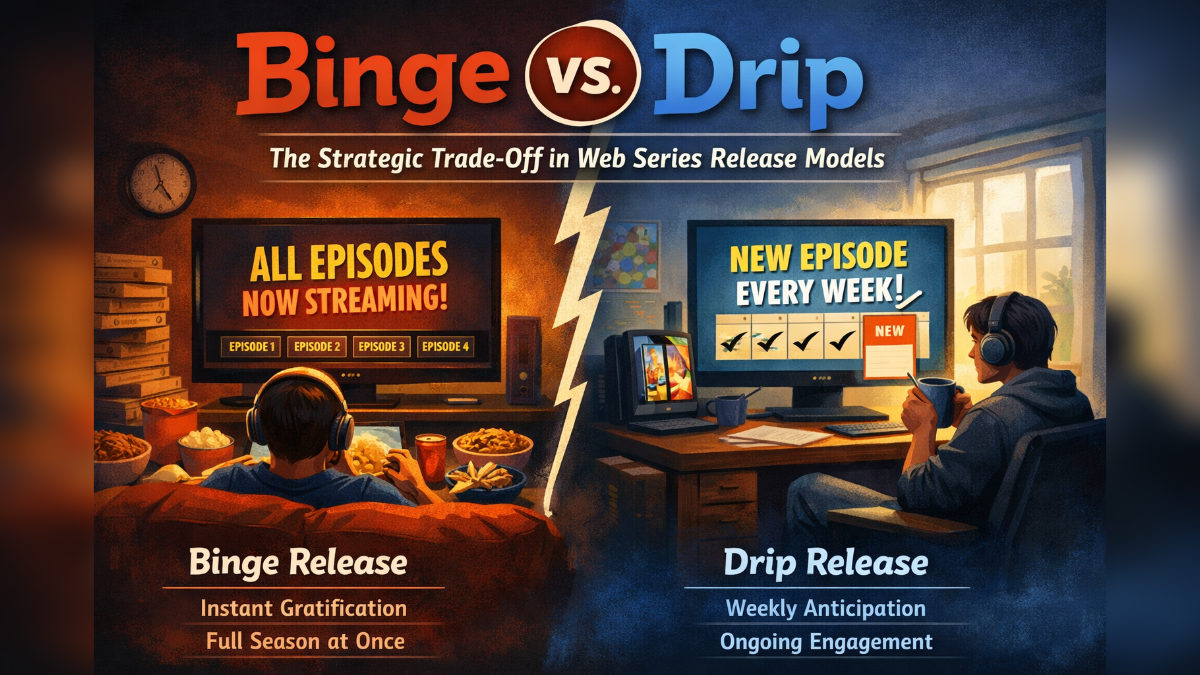
In the early years of the streaming boom, releasing an entire season of a series in one go became the defining feature of digital platforms. The binge drop did more than change how audiences watched television. It reshaped viewing habits, marketing strategies, and even storytelling structures.
Over time, however, the industry began to reconsider the model. As competition intensified and subscriber growth slowed, many platforms experimented with daily and weekly episode releases. What once looked like a simple format choice is now a strategic lever in the streaming economy.
Today, the debate is less about whether binge watching is popular and more about which release strategy delivers stronger long-term value.
The Case for the Binge Drop
The biggest advantage of releasing all episodes at once is the surge of immediate engagement it can generate. When viewers have access to an entire season on launch day, the barrier to continued viewing disappears. Episodes roll into one another, and viewers often consume several at a time.
For platforms, this can produce strong early metrics. Completion rates rise, watch time accumulates quickly, and the show can climb into trending lists within days. The concentrated viewing window also works well with recommendation algorithms that reward heavy engagement.
Marketing campaigns benefit from the simplicity of the model. Promotion can focus on a single launch moment, with publicity, reviews, and social media conversation all converging around the premiere week.
The binge model is particularly effective for heavily serialized storytelling. Complex plots, layered mysteries, and long narrative arcs can be easier for audiences to follow when episodes are consumed in quick succession rather than spread across several weeks.
The Limits of Instant Consumption
The very intensity that drives early engagement can also shorten a show’s lifespan. Series released in full often experience a rapid cycle of attention: a burst of conversation over a few days followed by a swift decline as viewers move on.
In a crowded streaming landscape, that compressed window can limit long-term cultural impact. Once audiences finish the season, there are fewer reasons for the show to stay in the public conversation.
Marketing momentum can also fade quickly. Without new episodes arriving week after week, there are fewer natural moments to revive press coverage or social media buzz.
For platforms increasingly focused on retention, this dynamic presents a challenge. A viewer can subscribe, binge an entire season over a weekend, and cancel soon after. As the streaming market matures, the industry is paying closer attention to strategies that keep audiences engaged for longer stretches.
Why Periodic Releases Are Making a Comeback
Daily and weekly release schedules offer a different advantage: sustained engagement. Each new episode becomes a recurring touchpoint that brings viewers back to the platform.
Weekly releases also extend the life of a series in the public conversation. Cliffhangers encourage speculation, fan communities dissect episodes, and social media discussions build momentum between installments. In some cases, the discussion surrounding a show can last for months.
From a business perspective, periodic releases also support subscriber retention. Viewers who want to follow a show through its entire run must remain engaged with the platform over a longer period.
The format can also turn individual episodes into events. Major reveals or season finales can become cultural moments that draw large audiences at the same time, something the binge model rarely replicates.
The Trade-Offs of Slower Rollouts
Periodic releases are not without drawbacks. In an environment built on on-demand convenience, some viewers find the waiting cycle frustrating. Audiences accustomed to binge viewing may delay watching until an entire season becomes available.
For highly serialized shows, long gaps between episodes can also disrupt narrative immersion. Complex plots that unfold over multiple timelines or characters may be harder to follow when episodes are spaced a week apart.
Daily releases attempt to strike a balance by maintaining narrative momentum while still stretching engagement across several days. Yet they still lack the sustained anticipation that weekly models can generate.
Toward a Hybrid Strategy
Increasingly, streaming platforms are experimenting with hybrid release models that combine elements of both approaches. A common strategy is to launch with two or three episodes at once before shifting to weekly drops. This gives audiences enough story to become invested while preserving the long-term engagement benefits of a staggered schedule.
The choice of release model is also becoming more genre-specific. Serialized thrillers and limited series may benefit from binge consumption, while reality shows, franchise dramas, and big-budget tentpoles often perform better with weekly installments that sustain conversation.
What is clear is that release strategy has become a programming decision rather than a default format. In the early streaming era, the binge drop helped differentiate digital platforms from traditional television. Today, the industry is less concerned with disrupting old models and more focused on maximizing attention in a crowded marketplace.
As the streaming economy continues to evolve, the most effective approach may not be choosing between binge and drip, but deploying each strategically. For platforms balancing audience engagement, subscriber retention, and cultural impact, how a show is released can be almost as important as the show itself.