
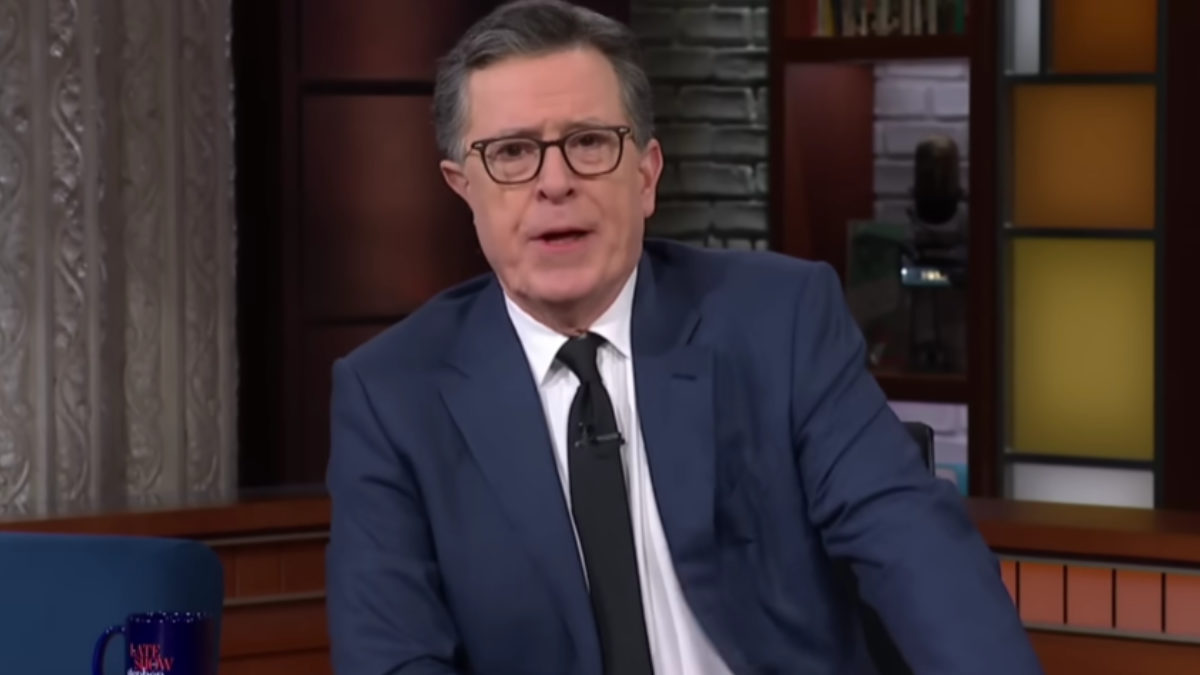
Stephen Colbert is reflecting on one of the biggest creative pivots of his late-night career, revealing that the political tone of The Late Show with Stephen Colbert was not always the plan, but became essential to its success. In a recent interview with The New York Times, Colbert shared that when he first transitioned from The Colbert Report to CBS, his instinct was to move away from politics. At the time, he wanted a broader, more traditional late-night format that did not rely heavily on current events or political commentary.
He admitted he was wary of engaging too deeply with what he saw as an increasingly tense and divided public discourse, and instead hoped to explore other forms of humor.
That approach did not last long.
According to Colbert, a turning point came during the 2016 political convention season. As the news cycle intensified, he felt pulled back toward the kind of sharp, political satire that had defined his earlier career. The shift was reinforced by advice from his longtime collaborator and producer Paul Dinello, who encouraged him to embrace that side of his comedic voice again. Dinello told him plainly that audiences enjoyed seeing him engage politically, and that it was the part of the show that resonated most.
Colbert compared the moment to metaphorically digging up something he had tried to bury. Once he leaned back into political humor, the show found its footing and grew into one of the most talked-about late-night programs of its era. His commentary, often critical of public figures including Donald Trump, became a defining feature of the show’s identity.
Now, as the show approaches its end, Colbert is also addressing the decision by CBS to cancel the long-running franchise. The network announced in July 2025 that The Late Show would conclude, citing financial pressures and the broader challenges facing traditional broadcast television in the age of streaming and digital platforms.
Colbert acknowledged that the economics of late-night television have shifted dramatically. With platforms like YouTube and streaming services competing for audience attention, monetizing traditional broadcast formats has become increasingly difficult. He said he does not dispute CBS’s stated reasons, even as speculation continues about whether external political factors may have played a role in the decision, especially given ongoing regulatory scrutiny tied to corporate mergers involving the network’s parent company.
At the same time, Colbert pointed out that the situation is not entirely straightforward. He noted that less than two years before the cancellation, CBS had been eager to secure him for a longer tenure, suggesting that something significant changed behind the scenes.
As The Late Show prepares to air its final episodes, Colbert’s reflections highlight both the evolution of his own comedic approach and the broader transformation of late-night television. What began as an attempt to step away from politics ultimately became a defining strength, shaping the show’s voice and legacy in a rapidly changing media landscape.