
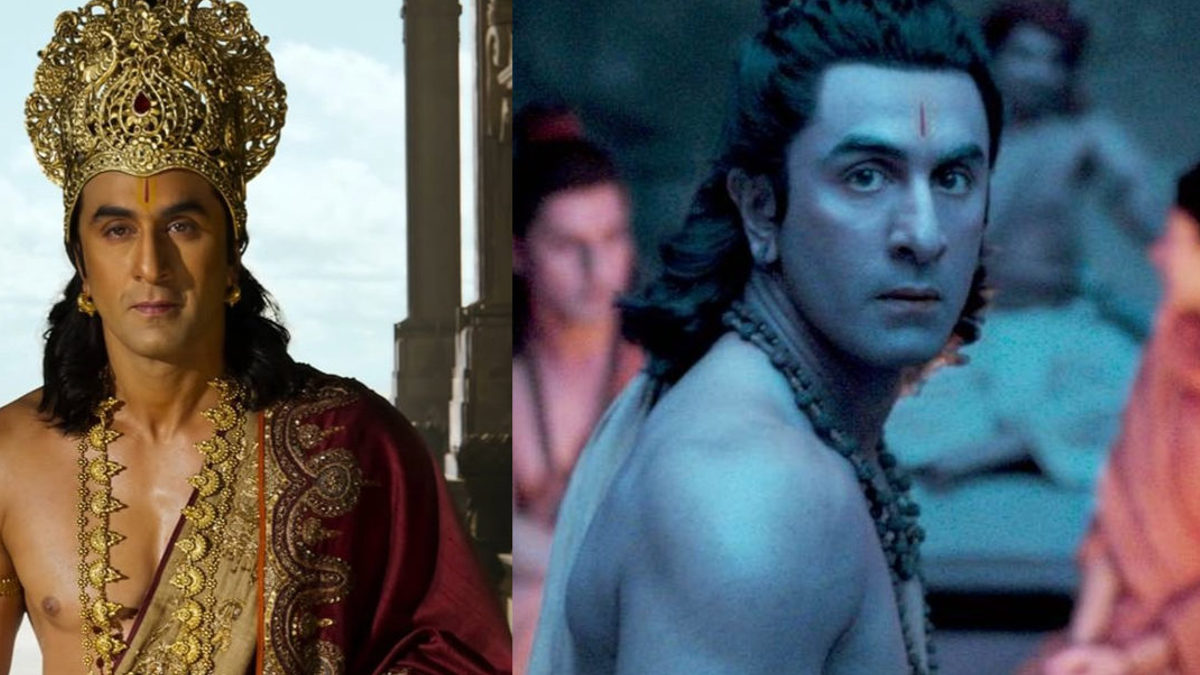
The first glimpse of Rama, directed by Nitesh Tiwari, was released on April 2 to celebrate Hanuman Jayanti. The teaser impressed audiences with its grand scale and visuals, along with Ranbir Kapoor playing the lead role. However, instead of only praise, it also started a debate online about the film’s title. Many people, especially in North India, questioned why the film is called “Rama” instead of the more commonly used “Ram”. Some even believed that the extra “a” at the end was added to make it sound more Western.
But this idea is not correct. The name “Rama” actually comes from Sanskrit, where the original word is written as Rāma. In this language, the final “a” is an important sound and part of the word itself. It is not something added later. Over time, languages like Hindi changed how words are spoken. This is due to something called Schwa Deletion, where the last “a” sound is dropped while speaking. That is why many people say “Ram” instead of “Rama” today.
The filmmakers have chosen “Rama” to stay closer to the original version of the story. This also helps connect with audiences across India. In South Indian languages, people still use names like Rama, Ramudu, or Raman, which are closer to the Sanskrit pronunciation. So using “Rama” makes the film more inclusive for a wider audience, not just Hindi speakers.
Another reason for this choice is the global reach of the film. Producer Namit Malhotra is planning to release the movie worldwide, including IMAX screens during Diwali 2026. Around the world, books and translations of the Ramayana already use “Rama”. This makes it easier for international viewers to connect with the story.
At the same time, both “Ram” and “Rama” are correct in their own way. “Ram” is widely used in daily life and prayers in North India, while “Rama” is the original form found in ancient texts. Some confusion has also come from pronunciation, as people may stretch the last sound, which changes its meaning.
Despite the debate, the film has already gained huge attention. With Part 1 set to release in Diwali 2026 and Part 2 planned for 2027, the makers are focusing on authenticity in both visuals and language. By choosing “Rama”, they are trying to stay true to the roots of the epic while reaching audiences around the world.