
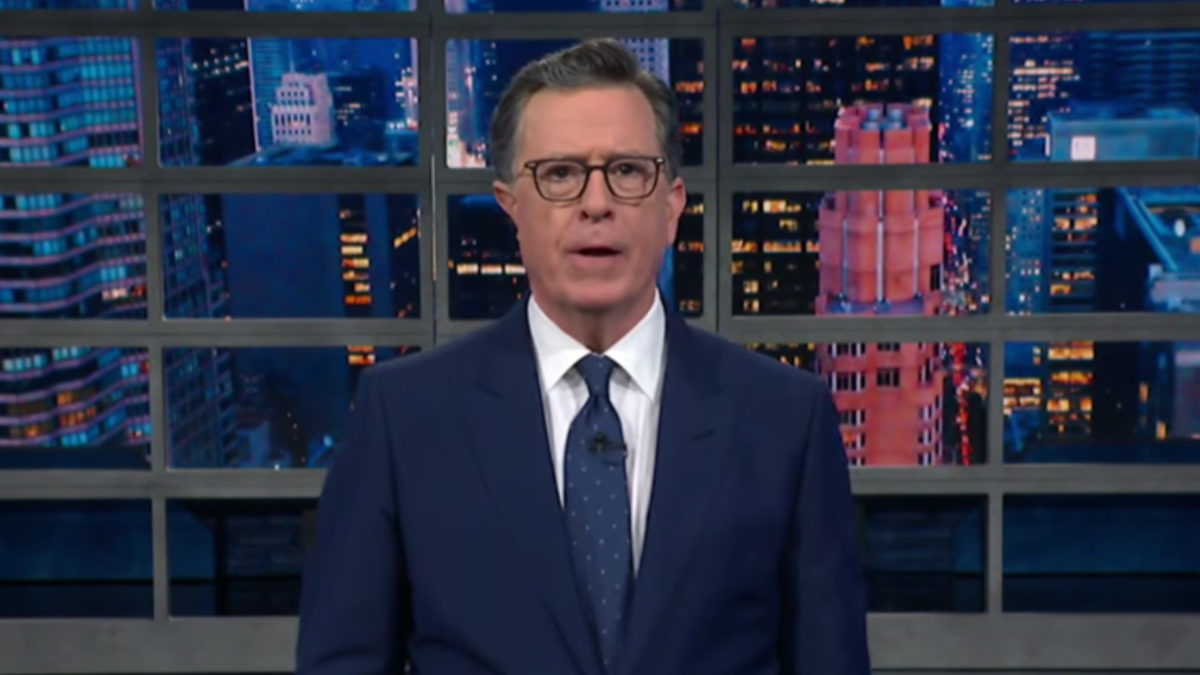
Stephen Colbert signed off from The Late Show with a monologue that felt surprisingly familiar. Rather than turning the finale into a sentimental farewell, the longtime host delivered a typical opening segment packed with jokes about current events, pop culture, and life after late night television. Opening the final episode, Colbert reflected on the show’s 11-year run at New York City’s Ed Sullivan Theater. He joked that while audiences know the program began in 2015, his “real” first show was supposedly broadcast from a public access station in Michigan for just 12 viewers. The self-deprecating humor set the tone for a finale that balanced nostalgia with comedy.
One of the night’s biggest laughs came when Colbert revisited his popular “First Drafts” segment. Showing a greeting card that read, “This isn’t goodbye, it’s see you later,” he revealed the fictional original version, which instead asked, “This isn’t goodbye. How do you start an OnlyFans?” The joke immediately fueled speculation about what projects the host could pursue next after leaving late night television.
Although Colbert avoided directly mentioning President Donald Trump during the monologue, he continued his trademark approach of commenting on news headlines. He joked about sinkholes disrupting parts of New York City, including incidents near LaGuardia Airport and in the Bronx. Colbert quipped that even sinkholes seemed determined to avoid Staten Island.
The host also targeted several unusual stories making headlines, including concerns about hantavirus and reports involving a vaccine skeptic who specializes in penile implants. Another segment focused on a dancing robot from China, with Colbert joking that its clumsy performance offered hope that machines might not be ready to take over the world after all.
Throughout the monologue, celebrities repeatedly interrupted the audience. Familiar faces including Bryan Cranston, Tim Meadows, and Paul Rudd appeared to jokingly ask whether they could be the final guest on the program.
The episode represented the end of an era for late-night television. Rather than delivering a lengthy goodbye speech at the beginning, Colbert chose to spend much of his final monologue doing what viewers had watched him do for more than a decade: turning the day’s headlines into comedy.
The result was a farewell that stayed true to the show’s identity. Even on its final night, The Late Show with Stephen Colbert remained focused on humor, current events, and the kind of sharp observations that defined Colbert’s tenure behind the desk.