
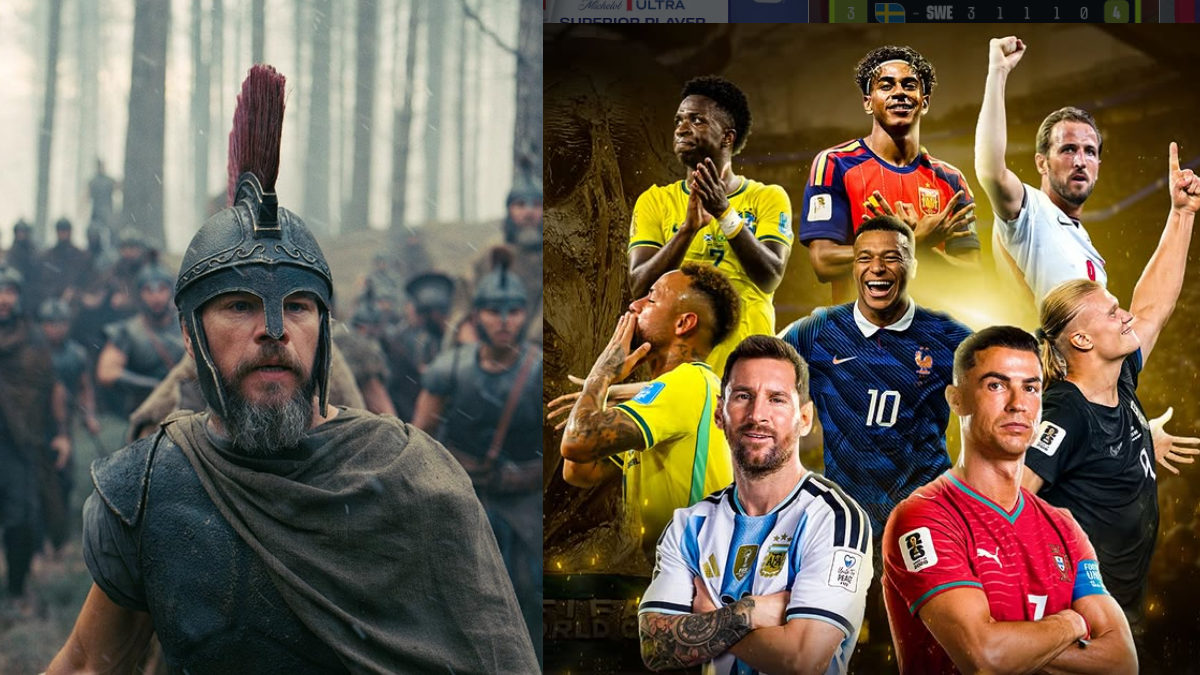
Hollywood and global sports rarely find themselves competing for audience attention on the same weekend, but Christopher Nolan’s The Odyssey appears set to do exactly that. With the filmmaker’s ambitious adaptation of Homer’s epic opening in U.S. theatres on July 17, 2026, just two days before the 2026 FIFA World Cup Final on July 19, the entertainment industry is watching closely to see how moviegoing and one of the world’s biggest sporting events will coexist.
A new survey conducted by entertainment discovery platform JustWatch suggests that, rather than forcing audiences to choose between the two, most Americans are planning to make room for both. According to the survey, awareness of the scheduling overlap remains surprisingly low. Only 20 percent of respondents knew that The Odyssey and the FIFA World Cup Final fall on the same weekend, indicating that the potential clash has yet to register with a large section of the public.
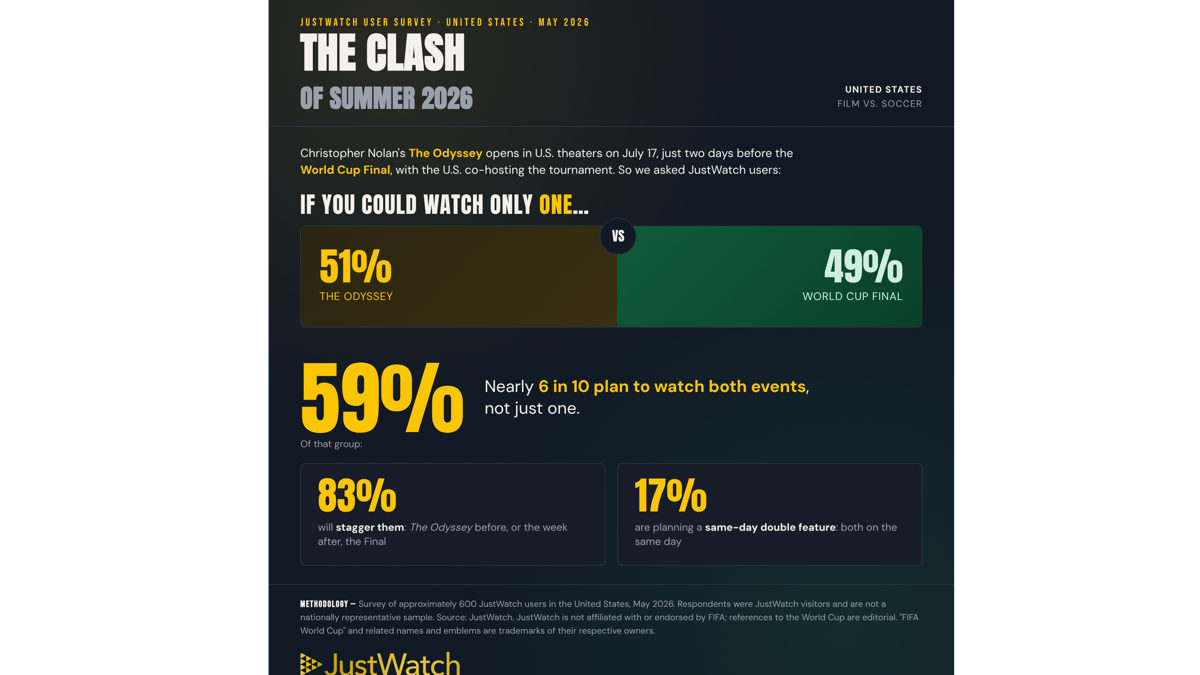
However, once respondents were informed of the overlap and asked to choose just one event, opinions were almost evenly divided. Fifty one percent said they would pick The Odyssey, while 49 percent opted for the World Cup Final. The near split is notable considering the FIFA World Cup Final is among the most watched sporting events in the world and the 2026 tournament is being jointly hosted by the United States, Canada and Mexico, making it an especially significant edition for American audiences.
The survey’s biggest takeaway is that most consumers are refusing to treat the weekend as an either or proposition. Nearly six in ten respondents, or 59 percent, said they intend to both watch The Odyssey and tune into the World Cup Final.
The findings also suggest that audiences are already planning around the scheduling conflict. Among those intending to experience both, 83 percent said they would watch Nolan’s film either before the Final or sometime during the following week, reducing the likelihood that the sporting event will significantly dent the film’s overall attendance. Another 17 percent said they plan to turn the weekend into a double event by watching both the movie and the championship match on the same day.
The survey becomes even more interesting when looking at committed football fans. Among respondents identifying themselves as “absolute soccer fans,” 97 percent said they would prioritise the FIFA World Cup Final if forced to choose. Yet enthusiasm for Nolan’s latest film remains remarkably strong even within that group, with 76 percent saying they still plan to see The Odyssey after the match.
Mike Pearce, Streaming Insights Lead at JustWatch, described the overlap as an unusual entertainment scheduling challenge rather than a direct battle for audiences.
“It’s a major viewing dilemma for fans. Summer 2026 was expected to belong to the World Cup. It’s surprising that more U.S. fans would rather miss the Final than miss opening weekend for The Odyssey. The World Cup Final only comes around once every four years, yet The Odyssey is generating the kind of anticipation that makes people feel they need to see it as soon as possible. For many fans, the question isn’t whether they’ll watch the movie or the match. It’s how they’re are going to fit both into the same weekend.”
For the exhibition business, the survey offers encouraging signs. Instead of suggesting that one event will cannibalise the other, the data points toward complementary consumer behaviour, with audiences adjusting their schedules rather than abandoning either experience. Premium format screenings, advance bookings and repeat weekend traffic could help The Odyssey maintain strong momentum even as global attention shifts to the World Cup Final.
The results also underscore the extraordinary anticipation surrounding Nolan’s latest project. Few films have demonstrated enough cultural pull to compete, even hypothetically, with the FIFA World Cup Final. If the survey reflects actual consumer behaviour, the July 17 to July 19 weekend could become one of the most closely watched case studies in how blockbuster cinema and live sports can successfully share the spotlight rather than compete for it. The findings are based on a new JustWatch survey released ahead of the film’s opening and offer an early snapshot of audience intentions rather than final viewing behaviour.