
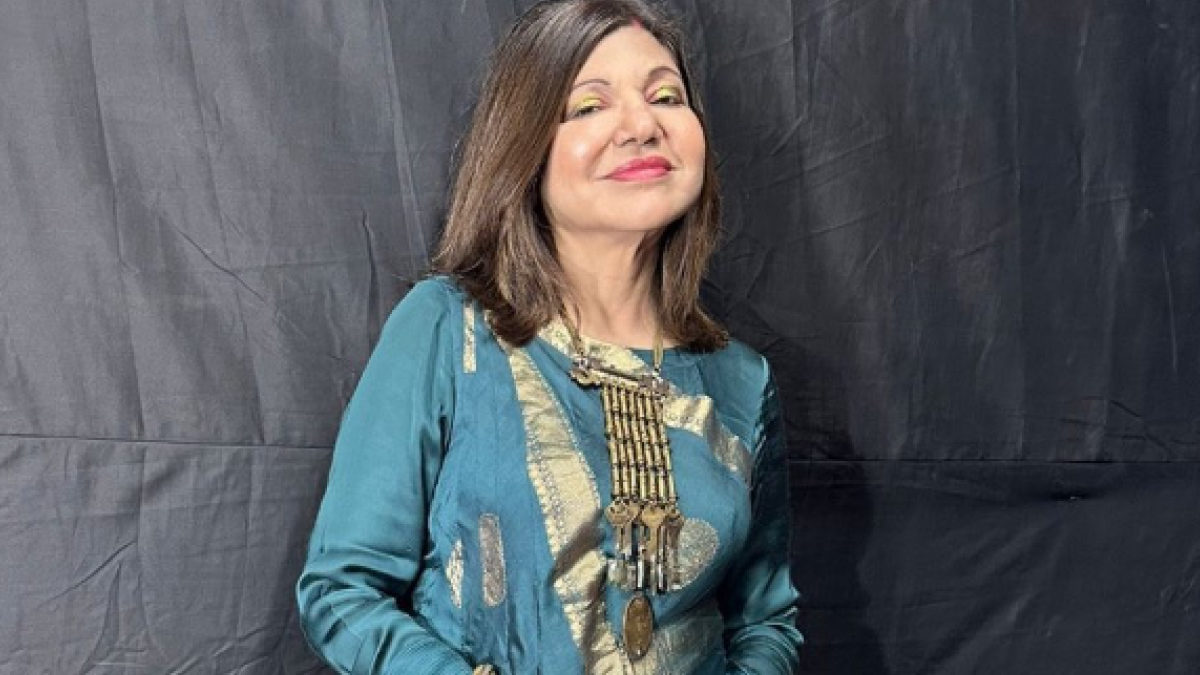
In the crowded recording studios of Mumbai in the early 1990s, musicians often knew within seconds whether a song would work. Sometimes the arrangement was wrong. Sometimes the lyrics fell flat. And sometimes the singer simply didn’t connect with the melody. But when Alka Yagnik stepped into the recording booth, composers say something unusual happened. The room quieted. The musicians leaned forward. And the song began to breathe.
For nearly three decades, her voice became inseparable from the emotional landscape of Hindi cinema. It carried flirtation, heartbreak, longing, celebration, and nostalgia. It belonged to countless heroines on screen yet somehow remained unmistakably her own.
The journey to becoming Bollywood’s defining female voice of the 1990s, however, began far from the glamour of film studios.
Alka Yagnik was born into a Gujarati family in Kolkata, a city whose musical culture has shaped generations of classical performers. In her home, music was not an ambition. It was routine.
Her mother, Shubha Yagnik, was a respected classical vocalist who regularly performed on All India Radio. The young Alka often accompanied her to the station, quietly absorbing rehearsals and performances long before she fully understood what a professional music career meant.
By the age of six, she was already singing bhajans for radio broadcasts.
Producers at All India Radio began noticing something unusual. Even as a child, her pitch rarely wavered. Her voice carried a natural sweetness, but also a clarity and steadiness that many trained singers struggle to achieve.
Her mother recognized the potential early and introduced her to rigorous classical training. Mornings often began with long sessions of riyaaz before school, a discipline that slowly shaped the control and breath stability she would later be known for.
Then came the decision that would change everything.
When Alka was around ten years old, her mother travelled with her to Mumbai to explore the possibility of playback singing. Through industry contacts, they managed to arrange a meeting with legendary filmmaker Raj Kapoor.
Kapoor listened carefully as the young girl sang. He was impressed, but he was also honest. Her voice, he felt, was still too youthful for the heroines of Hindi cinema.
Rather than dismissing the possibility, he suggested they meet composers Laxmikant–Pyarelal and return once her voice matured.
The composers offered two choices. She could begin immediately as a child singer or wait until her voice developed into a playback voice suited for leading actresses.
Her mother chose patience.
Looking back, it was the decision that quietly set the stage for everything that followed.
Through the early 1980s, Alka took on smaller assignments and slowly familiarised herself with the workings of recording studios. Her early film work included songs for Payal Ki Jhankaar, but widespread recognition still felt distant.
Then came 1988.
The film Tezaab needed a high-energy dance track for a rising star named Madhuri Dixit.
The song was Ek Do Teen.
During the recording session, musicians remember composer Laxmikant pushing the tempo repeatedly. The song demanded razor-sharp diction because every syllable had to match fast choreography.
After hours of recording, the final take burst with an infectious energy.
When the song released, it became a nationwide sensation. Madhuri Dixit’s electrifying performance and Alka Yagnik’s voice fused so seamlessly that audiences began associating the actress’s on-screen charisma with Yagnik’s singing.
The song earned Alka her first Filmfare Award for Best Female Playback Singer, but more importantly, it changed the trajectory of her career.
What followed was not just a run of hit songs, but the emergence of a voice capable of remarkable versatility.
Playback singing demands an unusual skill. The singer must disappear into the character on screen.
Few artists mastered that ability as naturally as Alka Yagnik.
Her voice could sound playful, romantic, mischievous, or deeply vulnerable depending on the actress she sang for. Composers often described this as emotional neutrality. She could reshape her tone to match the personality of the character rather than imposing her own identity on the song.
For Kajol, her voice carried youthful mischief. For Aishwarya Rai, it felt soft and graceful. For Preity Zinta, it sparkled with bright playfulness.
This adaptability helped define the romantic soundtracks of the 1990s.
Songs like the title track of Kuch Kuch Hota Hai and the lyrical Taal Se Taal Mila revealed a voice that could balance technical precision with emotional vulnerability.
Behind many of those iconic recordings are stories musicians still remember.
Playback legend Kumar Sanu once recalled arriving for a duet recording expecting several rehearsal takes. Alka listened quietly to the melody, studied the lyrics, and stepped into the booth.
She recorded her entire portion in a single take.
For sound engineers, this was hardly surprising. Years of classical training had given her extraordinary breath control and pitch stability.
Composer A. R. Rahman noticed another distinctive quality during the recording of Taal. Her first take often carried the most authentic emotional expression. Rahman began asking engineers to preserve early takes rather than assuming later versions would necessarily be better.
Then there was her enduring partnership with Udit Narayan, whose duets with Alka helped shape the romantic sound of an entire decade.
While recording the title track of Kuch Kuch Hota Hai, Alka suggested softening the opening line so the emotion would feel more tentative, reflecting the characters’ uncertainty. That small adjustment subtly altered the emotional tone of the song.
During the peak of Bollywood’s cassette era, the industry operated at a relentless pace. Playback singers often moved between studios throughout the day.
Musicians recall days when Alka Yagnik recorded multiple songs for different composers across Mumbai — a morning session in one studio, an afternoon duet in another, and a late evening recording for a dance track.
Despite the demanding schedule, she was known for quietly studying lyric sheets before every take, absorbing the emotional tone of the song before stepping into the booth.
Preparation allowed her to deliver performances that felt effortless even under intense time pressure.
Decades after the peak of her film career, Alka Yagnik unexpectedly returned to global headlines.
Streaming data in 2022 revealed that she had become one of the most streamed artists in the world, driven largely by the enduring popularity of 1990s Bollywood music.
Songs from films like Dilwale Dulhania Le Jayenge and Kuch Kuch Hota Hai continue to be played millions of times across streaming platforms.
For a singer who began her journey performing devotional songs on radio in Kolkata, the digital resurgence feels almost poetic.
Unlike many stars of her generation, Alka Yagnik rarely cultivated a public persona beyond the recording studio.
Her legacy lives where it always belonged: in the songs themselves.
For listeners who grew up through the 1990s and early 2000s, Bollywood romance often carries a particular sound. Warm, expressive, slightly playful, and unmistakably emotional.
More often than not, that sound belongs to Alka Yagnik.
Not because she tried to dominate the music, but because she understood something essential about playback singing: the audience must believe the emotion before they notice the voice.