
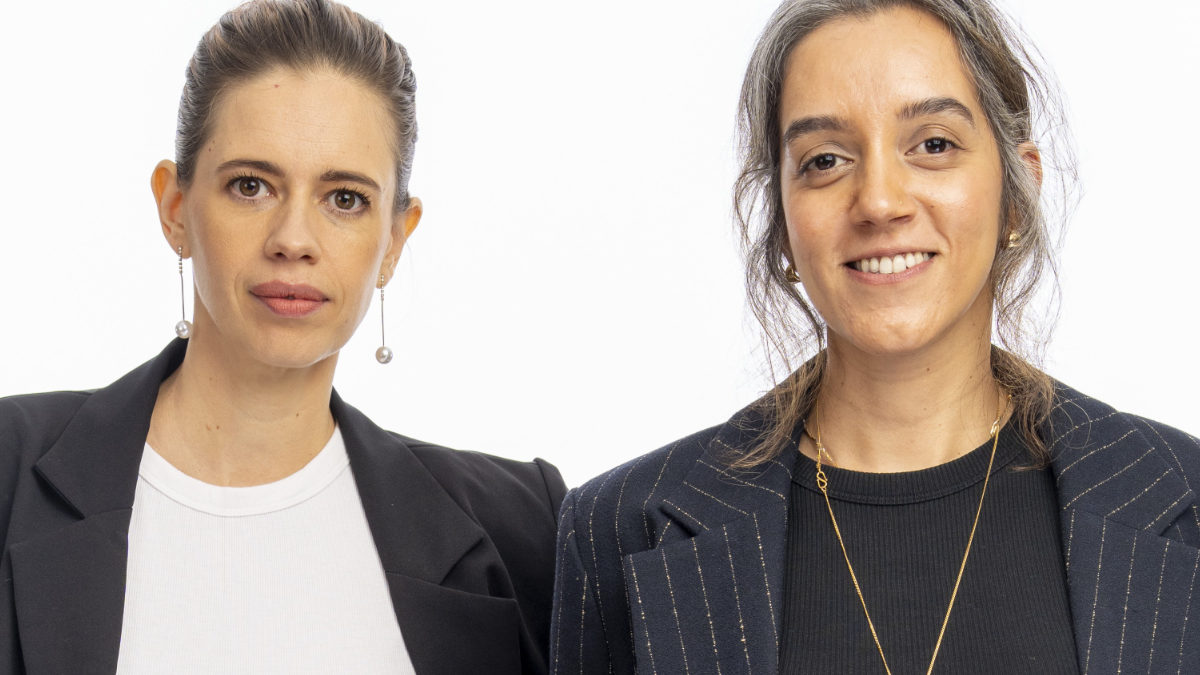
What happens when motherhood changes not just a woman’s life but her very sense of self? This question lies at the heart of Belly of the Beast, Aadyam Theatre’s third production of the season. Adapted from the book The Elephant in the Womb, the play is written by Kalki Koechlin and Sheena Khalid, and directed by Khalid.
The production follows five women at different stages of motherhood, from pregnancy and labour to postpartum life, raising young children and eventually learning to let go. As their lives evolve, they begin transforming into mythical creatures that reflect the emotional and physical intensity of their experiences. Drawing from real life stories and testimonies, Belly of the Beast explores motherhood in all its complexity, capturing moments that are beautiful, frightening, exhausting, tender and deeply personal, while remaining universally relatable.
Instead of relying solely on realism, the play uses mythology to explore the inner lives of its characters. At the centre of the story are five creatures: a dragon, a unicorn, a spider demon, a vampire and a werewolf. Each creature emerges from the emotional world of a woman, giving form to feelings that are often difficult to express, including fear, desire, rage, vulnerability and resilience. By moving between everyday life and fantasy, the production transforms intimate experiences into something larger, stranger and highly theatrical.
The world of the play is brought to life through shadow puppetry, live music and movement. Created in collaboration with acclaimed puppeteer Anurupa Roy, the shadow work allows the mythical creatures to exist alongside the performers, while an original live score by Guy Hershberg adds emotional depth to the storytelling. Together, these elements create a space where reality and imagination merge and often blur into one another.
The cast includes Kalki Koechlin, Kettan Singh, Amba Suhasini K. Jhala, Rachel D’Souza, Shanaya Rafaat and Shruti Vyas.
Speaking about the production and her involvement as both writer and actor, Kalki Koechlin said, “Pregnancy is tough, birth is gruesome and postpartum is hell, but more horrifying than all three is society’s completely casual approach to one of the most epic experiences life has to offer. Only when you become a mother do you awaken to the intensity and wonder of it all, to the sheer strength of character required to create life, and to transformations of mythic proportions that are unleashed upon mothers. This isn’t a cute play on the gift of motherhood; this is you walking straight into the belly of the beast.”
Director and co writer Sheena Khalid said the idea of adapting the book for the stage immediately appealed to her. “When I read Elephant in the Womb, I was immediately drawn to its world. It was playful and something that really left me intrigued. I have always been a fan of Kalki’s writing, so when she suggested adapting it for the stage, I was genuinely excited. I am not a mother, but the research for this play completely shifted in me. The conversations with friends, the stories of mothers, and a deep dive into what it actually means to grow a human being inside you, the challenges and the glory of it, revealed far more than I had anticipated.”
She also explained how the visual language of the production developed. “I found the graphic style of the novel intriguing. To preserve that intrigue, we thought that shadow puppetry and working with overhead projectors would work really well with the genesis of the book. Also, I always wanted to collaborate with Anurupa Roy, the puppeteer. So that’s kind of how all of these things started coming together.”
At its core, Belly of the Beast does not present motherhood as a single, universal experience. Instead, it embraces its contradictions, allowing love and exhaustion, care and rage, wonder and uncertainty to exist side by side. Compassionate, darkly humorous and visually inventive, the play offers an honest look at one of life’s most transformative journeys and the many changes that come with it.