
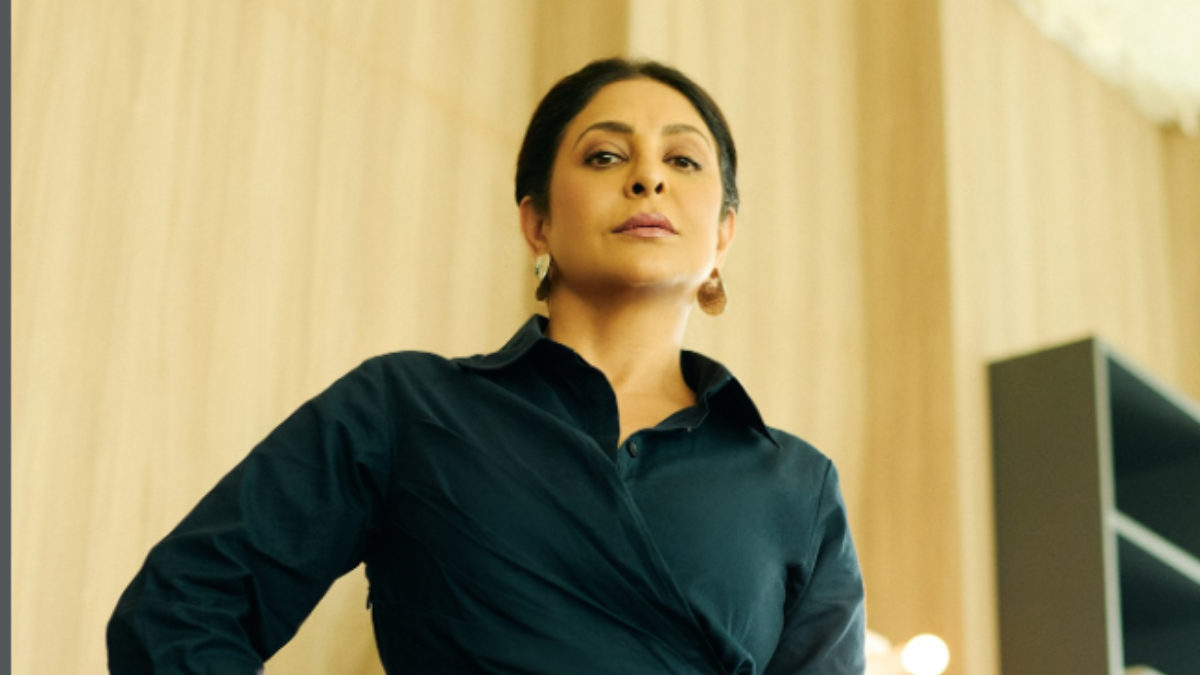
Acclaimed actress Shefali Shah has opened up about one of the most difficult phases of her life—her first marriage to actor Harsh Chhaya. The two tied the knot in 1994, but a few years into their relationship, they decided to part ways. Over the years, both have described their marriage as a turbulent chapter, and now Shefali has spoken candidly about the emotional toll it took on her and the lessons she learned from it.
In a recent conversation with Zoom, Shefali reflected on how society often conditions women to believe they need relationships to feel complete. “Nobody told me that you are enough. You don’t need a husband, a friend, a brother, a sister to be complete,” she said. According to her, while healthy relationships can add value to life, their absence should never define a person’s worth. She admitted that this realization came only after enduring significant emotional pain.
Shefali explained that there comes a moment in such situations when it becomes a matter of survival. “It comes to a point where it’s make or break for you. You realise, ‘Okay, this can kill me. I can’t do this anymore,’” she said, describing the turning point that pushed her to choose herself.
She also recalled a conversation with a close friend that deeply impacted her decision. Her friend asked her a life-altering question: what if she never found another partner? Would she still choose to leave the marriage? Shefali’s answer was clear. “If I have to live alone for the rest of my life, I will do it. But I cannot be somewhere that is not making me happy, confident, or treasured,” she shared.
The actress went on to address the often-dismissed reality of emotional abuse, stressing that it can be just as damaging as physical abuse. She pointed out how people tend to minimise such experiences by saying, “Well, he didn’t hit you, right?” She explained that repeated shouting, humiliation, and being made to feel foolish can slowly destroy a person’s sense of self.
“What you don’t realise is the kind of damage that is doing to you. It breaks you completely as a person,” Shefali said, adding that emotional abuse is frequently normalised as “common” in relationships. She felt compelled to speak up because so many people silently endure it without validation.
Through her honesty, Shefali Shah’s words serve as a powerful reminder about self-worth, boundaries, and the importance of recognising emotional abuse—no matter how invisible it may seem.