
There was a time when a single line like “how’s the josh” from Uri became a national emotion, and even today it continues to echo with pride. Now, a similar kind of wave seems to be building around Dhurandhar: The Revenge, and it is clearly not without reason. When I first watched the film, I felt it was impressive, but I also thought it might not have strong repeat value because of its intense violence and long action sequences. However, on watching it again, the experience completely changed. I began to notice finer details that I had missed earlier, and it made me realise something very important about filmmaking.
What truly stands out in both parts of Dhurandhar is its editing. It is tight, crisp, and incredibly effective. Interestingly, just when I was about to write about this second viewing experience, the film’s director himself shared a similar appreciation (on his X handle), highlighting the role of the editor as the real force behind the storytelling flow.
While watching the film, there were several moments that left me in awe, not because I was part of the hype, but because I genuinely look at cinema with a critical eye. There are many subtle details that can easily be missed if you watch the film casually. For instance, there is a small hand expression by Rakesh Bedi’s character at the end of a particular scene. It is such a tiny gesture, but it carries significant meaning.
I also want to mention the long clash just before the climax between Hamza and Major Iqbal, where both sides are fighting as if it is an all-out war. The editing in such a complex action sequence is truly remarkable. It reflects not just the final cut, but the entire process of imagining the shots, executing them with detailed choreography involving so many actors, and ensuring everything comes together in a coordinated manner. When just watching such a sequence feels overwhelming, one can only imagine the effort that went into shooting and editing it. It is nothing short of applause-worthy.
One scene that deserves special mention is when Jaskirat, aka Hamza, returns to his home in Pathankot. The scene has no dialogue, only a background song that quietly expresses everything that is happening internally. Ranveer Singh’s performance here is remarkable. He moves from being the raw and grounded Jaskirat to the ruthless Hamza and then circles back emotionally. Standing just yards away from his home, his eyes do all the talking. The way the scene ends leaves the audience to interpret what happens next, and that is what makes it truly powerful. Credit for this goes to Ranveer Singh, director Aditya Dhar, and editor Shivkumar Panicker.
While there is a lot to praise about the film, what makes it even more meaningful is when the appreciation comes from the director himself, the captain of the ship. It shows how deeply he values the final product and the people who helped shape his vision, sometimes even beyond what he had imagined.
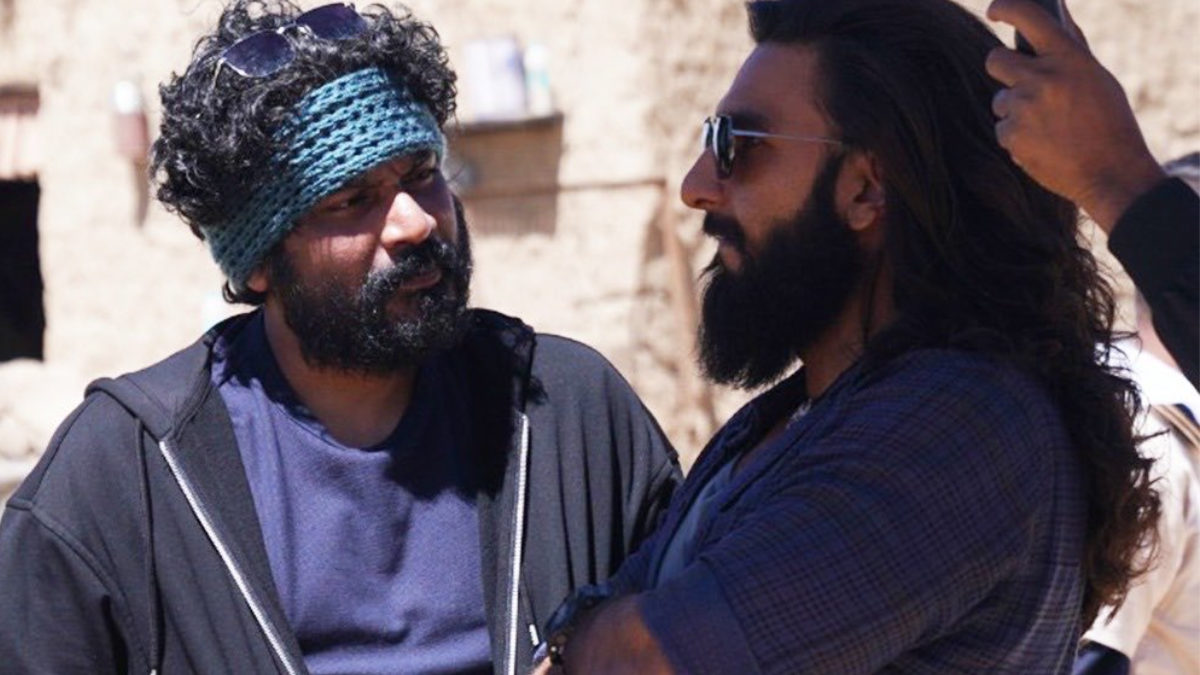
Director Aditya Dhar recently shared a heartfelt note on his X (Twitter) handle, expressing his admiration for someone who often remains unnoticed by audiences, the editor, Shivkumar Panicker. His words reflect not just professional respect but a deep personal bond.
Here’s what he said,
“Here’s to Shivkumar Panicker
Some relationships in filmmaking aren’t built on a single film, they’re built over years of trust, instinct, and standing by each other when it matters the most. Shiv has been that for me and much more.
He is not just my editor. He is my closest friend, my brother, my confidant, the kind of person whose loyalty is so absolute, it humbles you.
The kind of person who would stand for you, fight for you and if it ever came to it, even lay everything on the line for you.
And then there’s the genius.
Shiv is, without a doubt, one of the sharpest and smartest film editors I have ever known.
But what makes him truly exceptional is not just his craft, it’s his instinct.
His understanding of rhythm, emotion, and storytelling is almost frighteningly precise.
He doesn’t just edit a film, he breathes life into it.
With Dhurandhar, what he pulled off feels nothing short of miracle.
Yes, the decision to split the film into two parts was mine but the responsibility of making that decision work fell entirely on him. And the way he carried that on his shoulders, the way he shaped it, elevated it, and made it seamless was extraordinary.
In timelines that were, quite honestly, the craziest I have ever seen.
Where films of this scale take months, sometimes years to edit, Shiv delivered in a matter of days. Days. And not just delivered, he delivered excellence. The sharpest possible version of the film, under pressure that would break most people.
What we achieved with Dhurandhar, the scale, the quality, the deadlines is unheard of.
It breaks every conventional norm that filmmaking has followed for years. And a massive part of that credit belongs to him.
But what makes this even more special is that his contribution didn’t begin in the edit room.
He was there from the very beginning.
Like a silent co-director.
Through writing. Through prep. Through the chaos of shoot. Through post. Always present. Always thinking. Always pushing the film to be better.
He never once allowed the pressure to dilute the work.
He never once chose convenience over conviction.
He never once stepped back.
That integrity, that hunger, that loyalty is rare.
And it’s something I will carry with me for life.
The truth is, I don’t see myself making a film without him. Not now. Not ever. In many ways, he is my responsibility for life, just as much as he has made every film of mine his own.
Some contributions can be measured.
And then there are people like Shiv who become a part of your journey in a way that words can never fully capture.
Endless love, respect, and gratitude.
Dhurandhar will always carry his heartbeat within it. ❤️”
Here’s to Shivkumar Panicker
— Aditya Dhar (@AdityaDharFilms) April 6, 2026
Some relationships in filmmaking aren’t built on a single film, they’re built over years of trust, instinct, and standing by each other when it matters the most. Shiv has been that for me and much more.
He is not just my editor. He is my closest… pic.twitter.com/smOGJfV4zh
In the end, what Dhurandhar really highlights is something audiences often overlook. Behind the scale, the performances, and the spectacle, there are craftsmen who quietly shape the soul of a film. And sometimes, it takes a second viewing to truly see their work.