
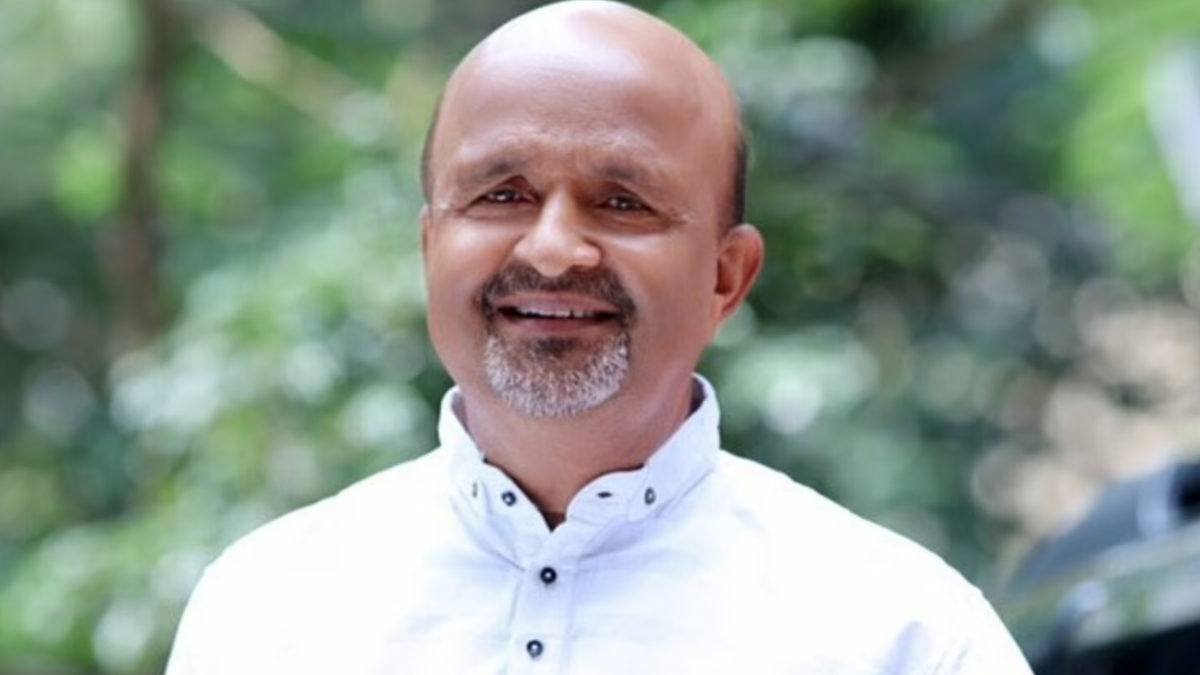
When people talk about prolific lyricists in Hindi cinema, Sameer Anjaan is not just part of the conversation — he defines it. With a Guinness World Record for writing the highest number of film songs, Sameer’s career reads less like a carefully planned journey and more like an unstoppable creative flood that Hindi cinema simply learned to accommodate. What makes Sameer fascinating isn’t only the staggering volume — over 4,000 songs across more than 500 films — but the sheer range of emotions he covered, often simultaneously. Romantic longing, tapori mischief, devotional sincerity, heartbreak, celebration — sometimes all in the same week.
Before Mumbai, fame, and film studios, Sameer was briefly a bank officer at the Central Bank of India. He has often recalled that within days of joining, he realised, “Yeh meri duniya nahi hai.” Walking away from a stable government-linked job in the 1980s wasn’t romantic rebellion — it was instinct. He quit almost immediately, moved to Mumbai in 1987, and decided to survive purely on words.
Sameer’s father, Anjaan, was already a towering lyricist. Unlike many star kids, Sameer didn’t receive a smooth launch. In fact, he has spoken about how his father refused to recommend him aggressively. Anjaan believed that if his son had talent, the industry would eventually notice — and if not, no amount of pushing would help.
Sameer often says that watching his father write taught him discipline over drama. Lyrics weren’t poetry competitions — they were emotional problem-solving exercises for cinema.
One of the most repeated anecdotes about Sameer is his inhuman writing speed. During the 1990s and early 2000s, he was reportedly associated with over 100 films at the same time — a logistical nightmare for music companies, but somehow routine for him.
In a podcast interview, Sameer mentioned days when he wrote 25+ songs in a single day, hopping from one studio to another. Composers learned not to be precious — if you missed your slot, Sameer would already be on to the next film.
The famous example he cites himself – the quirky hook “Haye Hukku Haye Hukku Haaye Haaye” reportedly came to him while travelling for a song session for a Suniel Shetty film. No diary, no quiet room — just rhythm forming in his head mid-journey.
Critics have often divided lyricists into “poets” and “popular writers.” Sameer never fought that label. In fact, he embraced it. He openly acknowledged his inspirations — Majrooh Sultanpuri and Anand Bakshi — but adapted their emotional intelligence for a faster, more commercial era.
His genius lay in clarity. Songs like “Nazar Ke Saamne,” “Pehla Nasha,” “Dil Hai Ke Manta Nahin,” or even massy numbers carried instantly graspable emotions. No decoding required. The listener felt first, analysed later — if at all.
By the mid-90s, Sameer became the industry’s safest insurance policy. If a producer needed ten songs written quickly — romantic, sad, festive, item number — Sameer could deliver without creative fatigue. Music labels trusted him to never block a film due to lyrics.
This reliability is a rarely celebrated art. Many composers have admitted that Sameer often saved projects simply by showing up on time and delivering exactly what the situation demanded.
Interestingly, Sameer rarely talks about his Guinness World Record unless asked. For him, the number isn’t vanity — it’s evidence of survival. He once remarked that writing continuously wasn’t ambition; it was necessity. In an industry where lyricists are often replaced overnight, staying relevant meant staying available.
Today, Sameer Anjaan’s lyrics form the emotional memory of an entire generation — wedding playlists, heartbreak nights, long drives, college romances. His words may not always be literary, but they are emotionally permanent.
In an age obsessed with minimalism and reinvention, Sameer’s career stands as proof that sometimes, consistency itself is genius.