Home Blog Page 235

O Romeo Director Vishal Bhardwaj  Slams Film Censorship

0

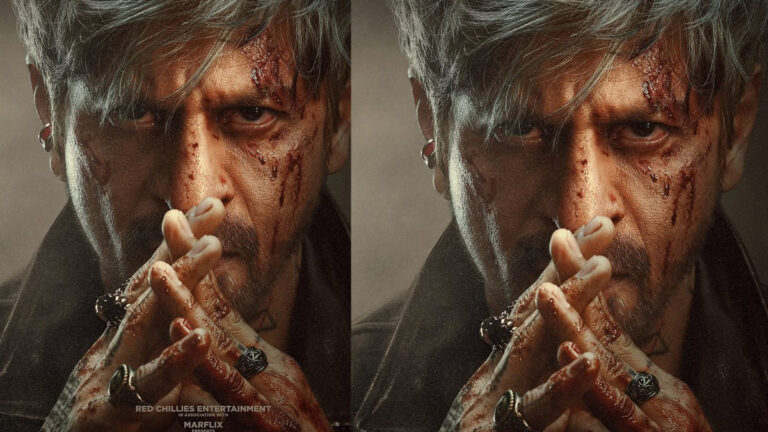
At the trailer launch of O Romeo, filmmaker Vishal Bhardwaj didn’t just unveil his next cinematic spectacle — he also ignited a conversation about censorship, language, and the responsibility of cinema. Known for his unapologetically raw storytelling, Vishal made it clear that he has no interest in sanitising reality for audience comfort.

Speaking about the soul of O Romeo, Vishal revealed that beneath its gritty world of gangsters and violence lies a deeply emotional core. “It’s a love story with a violent background,” he explained. “But in its DNA, it’s a love story — an unrequited love story of this character, Ustara.” His words suggest that while the film may appear brutal on the surface, its emotional heartbeat is driven by longing and passion.

However, it was Vishal’s stance on abusive language and screen violence that truly stood out. Addressing debates around censorship, he firmly opposed muting or beeping expletives in films. According to him, realism should not be diluted. “Aur jahan tak aap yeh gaali aur violence ki baat kar rahe hain, mujhe lagta hai ki beep beep beep nahi hona chahiye. Yeh hi hona chahiye jo ki poora bola jaa sake,” he said, stressing that stories lose authenticity when their language is artificially filtered.

The director went on to call out what he sees as society’s hypocrisy toward cinema. He pointed out that the same harsh language and aggression people encounter daily in real life is often blamed on films. “Hum sarkon pe yeh gaaliyaan accept kar lete hain, cinema mein nahi. Har bura kaam cinema karta hai — cinema hi bigaadega, cinema hi sudharega,” he remarked, questioning why films are made scapegoats for social behavior.

Rejecting the notion that cinema shapes morality, Vishal described films as reflections rather than influencers. “Cinema mere hisaab se aaina hai jo aapko dikhlaata hai. Agar aaj violence ho raha hai, toh yeh violence humari society mein exist karta hai,” he stated, asserting that filmmakers merely portray what already exists around us.

Ending on a lighter yet pointed note, Vishal even called expletives a form of expression. “Aur gaaliya mujhe lagta hai ki poetry hoti hai. Dhang se use kiya jaye toh koi problem nahi,” he added with a smile.

Directed by Vishal Bhardwaj, O Romeo stars Shahid Kapoor in the lead role alongside Triptii Dimri, Nana Patekar, Tamannaah Bhatia, Vikrant Massey, Avinash Tiwary, and Disha Patani. The film is set to release in theatres on February 13, 2026 — already carrying the promise of intensity, controversy, and unfiltered storytelling.

Pamela Anderson’s NYC Look Is A Ferragamo Dream Come True

After making a striking appearance in Ferragamo at the Golden Globes 2026, nominee Pamela Anderson once again turned heads by stepping out fully dressed in the Italian luxury house’s Fall/Winter 2025 collection. Known in recent years for redefining her public image with understated elegance and authenticity, Anderson’s latest look reflected a refined balance of timeless glamour and modern restraint.

The ensemble was anchored by an oversized coat that immediately set the mood. With its generous proportions and fluid structure, the outerwear created a cocoon-like silhouette that felt both protective and cinematic. Rather than overwhelming her frame, the coat enhanced the overall softness of the look, allowing movement and texture to play a key role. It was a masterclass in sculptural layering—luxurious without being loud.

One of the most memorable elements of the outfit was the ivory jacquard Gancini stole, styled in an unmistakably Old Hollywood manner. Tied around her head, the stole evoked the glamour of classic film icons while still feeling contemporary. The subtle Gancini motif added a layer of heritage to the look, nodding to Ferragamo’s storied past without detracting from the clean, modern styling. The choice to wrap the stole around her head instead of wearing it traditionally further emphasized Anderson’s embrace of vintage-inspired elegance.

Grounding the soft ivory tones were rich chocolate-brown accents that brought depth and warmth to the outfit. Nappa leather gloves added a tactile richness, their smooth finish contrasting beautifully with the textured jacquard stole. Knee-high hug-buckle boots provided structure and strength, anchoring the flowing layers above. The boots’ sleek design balanced the oversized coat, ensuring the look remained polished rather than bulky.

Acetate sunglasses completed the Old-Hollywood mood, adding an air of mystery and quiet confidence. Meanwhile, a slouchy soft handbag crafted from calfskin and suede introduced a relaxed, lived-in quality to the ensemble. The bag’s supple texture reinforced the overall theme of softness and ease, proving that luxury does not need to appear rigid or overly styled to make an impact.

What made the look particularly compelling was its tonal harmony. Rather than relying on bold contrasts or statement colours, the outfit flowed seamlessly from ivory to warm brown hues. This restrained palette allowed textures and shapes to take centre stage, creating visual interest through materiality rather than excess embellishment. Each piece worked in quiet synchrony, contributing to a cohesive narrative rather than competing for attention.

The sculptural quality of the outfit was evident in every layer. From the drape of the oversized coat to the way the stole framed her face, the look felt intentionally composed yet effortlessly worn. The interplay between softness and structure gave the ensemble a cinematic quality, as though it belonged in a carefully lit film scene rather than a red carpet moment.

Pamela Anderson’s styling choice also reflected her ongoing evolution in fashion. In recent years, she has embraced a more natural, stripped-back aesthetic, often favouring authenticity over spectacle. This Ferragamo look aligned perfectly with that philosophy—luxurious yet grounded, elegant yet approachable. It showcased confidence that comes not from excess glamour but from thoughtful restraint.

Ferragamo’s Fall/Winter 2025 collection clearly emphasizes tactile richness, sculptural silhouettes, and timeless appeal, all of which were embodied in Anderson’s ensemble. The look demonstrated how heritage fashion houses can remain relevant by blending classic codes with modern sensibilities.

Ultimately, Pamela Anderson’s head-to-toe Ferragamo moment was not just about wearing designer clothing—it was about storytelling. Through soft layers, rich textures, and a harmonious colour palette, the outfit delivered a quietly powerful statement. It captured a sense of nostalgia while remaining firmly rooted in the present, proving once again that true style lies in balance, intention, and understated confidence.

Bhavana Pandey Calls Out Chunky Panday For Never Gifting Her Anything On Their Anniversary

0

MasterChef India continues to celebrate the vibrant spirit of “Desh Front Foot Pe Chal Raha Hai,” bringing together culinary jodis from different corners of the country who proudly showcase their regional flavours, traditions, and cooking expertise. The ongoing Shaadi Special Week has added an extra layer of warmth, romance, and entertainment to the competition, and the latest episode turns even more special with the arrival of Bollywood’s beloved power couple, Chunky Panday and Bhavana Pandey.

The celebrity couple graces the MasterChef kitchen as special guests, instantly lighting up the set with their infectious chemistry and playful banter. Married for nearly 28 years, Chunky and Bhavana bring not only star power but also a refreshing dose of real-life relationship humour, making them clear show stealers of the episode.

During a candid interaction with the judges, Bhavana Pandey amusingly teases her husband about a long-standing promise he has yet to fulfil. With a smile and a hint of mock complaint, she shares that every year Chunky assures her of a grand anniversary gift, but that promise has remained unfulfilled even after nearly three decades of marriage. Her light-hearted comment leaves everyone on the set laughing, as she says that despite all the assurances, the “bohot badhiya gift” has never actually arrived.

Not one to miss a beat, Chunky Panday quickly steps forward with his trademark wit to defend himself. He jokingly declares that he has finally delivered on his promise by bringing Bhavana to what he calls “the world’s biggest cooking show.” He adds that on MasterChef India, she gets to taste food from every corner of the country, where each plate represents India’s identity—and best of all, without having to pay the bill. His humorous response draws laughter and applause, perfectly capturing the couple’s effortless camaraderie.

Following this entertaining exchange, the focus shifts back to the competition as the judges unveil an exciting blind guessing challenge for the jodis. In this task, contestants are required to identify ingredients placed in front of them without seeing them, relying solely on their senses of touch, smell, and taste. The challenge is designed to test not just culinary knowledge, but also instinct, teamwork, and trust between partners.

As the jodis take on the blind challenge, the kitchen buzzes with anticipation and nervous energy. Some contestants confidently identify the ingredients, while others struggle, leading to moments of surprise, laughter, and suspense. The challenge highlights the diversity of Indian ingredients and reinforces the idea that true culinary mastery goes beyond recipes—it lies in understanding flavours at their core.

Chef Ranveer Brar, one of the judges on the show, is visibly impressed by the performances during the challenge. Praising the contestants, he remarks that MasterChef India has set a benchmark for chefs around the world by showcasing the evolving face of the country. He emphasizes that this platform reflects a “new India,” where tradition meets innovation, and homegrown talent stands shoulder to shoulder with global culinary standards.

The Shaadi Special Week not only celebrates food but also relationships—between couples, cooking partners, and cultures. The presence of Chunky and Bhavana Pandey adds a relatable and heartwarming touch, reminding viewers that love, laughter, and shared experiences are just as important as culinary excellence.

With its mix of emotional moments, fun banter, challenging tasks, and inspiring performances, MasterChef India continues to strike a chord with audiences. The show remains a celebration of India’s culinary diversity, teamwork, and evolving identity, all wrapped in engaging storytelling.

As the competition heats up and the stakes get higher, viewers can expect many more memorable moments, both inside and outside the kitchen.

Keep watching MasterChef India, Monday to Friday at 9:00 PM on Sony Entertainment Television and streaming on Sony LIV.

Rupali Ganguly’s Intense Performance As Anupama Will Leave You Rooted To The Screen

0

The upcoming episode of Deepa Shahi and Rajan Shahi’s widely loved television show Anupama promises to deliver one of its most powerful and emotionally charged moments yet. Known for its heartfelt storytelling and strong performances, the show is set to present a sequence that is expected to leave a lasting impact on viewers, reinforcing why Anupama continues to resonate deeply with audiences across generations.

The scene unfolds under a softly glowing twilight sky, creating a serene yet emotionally loaded atmosphere. Anupama is seen lighting diyas with a sense of calm devotion. Her movements are slow and deliberate, reflecting faith, patience, and deep-rooted tradition. As the small lamps begin to glow, their warm golden light gently illuminates her face, revealing both quiet hope and an unshakeable determination. At first glance, everything appears peaceful, but there is an unspoken tension lingering in the air.

When Jaspreet speaks to her, Anupama responds with a gentle smile. However, beneath that comforting expression lies a trace of fear that she herself seems to be suppressing. It is the kind of fear that comes from intuition—a silent warning from the heart. As she steps forward and unknowingly crosses one of the three symbolic lines drawn on the wall, the mood of the scene shifts dramatically. The air grows heavy, and an unsettling feeling takes over, signalling that something is not right.

Almost immediately, the diya flame begins to flicker. What was once a steady light now wavers, mirroring Anupama’s inner turmoil. Her eyes sharpen, filled with concern and alertness, as though she senses impending danger. The background score intensifies, amplifying the emotional weight of the moment. She attempts to light the diya again, but the flame refuses to catch. Her hands start trembling, reflecting her rising anxiety.

As the wind blows, the matchstick goes out, plunging the moment into an eerie stillness. Anupama’s breath catches, and her eyes slowly fill with worry. The silence becomes overwhelming, almost frightening, as if time itself has paused. Jaspreet steps in to help, hoping to ease the situation, but instead, her actions only seem to worsen it. The diya remains unlit, its darkness symbolising a bad omen and hinting at the possibility of an impending crisis.

With each passing second, Anupama’s hope begins to fade, replaced by an intense sense of fear and helplessness. The once-comforting ritual now feels like a warning, and the weight of the moment presses heavily on her heart. The sequence beautifully captures the emotional depth of the character—her vulnerability, her strength, and her unspoken resilience.

What elevates this scene even further is a striking visual transformation. In a powerful symbolic sequence, Rupali Ganguly appears as a fierce and courageous figure reminiscent of Rani Laxmi Bai. Dressed in a white outfit paired with a vibrant orange turban and holding a sword, she embodies strength, bravery, and unwavering resolve. Her commanding presence instantly changes the tone, shifting the narrative from fear to resistance.

Rupali’s expressions are layered with pain, courage, and determination, all conveyed through her eyes and body language. She stands tall, fearless, and ready to confront whatever storm lies ahead. This portrayal reinforces the essence of Anupama—not just as a devoted mother, daughter, or wife, but as a warrior who refuses to bow down to adversity.

The makers of Anupama once again succeed in redefining the character by presenting her as a symbol of inner power and emotional resilience. Through this evocative sequence, they remind viewers that Anupama’s strength lies not just in her sacrifices, but in her ability to rise, fight, and protect her values even in the darkest moments.

With strong visuals, hauntingly emotional music, and Rupali Ganguly’s exceptional performance, this episode is set to touch hearts deeply. It promises to leave viewers emotionally stirred and eager to see how Anupama will face the challenges ahead. More than just a dramatic moment, this scene reinforces why Anupama is not merely a television character, but an emotion that millions of viewers continue to connect with and cherish.

Jaaved Jaaferi On AR Rahman’s Communal Bias Statement: ‘Values Are Changing’

0

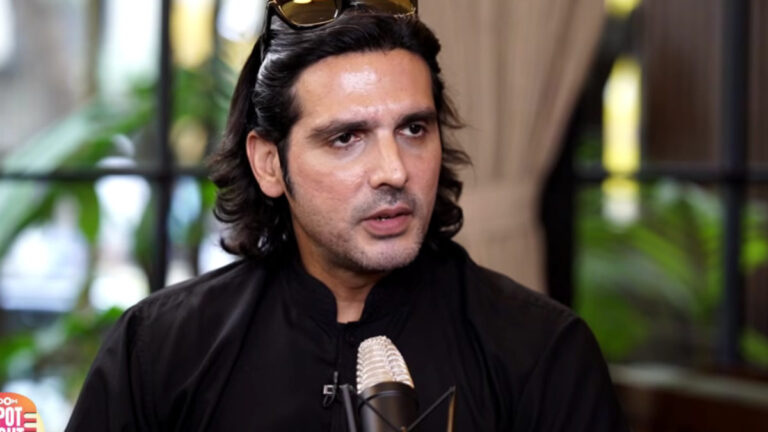
Actor Jaaved Jaaferi has shared his thoughts on the ongoing debate surrounding composer A. R. Rahman’s recent remarks about alleged communal bias in the Hindi film industry, offering a wider and more reflective view on how the entertainment landscape has changed over the years. Speaking during promotions for his upcoming film Mayasabha, Jaaved addressed the issue in an interview with IANS, choosing to frame the discussion within the context of the industry’s rapid evolution rather than focusing solely on allegations of discrimination.

With a career spanning more than four decades, Jaaved Jaaferi has witnessed Bollywood transition through multiple phases—right from the era of single-screen theatres to the rise of multiplexes, streaming platforms, and now the growing influence of artificial intelligence and data-driven content creation. When asked whether he had personally encountered anything similar to what Rahman alluded to in his comments, Jaaved refrained from giving a direct yes-or-no answer. Instead, he highlighted how deeply the industry has been shaped by broader global changes.

According to Jaaved, the transformation of cinema mirrors the transformation of the world itself. “Industry has changed like the world has changed,” he said, pointing to technological shifts such as digital platforms and AI. He added that changes are visible everywhere—from fashion and food to values and cultural narratives. “Obviously, the narrative is changing,” he noted, stressing that storytelling today is influenced by factors that did not exist a few decades ago.

One of the most striking observations Jaaved made was about shrinking attention spans among younger audiences. He revealed that he had recently learned that the average attention span of Gen Z and Gen Alpha audiences is now estimated to be as short as six seconds. This shift, he explained, has dramatically altered how content is created, marketed, and consumed. “Channel heads say that if you cannot capture attention in six seconds, it’s gone,” he said, underlining how ruthless the competition for viewer engagement has become.

Jaaved elaborated that these changing dynamics directly affect creative decision-making in the industry. While there are still opportunities to tell stories in long formats—such as feature films or web series—time and space are increasingly limited. Creators are constantly balancing artistic intent with practical constraints. “There are choices,” he said, “but at the same time, there is business. There are numbers. You are making a project, not a film.” His remark highlighted how commercial viability often takes precedence over purely creative considerations in today’s ecosystem.

Rather than directly commenting on claims of bias or discrimination, Jaaved’s response appeared to suggest that many established artists may be feeling the impact of structural and commercial shifts rather than being intentionally sidelined. His comments implied that the dominance of metrics, audience analytics, and profitability has become a defining force in determining who gets opportunities and how frequently.

The discussion gained momentum following A. R. Rahman’s interview with BBC Asian Network, where the Oscar- and Grammy-winning composer spoke about receiving fewer offers from Bollywood in recent years. Rahman hinted that changes in power structures and “communal” elements—referring broadly to religion, regional identity, and internal industry politics—may have influenced the trajectory of his career over the last eight years.

These remarks quickly sparked controversy, with social media users and commentators interpreting them as an allegation of bias within the Hindi film industry. The debate intensified as opinions became polarised, with some supporting Rahman’s perspective and others criticising the suggestion of discrimination.

In response to the backlash, Rahman later released a video clarification, stating that his words had been misunderstood. He emphasised that he never intended to hurt anyone and reiterated his deep connection with India as both an artist and a citizen. The composer also reaffirmed that his music has always celebrated unity, inclusivity, and cultural harmony, values that have defined his work across languages and regions.

Jaaved Jaaferi’s measured response adds a different layer to the conversation. Rather than framing the issue as a binary debate about bias, he pointed to a more complex reality—one where technology, audience behaviour, and commercial pressures are reshaping the industry at an unprecedented pace. His perspective suggests that the challenges faced by artists today may be as much about adapting to a new ecosystem as they are about navigating power structures.

As the conversation around Rahman’s remarks continues, Jaaved’s comments serve as a reminder that Bollywood, like the rest of the world, is in a constant state of flux—where change, rather than continuity, has become the defining feature.

Hande Ercel Shuts Down Rumors Of Calling Shah Rukh Khan ‘Uncle’ With A Simple ‘This Is Fake’

0

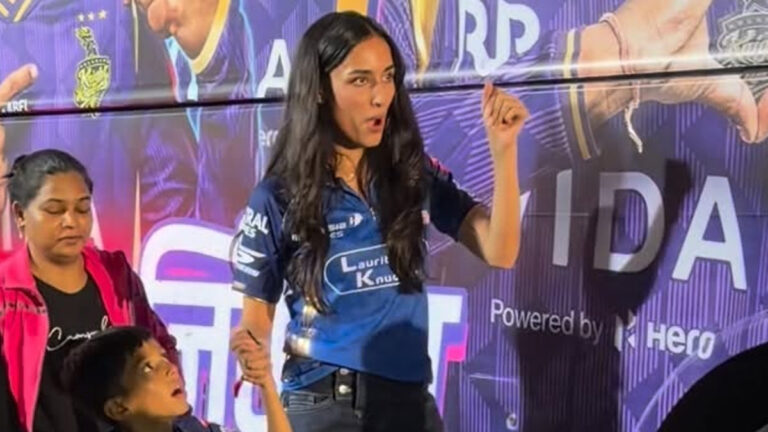
Ever since the Joy Awards were held in Riyadh, Saudi Arabia, on January 17, Turkish actor Hande Erçel has found herself unexpectedly dominating headlines in India. While the awards night brought together several global celebrities, it was a misunderstanding involving Bollywood superstar Shah Rukh Khan that sparked widespread chatter on social media, eventually forcing Hande to step in and clarify the truth herself.

The controversy began soon after videos from the star-studded evening started circulating online. Shah Rukh Khan, who co-hosted the Joy Awards, was one of the most talked-about figures at the event. Around the same time, a clip featuring Hande Erçel also went viral, with many users claiming that she was filming Shah Rukh on stage and reacting like a devoted fan. The narrative quickly snowballed, with several posts suggesting that Hande had referred to Shah Rukh Khan as an “uncle,” allegedly dismissing the idea that she admired him.

Fuel was added to the fire when a screenshot began circulating on social media platforms, claiming to be from Hande’s Instagram Stories. The alleged story read, “Who is this uncle? I was just filming @aminakhalilofficial, I am not his fan!! Please stop spreading false information!!” The screenshot was widely shared, leading to speculation that the Turkish star had denied knowing Shah Rukh Khan altogether and had even used dismissive language while doing so.

An X (formerly Twitter) user shared the screengrab along with a detailed claim stating that Shah Rukh Khan had attended the Joy Awards 2026 in Riyadh and that Hande Erçel’s viral clip had been misinterpreted. According to the post, reports falsely portrayed her as Shah Rukh’s fangirl, while she supposedly rejected the claim and referred to him as “uncle.”

However, the speculation came to an abrupt halt when Hande herself responded directly to the post. In a brief but firm reply, she wrote, “This is fake.” With just two words, the actor shut down the rumour entirely, making it clear that the circulating screenshot and the claims attached to it were not true.

Her response was met with strong reactions from fans across the globe. Supporters of Hande Erçel rallied behind her, criticising the spread of misinformation and expressing sympathy for the unnecessary controversy she was pulled into. One fan wrote, “We will always be here to defend you. I’m so sorry you have to go through this, my love.” Another user apologised on behalf of those spreading false narratives, calling the situation “embarrassing.”

Interestingly, Shah Rukh Khan’s fans also joined the conversation, defending the actor and calling out the false claims. One fan commented sarcastically, “Imagine waking up daily just to lie about SRK and still getting fact checked by the person you dragged into it.” The incident highlighted how quickly misinformation can spread online and how celebrities are often forced to respond to narratives they never created.

For clarity, the original video that sparked the confusion showed Hande filming her friend Amina Khalil, who was co-hosting the Joy Awards alongside Shah Rukh Khan. Many viewers mistakenly assumed that Hande’s camera was focused on Shah Rukh, leading to the incorrect conclusion that she was reacting to him. This misunderstanding, combined with a fake screenshot, was enough to generate viral headlines before being debunked.

While the controversy has now been laid to rest, it once again underscores the scrutiny faced by international stars when they attend globally covered events. Hande Erçel, one of Turkey’s most popular actors, enjoys a massive fan following across several countries, including India, making her particularly vulnerable to such viral misinterpretations.

Meanwhile, Shah Rukh Khan continues to remain in the spotlight for his professional commitments. After a remarkable 2023 that saw him dominate the box office with Pathaan, Jawan, and Dunki, the Bollywood superstar is currently busy shooting for King, directed by Siddharth Anand. The film is especially significant as it marks the big-screen collaboration of Shah Rukh with his daughter, Suhana Khan. The ensemble cast also includes Deepika Padukone, Abhishek Bachchan, and several other prominent names.

As fans await further updates on King, the Joy Awards incident serves as a reminder of how easily misinformation can spiral in the age of social media—and how sometimes, a simple clarification from the person involved is enough to put an end to it.

Anupam Kher Tries To Take On Sikandar Kher’s Playful Hit, Ends Up Saying ‘Aesa Nhi Karte’

0

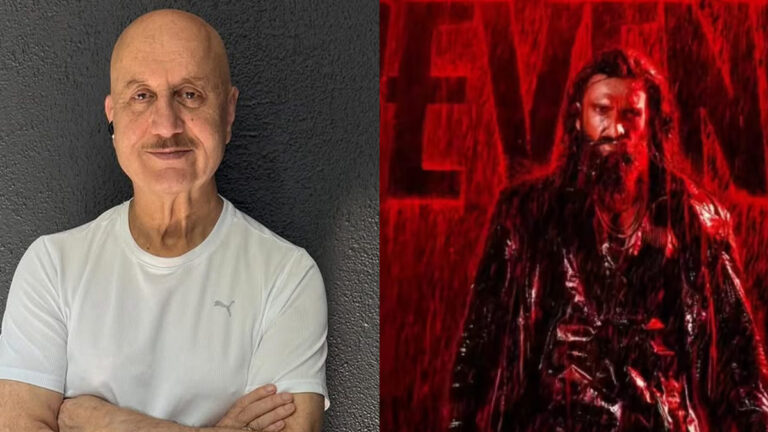
Actor Sikandar Kher recently shared a light-hearted yet surprising video on Instagram featuring his father, veteran actor Anupam Kher, that quickly caught the attention of fans. The clip, filled with playful banter, family chemistry, and candid conversations, showed Anupam shortly after undergoing a tooth extraction, leading to a humorous and slightly shocking moment between the father-son duo.

The video begins with Sikandar explaining that Anupam had just had a tooth removed and was still feeling the after-effects of the procedure. During their conversation, Anupam mentions that one side of his cheek had gone numb following the dental work. Sikandar, clearly in a mischievous mood, then jokingly refers to a line about a son hitting his father with the back of his hand. As he brings his hand close to Anupam’s face, pretending to slap him, Anupam immediately reacts and asks, “Kya karne wala hai?” (What are you about to do?).

Realising that his son might actually go through with it, Anupam jokingly warns him in a dramatic tone. He says that if Sikandar hits him too hard, he would retaliate by slapping him on the nose and breaking it. Despite the warning, Sikandar suddenly taps Anupam on the cheek. The unexpected action leaves Anupam visibly shocked, and he instinctively clutches his face. Sikandar, continuing the joke, asks, “Kya karoge aap?” (What will you do now?) and proceeds to hit him once more, further surprising the veteran actor.

Adding to the humour, Anupam responds by repeating a famous line from one of his films with the late Dilip Kumar, blending real-life banter with cinematic nostalgia. The playful exchange continues, but when Sikandar attempts to hit him again after some time, Anupam turns his face away and firmly says, “Nahi nahi nahi beta” (No, no, no, son). When Sikandar insists, Anupam grabs his hand and tells him that this is not how one behaves, asking him to stop. Eventually, Sikandar softens his approach and gently brushes his father’s cheek instead.

The mood remains light until Sikandar casually mentions that he plans to post the video on Instagram. Anupam immediately protests, saying that it is a personal moment between the two of them and should not be shared publicly. Despite this, the clip did make its way online, much to the amusement of fans.

As the video progresses, the conversation shifts away from the cheek-slapping episode to industry anecdotes. Anupam and Sikandar discuss lyricist and writer Javed Akhtar, whom Anupam fondly refers to as “uncle.” The veteran actor then reveals that Javed Akhtar’s daughter, filmmaker Zoya Akhtar, once cast him in a guest appearance for one of her films. However, the sequence was eventually removed from the final cut, a revelation shared with a sense of humour rather than regret.

Anupam also opens up about another significant moment from his career. He recalls being selected for the iconic role of Mogambo in the 1987 blockbuster Mr India. According to him, despite being chosen, he was later removed from the film by Anil Kapoor and producer Boney Kapoor. The role ultimately went to the late Amrish Puri, whose performance went on to become legendary in Indian cinema.

The video ends with more banter between the father and son, maintaining its informal and candid tone throughout. Sharing the clip on Instagram, Anupam tagged several prominent names from the film industry and wrote, “For Javed Akhtar (uncle), Boney Kapoor, Amrish Puri (legend), Anil Kapoor, Shekhar Kapur (uncle) … enjoy #KherSaab after his tooth removal.”

On the professional front, Anupam Kher was recently seen in his directorial venture Tanvi The Great, which marked the debut of Shubhangi Dutt in the lead role. He is also set to return to screens in Khosla Ka Khosla 2, where he will reunite with actors such as Ranvir Shorey, Kiran Juneja, Parvinn Dabass, Tara Sharma, and Ravi Kishan, among others.

Lee Cronin Reimagines The Mummy For A New Generation Of Horror Fans

0

Warner Bros. Pictures is officially bringing The Mummy back, and this time, it is heading straight into horror territory. The studio has tapped Lee Cronin, best known for The Hole in the Ground and Evil Dead Rise, to reimagine the legendary monster for a new generation, signaling a sharp tonal shift from previous action-heavy versions.

Cronin’s take on The Mummy is expected to lean heavily into dread, atmosphere, and psychological fear rather than spectacle. Sources close to the project have described the film as grounded, unsettling, and far more intimate than audiences might expect from a franchise historically associated with large-scale adventure. This version aims to strip the myth down to its most terrifying core: ancient curses, forbidden discoveries, and the slow, inescapable horror of something that should have remained buried.

Unlike earlier adaptations that leaned on globe-trotting action and blockbuster energy, this reboot is being positioned as a true horror film. Cronin has previously spoken about his interest in making monsters feel personal and unavoidable, and that approach fits perfectly with a story rooted in ancient death rituals and consequences that stretch across time.

While casting details and plot specifics remain under wraps, the creative direction alone has already sparked excitement among horror fans. Warner Bros. appears confident in allowing Cronin the creative freedom to redefine the iconic figure, especially after the success of Evil Dead Rise, which proved audiences are hungry for bold, scary reboots done right.

This new Mummy is not trying to recreate past versions or chase nostalgia. Instead, it is focused on fear, tension, and myth, treating the monster less like an action villain and more like an unstoppable force tied to history, death, and human arrogance.

With Lee Cronin at the helm and Warner Bros. backing a horror-first vision, The Mummy could finally return to its roots as something truly terrifying. If executed right, this reboot has the potential to redefine the franchise and remind audiences why the idea of disturbing the dead has always been one of horror’s most powerful concepts.

Mayasabha Trailer Impresses Rahi Anil Barve’s Dark, Ambitious Return

0

Following a strong response to its teaser, the makers of Mayasabha – The Hall of Illusion officially unveiled the film’s trailer at a special launch event, further building momentum ahead of its nationwide theatrical release slated for January 30, 2026. Early reactions from the trade, media, and audiences alike indicate growing anticipation, positioning the film as a notable early-2026 theatrical release.

Directed by Rahi Anil Barve, Mayasabha marks the filmmaker’s second feature following his acclaimed debut Tumbbad. Known for his atmospheric storytelling and allegorical depth, Barve once again ventures into psychologically charged and philosophically layered territory. Mayasabha – The Hall of Illusion examines themes of power, perception, and the porous line between reality and illusion, aiming to deliver a dense, immersive cinematic experience.

The newly released trailer expands on the intrigue established by the teaser, offering a darker and more unsettling glimpse into the film’s narrative world. Driven by mood and subtext, the visuals reinforce Barve’s signature creative approach—one that encourages audiences to question appearances, authority, and truth rather than accept them at face value.

The film features an ensemble cast led by Jaaved Jaaferi, with Mohammad Samad, Veena Jamkar, and Deepak Damle in pivotal roles. The performances collectively add weight to the film’s layered narrative and brooding tone.

The trailer launch event saw the presence of director Rahi Anil Barve, Jaaved Jaaferi, and Deepak Damle, who spoke about the film’s journey from conception to completion, offering insights into its thematic ambitions and creative process.

Commenting on the response received so far, Barve said, “The curiosity and engagement around Mayasabha since the first look has been deeply encouraging. This film has been a challenging and immersive journey—one that explores ideas meant to stay with the audience long after the film ends. The trailer is our first true entry point into this world.”

Sharing his experience, Jaaved Jaaferi added, “Mayasabha pushed me into unfamiliar creative territory. It’s not merely a story, but an exploration of perception, human behaviour, and inner conflict. Working with Rahi has been creatively stimulating, and I’m keen to see how audiences respond to the film.”

With its trailer now out, Mayasabha – The Hall of Illusion continues to consolidate its position as a content-driven, concept-forward release to watch in the upcoming theatrical calendar.

Border 2: Ahan Shetty Calls Sunny Deol As ‘Father Figure’ – Emotional Bond Revealed

0

Actor Ahan Shetty has opened up about his heartfelt bond with Border 2 co-star Sunny Deol, calling the Bollywood icon a “father figure” who guided and inspired him throughout the making of the much-awaited war epic. In a recent interaction, Ahan shared how Sunny’s warmth, encouragement, and acceptance left a deep emotional impact on him, making the experience more meaningful than just another film project.

Set to appear alongside Sunny Deol, Varun Dhawan, and Diljit Dosanjh in Border 2, Ahan revealed that his respect for Sunny comes not only from working together but also from the immense admiration his own father, actor Suniel Shetty, holds for the veteran star. Speaking fondly, Ahan said that at home, his father refers to Sunny Deol as “Sunny Paa,” a term that reflects their close bond and mutual respect. Naturally, this reverence has been passed down to him as well.

Ahan shared that Sunny’s acceptance of him as part of the Border legacy meant a great deal. He described Sunny as a strong pillar of the film, while he, Varun, and Diljit form the supporting force around him. For a young actor stepping into such an iconic franchise, receiving encouragement from the man who defined the original Border was both emotional and motivating. Ahan admitted that Sunny constantly pushed him to perform better, offering guidance that went beyond acting and touched him on a personal level.

The actor also took a trip down memory lane, recalling how the 1997 blockbuster Border shaped his childhood dreams. He said he was very young when the film released, but it left such a powerful impression that he developed a deep love for the Indian Army. For a long time, Ahan dreamed of becoming a soldier. However, his path changed when he discovered theatre during school days, igniting his passion for acting. He now believes that his journey toward becoming an actor truly began with Border.

Border 2, directed by Anurag Singh, is inspired by true events from the 1971 India-Pakistan War and promises a grand cinematic tribute to bravery and patriotism. The sequel brings Sunny Deol back in the lead, with Varun Dhawan, Diljit Dosanjh, and Ahan Shetty joining the mission. Produced by Gulshan Kumar and T-Series in association with JP Dutta’s JP Films, the film aims to continue the legacy of the original cult classic.

Border 2 is set to storm theatres on January 23, 2026, carrying forward a story of courage, sacrifice, and national pride — now with a new generation stepping into the battlefield under Sunny Deol’s guiding presence.