
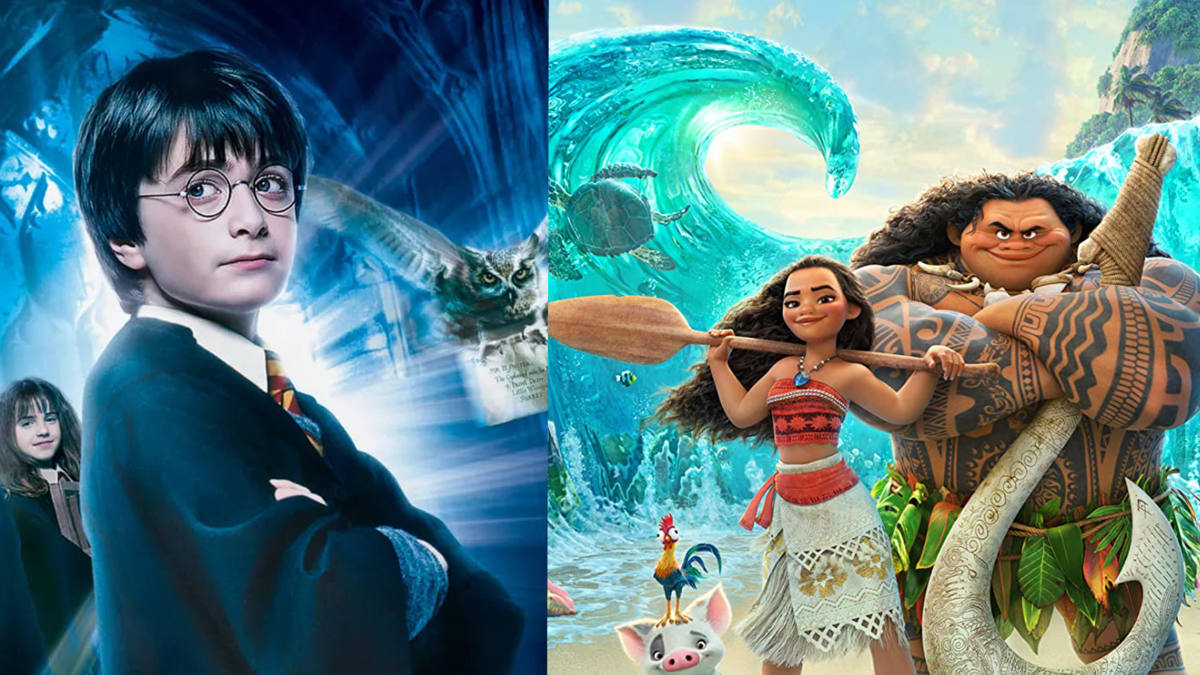
There was a time when movies looked like movies. Not content. Not products. Not intellectual property waiting for the next sequel. Movies felt bigger, brighter and somehow more alive. Lately, however, a growing number of fans have been asking the same question: why does everything look so grey now? The debate has resurfaced once again with HBO’s upcoming Harry Potter series. Ever since the first promotional images surfaced online, social media has been flooded with comparisons to the original films. Fans aren’t just debating casting choices or storylines. They’re talking about the visuals.
The original Harry Potter films looked magical. Hogwarts felt warm and inviting. The Great Hall glowed with floating candles. Diagon Alley was bursting with color and personality. Every location felt like a place you wanted to step into.
The HBO series, at least from what audiences have seen so far, appears far more muted and grounded. It looks expensive. It looks realistic. But many fans feel like some of the magic has been drained out of it.
And Harry Potter is hardly the only example.
Disney’s live-action remakes have faced the exact same criticism for years.
Compare the original animated Moana to the upcoming live-action adaptation. The animated film exploded with color. The ocean practically sparkled. The islands looked vibrant and dreamlike. Every frame felt handcrafted to capture a sense of wonder.
The live-action version looks more realistic.
But realism isn’t always what audiences are looking for.
The same criticism followed The Lion King. Technically, the film was an incredible achievement. The animals looked real. The environments looked real.
The problem was that many viewers felt nothing.
The animated Lion King had expressions, energy and personality. The remake had realism. And for many fans, realism turned out to be a poor substitute for emotion.
Marvel has also become part of this conversation.
Go back and watch films like Spider-Man, Iron Man or Guardians of the Galaxy.
The colors pop. Characters look distinct. Locations feel memorable.
Now compare that to many recent superhero projects where entire scenes seem covered in shades of grey, brown and blue. Fans regularly joke that modern blockbusters look like they were filmed behind a layer of dust.
Even the posters have started looking identical.
A floating head collage. A dark background. Orange and blue lighting.
The same design repeated over and over again.
The issue extends far beyond Disney and Marvel.
Look at fantasy television.
Compare HBO’s House of the Dragon to Peter Jackson’s Lord of the Rings trilogy.
Both are large-scale fantasy projects. Both are visually impressive.
Yet one feels significantly more colorful and adventurous than the other.
Jackson’s Middle-earth felt alive. Green fields. Golden forests. Bright costumes. Distinct cultures.
Many modern fantasy shows lean heavily into darker color palettes, desaturated visuals and gloomy lighting in an attempt to appear more serious.
Somewhere along the way, Hollywood started confusing darkness with maturity.
The result is a lot of projects that look expensive but not necessarily memorable.
Even animation isn’t immune.
Pixar classics like Finding Nemo, Monsters Inc., Ratatouille and Up were overflowing with visual personality. Every film had a distinct identity.
Many recent animated releases still look beautiful, but they often feel safer and more polished. The rough edges that made older films feel unique are slowly disappearing.
Part of the problem may be Hollywood’s obsession with realism. Modern cameras capture extraordinary detail. CGI can make almost anything look real. Studios spend hundreds of millions of dollars making fictional worlds appear believable.
But audiences don’t always fall in love with realism.
They fall in love with feelings. Nobody loved Harry Potter because Hogwarts looked realistic. Nobody loved Pandora because it looked practical. Nobody loved Moana because the ocean behaved according to the laws of physics. People loved these worlds because they felt magical.
Ironically, this conversation mirrors something happening outside Hollywood.
Look around and you’ll notice the same trend everywhere. Movie posters are more minimalist.
Streaming interfaces all look identical. Social media aesthetics favor neutral tones.
Even many modern logos have lost their unique personalities in favor of clean corporate simplicity.
Everything is becoming sleeker. Everything is becoming safer. Everything is becoming more similar.
And perhaps that is why audiences are reacting so strongly to movies that appear visually muted.
They’re not just talking about color correction. They’re reacting to a broader cultural shift.
A shift away from imagination and toward optimization. A shift away from personality and toward uniformity. Of course, nostalgia plays a role. Every generation believes the movies they grew up with were better.
But when fans compare the original Harry Potter films to HBO’s new version, or animated Moana to its live-action remake, they’re not necessarily saying the new projects are bad.
They’re saying something feels missing.
The colors feel flatter. The worlds feel smaller. The magic feels harder to find.
And maybe that’s the real reason this conversation keeps returning.
Because people don’t just miss old movies.
They miss how those movies made them feel.