
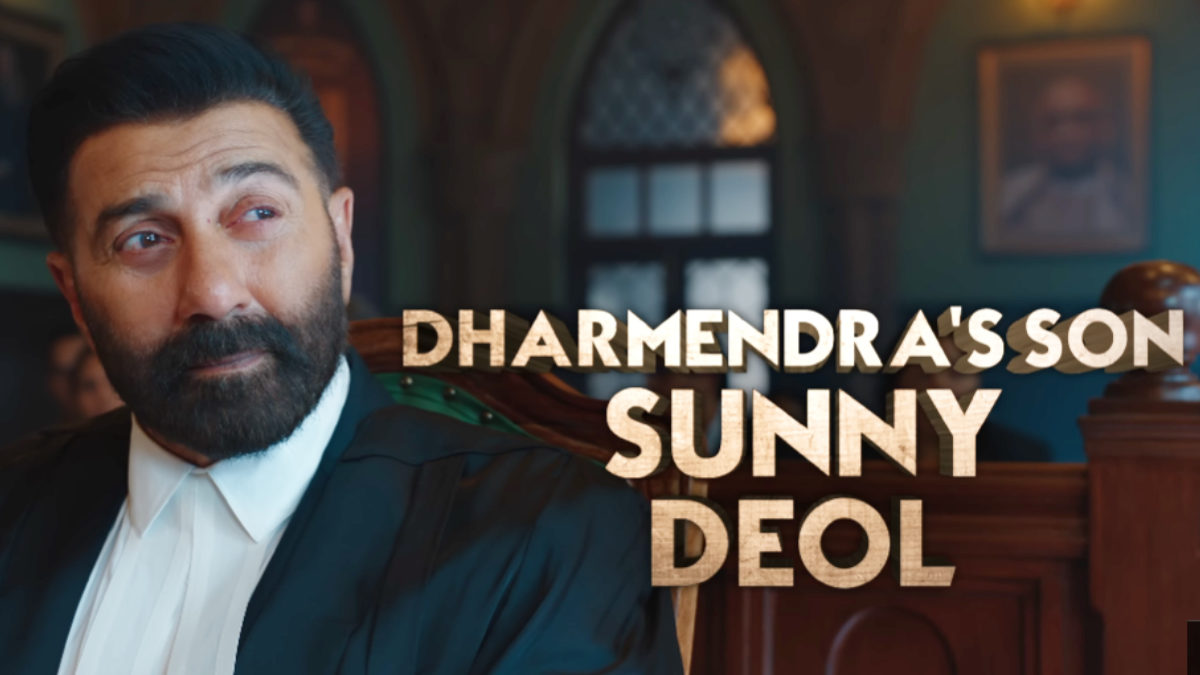
The trailer of IKKA has generated conversation for its courtroom face-off led by Sunny Deol and Akshaye Khanna. On paper, the film appears to be an engaging legal drama, but the trailer also leans heavily into nostalgia. One particular moment stands out when Tillotama Shome’s lawyer remarks that taking on such a high-profile case would require “dhai kilo ka haath,” an obvious callback to Sunny Deol’s iconic dialogue that has become a part of popular culture. Whether that reference lands or feels a little too deliberate is a matter of personal taste.
However, the most interesting detail in the trailer isn’t the dialogue. It’s the way Sunny Deol is introduced in the credits.
Instead of a conventional cast credit, the trailer identifies him as “Dharmendra’s son Sunny Deol.” It is an unusual choice, especially in an era where star introductions are almost always limited to the actor’s own name. That single line immediately stands out because it feels less like a marketing decision and more like a deeply personal one.
Interestingly, the title IKKA also brings to mind IKKIS, the final film associated with the late Dharmendra. While there is no official confirmation connecting the two, the timing makes the credit even more meaningful. It is easy to imagine that this could have been a conscious suggestion from Sunny Deol himself, a simple yet heartfelt tribute to the man who shaped not just his life but generations of Indian cinema.
If that is indeed the thought behind it, then the credit carries far more emotional weight than any nostalgic dialogue ever could. It is a reminder that while audiences celebrate stars for their achievements, they are also sons, daughters, fathers and mothers who carry forward the legacy of their families.
Sometimes, the most touching tribute doesn’t come through a grand speech or an elaborate dedication. Sometimes, it is just a single line on screen that quietly says everything. “Dharmendra’s son Sunny Deol” is one such line. In a few words, it keeps a legendary father’s presence alive and reminds audiences that some relationships never need an introduction because they never really leave.