
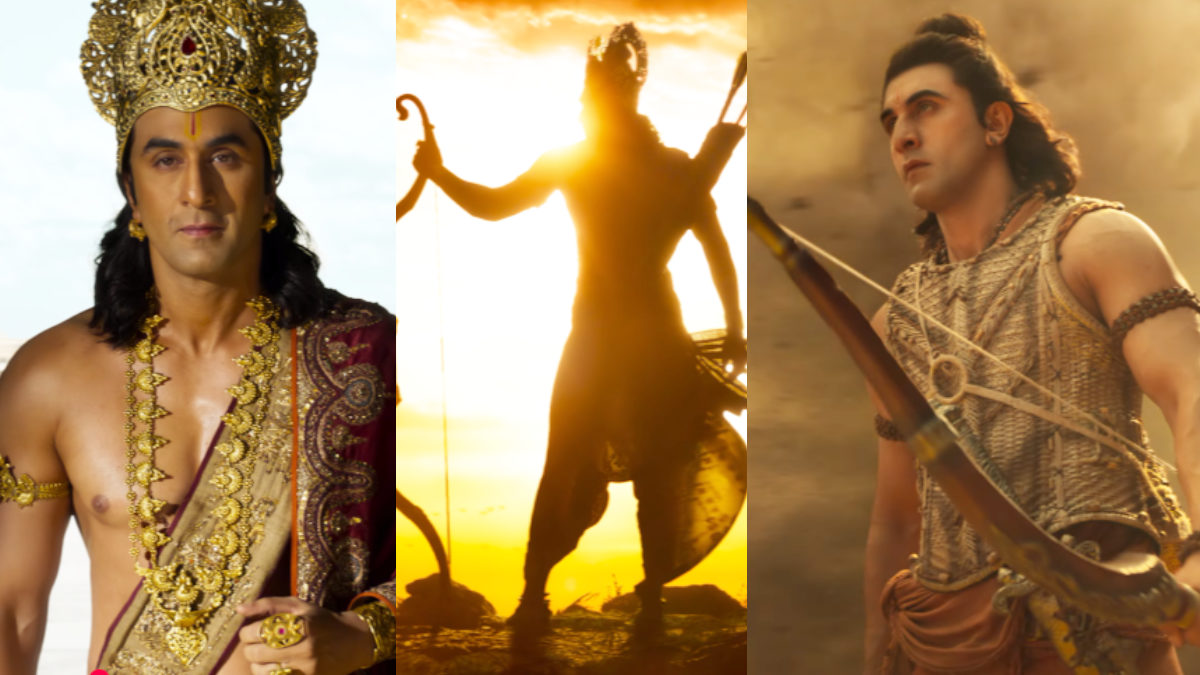
The Ranbir Kapoor starrer Nitesh Tiwari’s Ramayana has understandably generated enormous excitement. With a reported runtime of around six plus hours spread across two films, it is arguably the most ambitious Indian cinematic project ever attempted. Yet, beyond the visual spectacle, star cast and VFX, there is one question that deserves serious discussion, can six hours truly capture the soul of the Ramayana? This isn’t a question about budgets or technology. It is about storytelling.
When Ramanand Sagar adapted the Ramayana for television, he spread it across 78 episodes of 35 minutes each, to narrate the epic. That luxury transformed the viewing experience. Characters were not simply introduced, they evolved. Dasharath’s anguish, Bharat’s renunciation, Lakshman’s devotion, Hanuman’s humility and Ravan’s arrogance were allowed to breathe. Perhaps more importantly, the serial was never in a hurry.
Entire scenes were built around conversations on dharma, duty, sacrifice, kingship and morality. Those dialogues became timeless because they were not mere exposition; they were philosophical debates that invited viewers to reflect. Even today, decades later, many audiences can recall those exchanges more vividly than the battles themselves.
Cinema, however, operates under a very different discipline. Six hours may sound substantial by film standards, but it is barely one-eighth the duration of Ramanand Sagar’s television adaptation. Inevitably, numerous episodes, relationships and reflective conversations will have to be condensed, or omitted altogether.
This raises an uncomfortable but important question. Will Nitesh Tiwari’s Ramayana become an extraordinary visual retelling, or will it also preserve the emotional and philosophical depth that has defined the epic for generations?
History offers an interesting comparison.
Yugo Sako’s animated Ramayana: The Legend of Prince Rama compressed the epic into a little over two hours. Despite its brevity, it remains one of the most respected adaptations ever produced because its screenplay understood exactly what to retain. It sacrificed volume without sacrificing dignity. That is perhaps the benchmark before Nitesh Tiwari, not merely to narrate the story, but to preserve its spirit.
This is not an argument against cinematic adaptation. Every medium demands its own language. No one expects a two-film saga to reproduce a television serial scene for scene. But audiences should also recognise that scale alone cannot replace depth.
The most memorable moments in the Ramayana are often not the grand battles or celestial weapons. They are the conversations. Ram accepting exile without resentment. Bharat refusing the throne. Hanuman discovering his own strength. Vibhishan choosing righteousness over blood ties. These are moments that derive their power from silence, restraint and thoughtful dialogue, not spectacle.
If those moments are rushed, no amount of visual grandeur can compensate.
Perhaps the real challenge before Nitesh Tiwari is not whether he can recreate the Lanka war on an unprecedented scale. Modern technology can achieve that. The greater challenge is whether he can make audiences pause, reflect and return home discussing a conversation rather than a CGI sequence.
If he succeeds, Ramayana could redefine Indian epic cinema.
If not, it may still become a visual marvel, but one that reminds us why Ramanand Sagar’s version continues to occupy a unique place in Indian cultural memory.
The debate, therefore, is not about comparing two creators across different eras. It is about asking a simple question that every adaptation of a timeless epic must confront, can the essence of the Ramayana be compressed without diminishing its soul?