
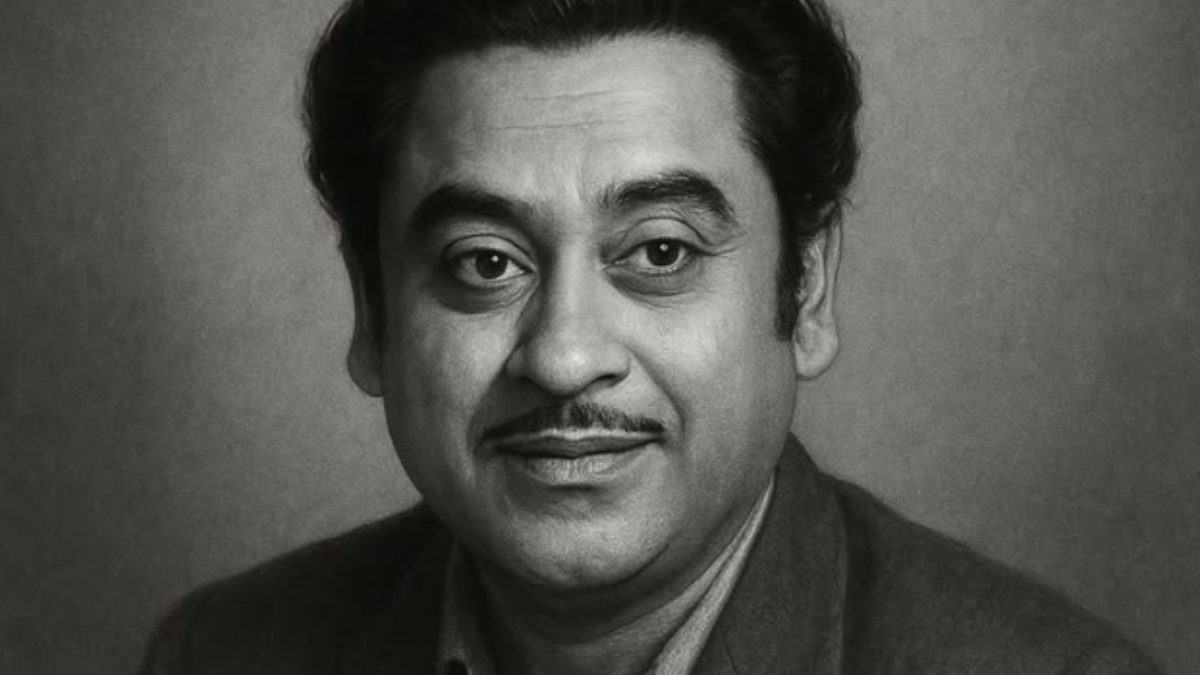
For generations of music lovers, Kishore Kumar has remained synonymous with timeless melodies, effortless yodeling and an unmatched ability to breathe life into every song he sang. However, away from the recording studio, Kishore was equally legendary for his unconventional personality, unwavering principles and unpredictable sense of humour. Decades after his passing, several verified incidents from his life continue to fascinate fans because they reveal an artist who refused to compromise, whether it involved money, politics or creative freedom.
One of the most talked-about aspects of Kishore Kumar’s personality was his insistence on being paid before he worked. In an era when many artistes hesitated to demand their dues, Kishore made it clear that professional commitments deserved professional treatment. His way of conveying the message, however, was unlike anyone else’s.
During one film shoot, after receiving only half of his agreed remuneration, Kishore reportedly arrived on the set with makeup applied to just one side of his face. When questioned by the filmmakers, he calmly remarked that half the payment deserved only half the makeup. In another widely narrated incident, he was asked to perform a simple shot that required him to walk through a doorway after receiving only part of his fee. Kishore walked through the door exactly as instructed, continued to his car and drove home, leaving the unit stunned.
These stories earned him the reputation of being eccentric, but those who knew him closely often pointed out that his behaviour stemmed from a strong belief that artistes deserved to be treated fairly.
Interestingly, the same Kishore Kumar who refused to compromise over professional commitments could be remarkably generous when it came to people he admired. One of the finest examples of this relationship was with legendary filmmaker Satyajit Ray.
When Ray was making Charulata in 1964, he wanted Kishore Kumar to sing the Rabindra Sangeet classic Ami Chini Go Chini Tomare. Aware of Kishore’s reputation regarding payments, Ray was reportedly concerned about whether his modest budget would allow him to afford the singer. Kishore not only recorded the song with immense sincerity but also declined to accept any remuneration out of his respect for the filmmaker.
Another story associated with their friendship has endured for decades. During the financially difficult production of Pather Panchali, Ray is said to have received financial help from Kishore Kumar, who quietly lent him ₹5,000 to help the landmark project continue. While this anecdote has been repeated in several biographies and media reports over the years, it remains one of the most touching stories associated with Kishore’s lesser-known generosity.
Perhaps the biggest example of Kishore Kumar standing by his convictions came during the Emergency in 1976. Government authorities reportedly requested him to perform at a state-sponsored political programme. Kishore declined the invitation, unwilling to associate his art with political campaigning.
The refusal had immediate consequences. The Ministry of Information and Broadcasting banned his songs from being aired on All India Radio and Doordarshan, significantly reducing his presence on government-controlled broadcasting platforms. Despite the professional setback, Kishore refused to apologise or change his stand, making the episode one of the defining examples of an Indian artiste choosing principle over convenience.
Away from cinema, Kishore gradually became increasingly private. Unlike many of his contemporaries, he preferred spending time at home rather than attending social gatherings. Among the many stories that emerged from this phase of his life is one involving a journalist who visited his residence for an interview.
The reporter reportedly found Kishore walking through his garden while talking to his trees. When asked what he was doing, Kishore introduced the trees individually, explaining that each had a name and jokingly describing them as some of his most honest companions. Whether interpreted as humour, loneliness or simply his unique outlook on life, the incident became another unforgettable chapter in the folklore surrounding the singer.
His unconventional nature was equally evident inside the recording studio. Kishore Kumar never received formal classical music training, yet he consistently astonished composers and sound engineers with his instinctive understanding of voice modulation and microphone technique.
One of the finest examples remains Aake Seedhi Lagi Dil Pe from Half Ticket, where he convincingly rendered both the male and female portions of the song himself, seamlessly switching between vocal registers. The performance continues to be admired as a remarkable display of natural vocal control, proving that musical brilliance is not always defined by formal training alone.
More than three decades after his passing, these stories continue to resonate because they reveal the man behind the music. Kishore Kumar was never interested in fitting into industry conventions. He fought for professional respect, remained fiercely independent in his beliefs, displayed unexpected generosity towards people he admired and approached both life and music with an originality that very few artistes have matched.
For millions of admirers, Kishore Kumar’s legacy extends far beyond the countless classics he recorded. It lives equally in these unforgettable stories that remind fans why he was not just one of Indian cinema’s greatest playback singers, but also one of its most fascinating personalities.