
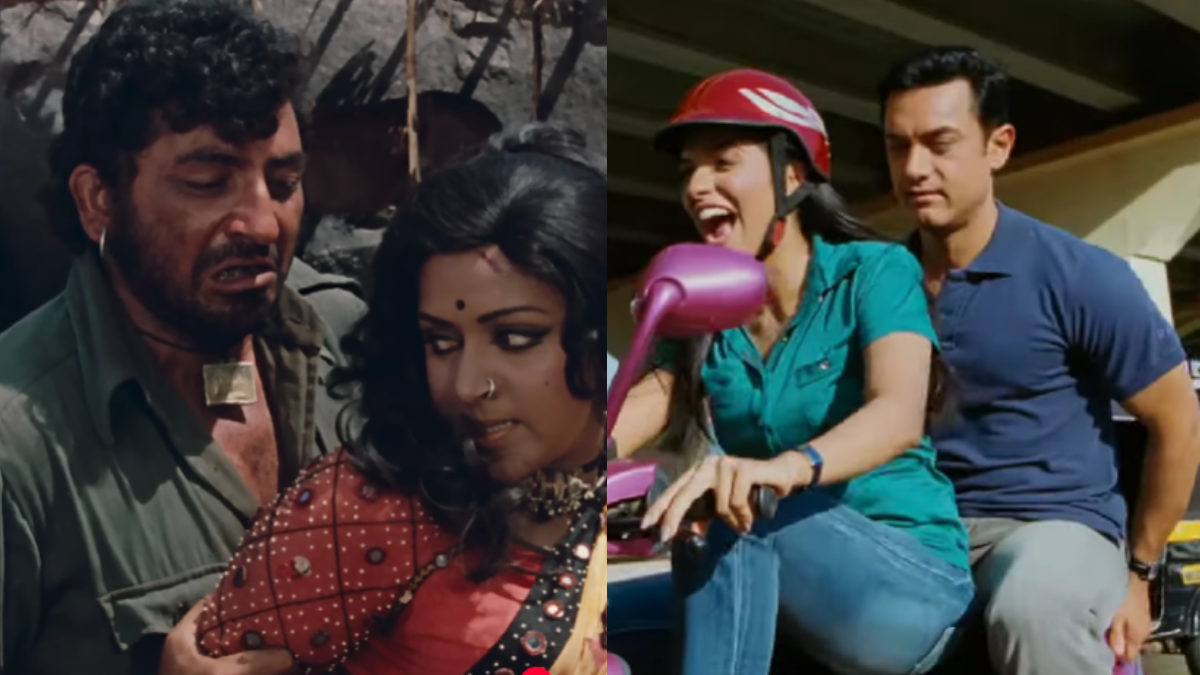
The obsession with box office milestones in Bollywood has never been louder. The ₹100 crore club, ₹500 crore benchmarks and now the ₹1000 crore conversation dominate industry discourse. But strip away the headline numbers, and a more uncomfortable question emerges. Are today’s blockbusters truly bigger than the classics, or are we measuring success through an inflated lens?
To understand this, one has to go back to Kismet. Often cited as India’s first ₹1 crore grosser, the film achieved this at a time when ticket prices were measured in annas. Adjusted for inflation and more importantly for footfalls, Kismet’s reach would dwarf most modern releases. It wasn’t just a hit, it was a nationwide phenomenon in an era with limited screens.
The same argument becomes even stronger with Sholay. While its ₹10 crore figure is often quoted as a milestone, trade veterans have long pointed out that Sholay sold an estimated 15–20 crore tickets in India. In today’s terms, that level of theatrical penetration is virtually unheard of. Even the biggest modern blockbusters operate in a far more fragmented audience environment.
The ₹100 crore benchmark, popularised by Ghajini, marked a shift not just in box office reporting but in perception. For the first time, a number became a brand. However, multiplex expansion had already pushed average ticket prices significantly higher by this point. What appeared to be exponential growth in revenue was, in part, a reflection of rising ticket costs rather than proportionate audience growth.
Even global success stories like Disco Dancer, which crossed ₹100 crore worldwide largely on the back of the Soviet market, highlight a different reality. Its success was driven by massive audience turnout across territories, not premium pricing or limited high-value screens.
The modern era’s defining moment arguably came with Baahubali 2: The Conclusion. Its ₹500 crore Hindi net collection demonstrated the power of pan-India storytelling and event cinema. Yet even here, the scale was achieved through a combination of wider release, higher ticket prices, and repeat premium-format viewings rather than unprecedented footfall records.
Now, as films push towards and beyond the ₹1000 crore mark, the gap between revenue and actual audience size becomes even more pronounced. A ₹1000 crore grosser today does not necessarily mean it has been watched by more people than Sholay or other pre-multiplex era blockbusters.
This is not to diminish contemporary success. If anything, it highlights how the business model has evolved. Today’s films operate in a high-cost, high-return ecosystem driven by multiplex economics, overseas markets, and digital amplification. The definition of a “hit” has shifted from how many people watched a film to how much revenue each viewer generates.
The real trade insight lies in recognising that box office milestones are no longer directly comparable across eras. A ₹100 crore film in 2008, a ₹500 crore film in 2017, and a ₹1000 crore film today exist in entirely different economic ecosystems.
Perhaps the industry needs to revisit an older metric that has quietly faded from mainstream conversation: footfalls. Because while revenue defines business success, audience volume defines cultural impact. And in that metric, many of Bollywood’s biggest milestones may still belong to the past.
In the end, the question is not whether today’s films are bigger. It is whether they are reaching as many people.