
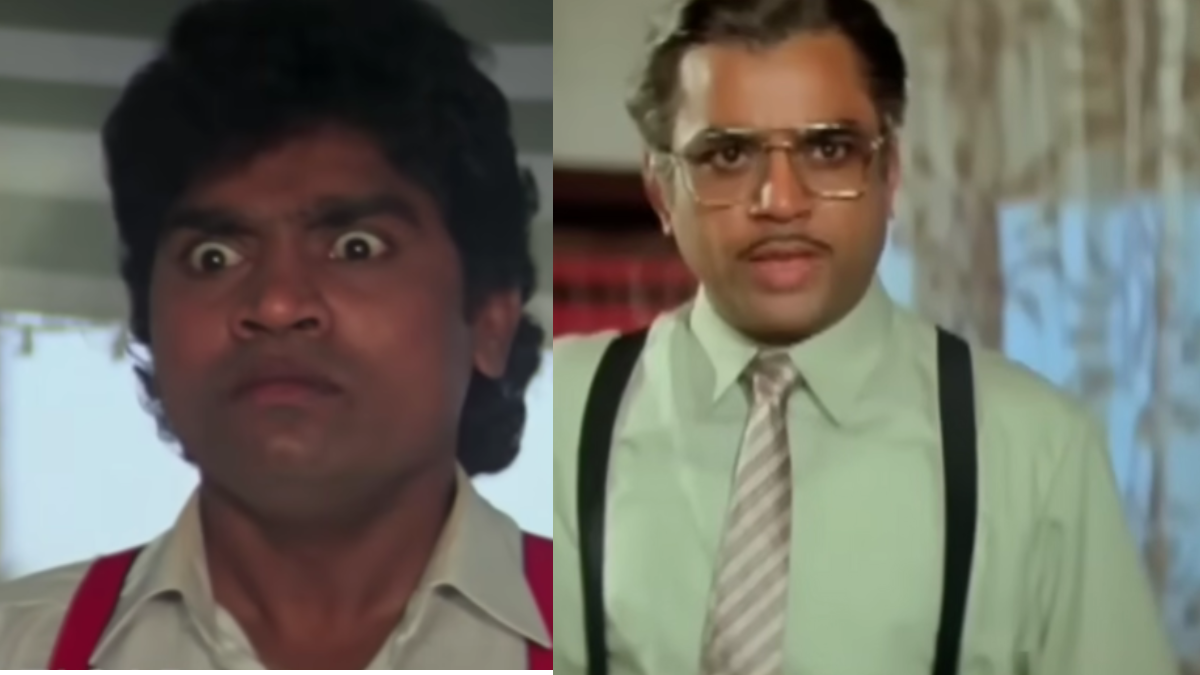
In the 90s, Hindi cinema quietly built a parallel star system that did not rely on heroes or heroines. It ran on laughter. Actors who were never positioned as leads became the faces audiences remembered the most. You could walk into a film for the star, but you often walked out remembering the comedian. Take Johnny Lever in Baazigar. The film itself is a thriller driven by Shah Rukh Khan, but decades later, people still recall Johnny Lever’s track with the same clarity. It was not just comic relief. It became part of the film’s identity. The same holds true for Paresh Rawal in Andaz Apna Apna. His character Teja did not just support the narrative. It lived on far beyond the film, turning into a cultural reference that continues to be quoted even today.
This was not accidental. The industry at the time understood the value of these performers. Writers wrote scenes keeping them in mind. Directors gave them space to stretch. Producers knew that their presence added repeat value. In many films, they were the reason audiences returned for a second viewing. Their scenes travelled outside the theatre through mimicry, conversations and everyday humour.
Actors like Kader Khan and Shakti Kapoor became essential to this ecosystem. Kader Khan shaped the language of mainstream comedy with dialogues that felt both exaggerated and familiar. Shakti Kapoor turned even the most absurd characters into something memorable. Tiku Talsania represented the everyday man, someone the audience could instantly recognise from their own lives. Satish Shah and Asrani brought a quieter, more situational humour that balanced the louder performances.
What made this era unique was that these actors were not competing with the leads. They were complementing them while building their own space. Over time, that space became strong enough to stand on its own. Their presence started to feel like a guarantee. A film without a strong comic track often felt incomplete.
There was also a certain honesty to their performances. The humour did not rely on quick punchlines alone. It came from characters, situations and timing. It allowed the audience to invest in them, not just laugh at them. That is why these roles lasted. They were not jokes. They were people.
As the industry moved forward, this system slowly faded. Scripts became tighter around the lead characters. The idea of separate comic tracks reduced. Comedy itself shifted towards stand up and television formats. The space that once allowed these character actors to breathe and grow started to shrink.
What remains today is memory. And it is a strong one. When people revisit films from that era, they often remember the comedian before they remember the plot. That says something important about how Hindi cinema once functioned. It was not always about who was at the centre of the poster. Sometimes, it was about who stayed with you after the film ended.
That is the real legacy of actors like Johnny Lever and Paresh Rawal. They were not just part of the film. In many ways, they became the reason the film was remembered at all.