
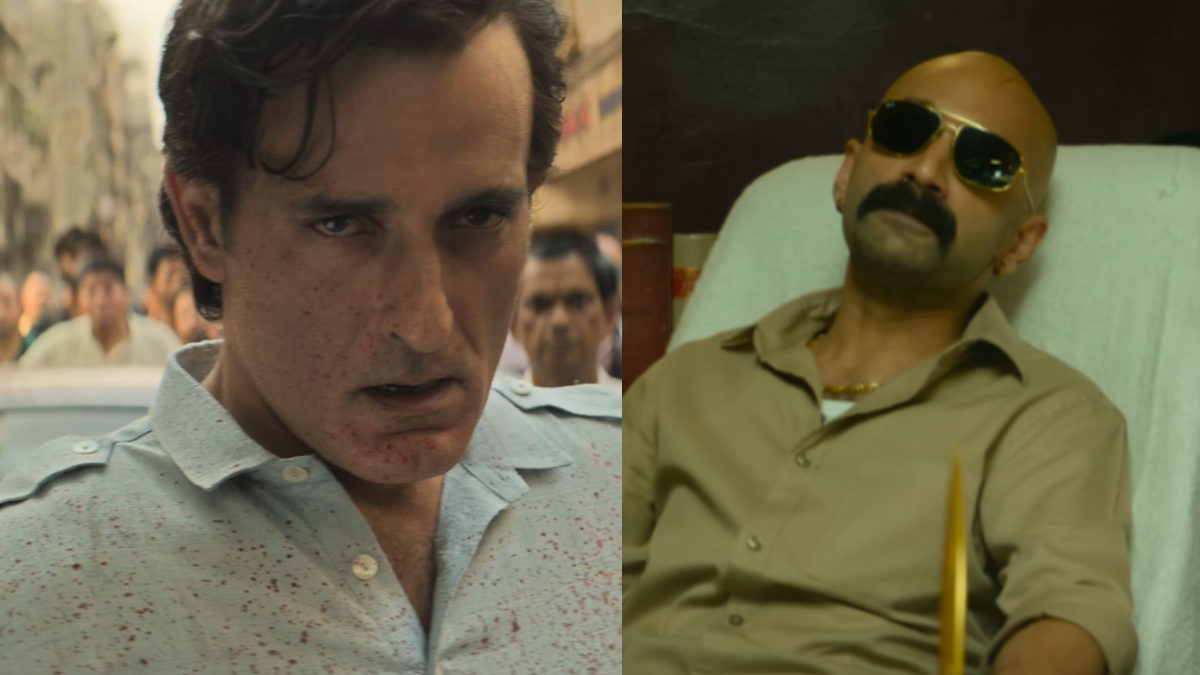
Indian cinema didn’t suddenly become darker in 2025. It became sharper. Heroes were still heroic, action still thunderous, but something fundamental shifted – villains stopped performing for attention. They operated with certainty. They didn’t explain themselves. And audiences couldn’t look away. At the centre of this shift stood Akshaye Khanna in Dhurandhar — arguably the most controlled and intelligent villain Bollywood has seen in years.
Khanna’s antagonist wasn’t driven by rage or revenge. He was driven by order. He understood systems, leverage, and timing. Violence was optional. Authority was not. What made the performance unsettling was its realism. This wasn’t cinematic evil. This felt like power exercised quietly, efficiently, and without guilt. By the time the film ended, it was clear – the hero survived the story, but the villain defined it.
That tone echoed across industries.
In Pushpa 2: The Rule, Fahadh Faasil’s Bhanwar Singh Shekhawat returned more dangerous than before. No longer just an arrogant officer bruised by Pushpa, he became obsession incarnate. Authority slipping through his fingers drove him to volatility. His villainy was psychological — ego fighting humiliation — and it gave the film its sharpest edges.
Kantara took an even bolder route. Kantara Chapter 2 refused to offer a single villain face. Instead, it positioned greed, land exploitation, and inherited entitlement as the antagonists. The enemy wasn’t one man. It was history repeating itself. In a year obsessed with power structures, this felt quietly radical.
Bollywood returned to history with Chhaava, where Akshaye Khanna appeared again — this time as Aurangzeb. Two villain roles in the same year, radically different, equally controlled. As Aurangzeb, Khanna stripped the character of melodrama. His authority came from belief, not cruelty. He didn’t need to intimidate. He assumed obedience. That confidence made him chilling.
Mainstream spectacle followed suit in War 2. Casting NTR Jr. as the antagonist reframed the franchise. This was not hero versus madness. It was hero versus mirror. Two men trained by the same system, divided only by allegiance. The villain wasn’t wrong in technique — only in loyalty. That closeness made the conflict far more tense than any explosion.
Even performances like Bobby Deol’s near-silent brutality and Riteish Deshmukh’s polished entitlement earlier had prepared audiences for this shift. By 2025, filmmakers trusted restraint more than noise. The result was a rare year where villains didn’t feel written to lose. They felt written to exist. And that made their defeats — when they came — feel earned, not convenient.
If heroes carry films, villains give them weight. In 2025, Indian cinema finally let that weight settle.
Threaded through all these films was a clear pattern. Villains in 2025 were:
-Calm, not chaotic
-Strategic, not reactive
-Backed by systems, not just strength
-Convinced they were right