
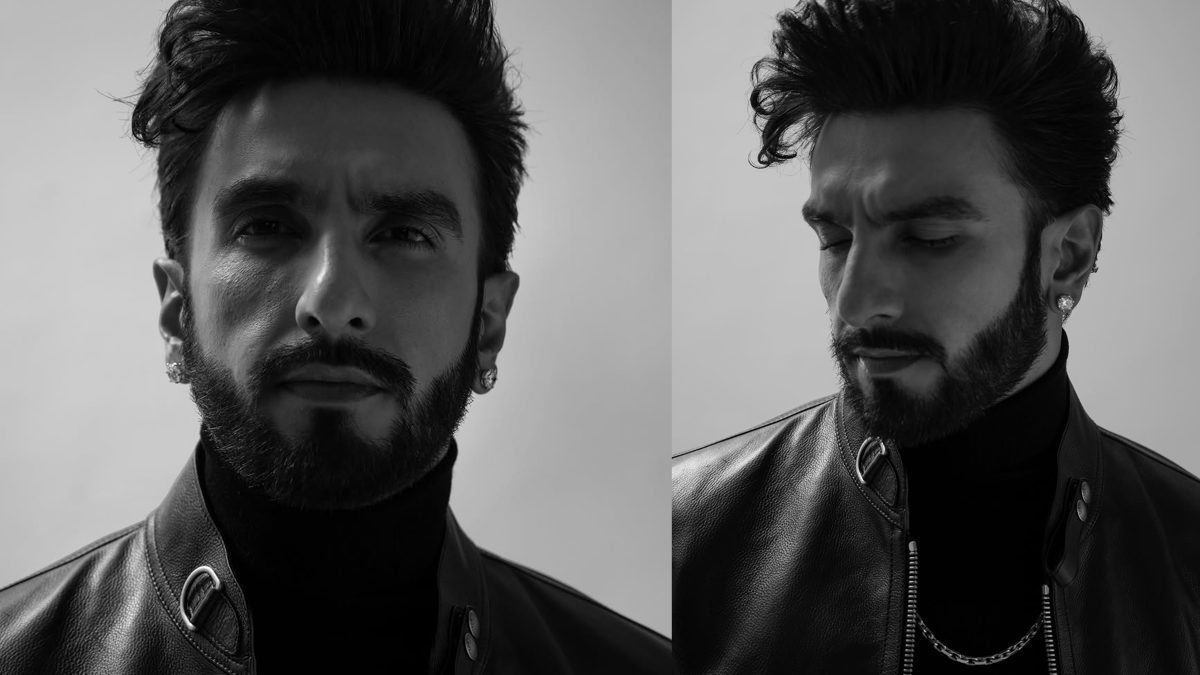
Actor Ranveer Singh has landed in legal trouble following a controversy surrounding his public remarks and stage performance at the International Film Festival of India (IFFI) 2025. Months after facing criticism online, an FIR has now been registered against the actor at the High Grounds Police Station in Bengaluru, as reported by NDTV. The complaint alleges that Ranveer insulted Hindu religious sentiments and disrespected the Chavundi Daiva tradition of coastal Karnataka.
According to the FIR, the case has been registered under Sections 196, 299, and 302 of the Bharatiya Nyaya Sanhita (BNS). The complaint was filed by Bengaluru-based advocate Prashanth Methal, who accused the actor of making derogatory remarks and performing a mocking stage act that allegedly demeaned sacred elements of the Daiva worship tradition.
The incident in question reportedly took place on November 28, 2025, during the closing ceremony of IFFI in Goa. Actor Rishab Shetty, whose film Kantara: A Legend – Chapter 1 draws heavily from the Daiva worship traditions of Karnataka’s coastal belt, was also present at the event. Ranveer Singh took to the stage and imitated a Daiva possession scene performed by Rishab in the Kantara films, which soon sparked backlash from sections of the audience and social media users.
In his complaint, advocate Prashanth Methal alleged that Ranveer imitated expressions associated with Panjurli and Guliga Daiva in a crude, comical, and derogatory manner. The complaint further claimed that Ranveer referred to Chavundi Daiva as a “female ghost,” a description the complainant said was deeply offensive and factually incorrect. According to the advocate, Chavundi Daiva is a revered guardian deity symbolising divine feminine energy in the coastal regions of Karnataka, and referring to the deity as a ghost amounted to a serious misrepresentation.
The FIR stated that such remarks and actions hurt the religious sentiments of devotees who hold the Daiva tradition sacred. The complainant maintained that the stage act trivialised an ancient spiritual practice and crossed the line between appreciation and mockery.
The matter has now been referred to the 1st Additional Chief Metropolitan Magistrate (CMM) Court in Bengaluru and is scheduled for a hearing on April 8. Notably, a private complaint had been filed earlier on December 27 last year before the Additional Judicial Magistrate in Bengaluru. Subsequently, on January 23 this year, the court directed the High Grounds Police Station to register an FIR under Section 175, clause 3 of the Bharatiya Nyaya Sanhita, leading to the current proceedings.
Following widespread criticism and outrage on social media, Ranveer Singh issued a public apology. In a note shared online, the actor clarified that his intention was never to offend religious sentiments. “My intention was to highlight Rishab’s incredible performance in the film,” Ranveer wrote. “Actor to actor, I know how much it takes to perform that particular scene the way he did, for which he has my utmost admiration.”
He further added, “I have always deeply respected every culture, tradition, and belief in our country. If I’ve hurt anyone’s sentiments, I sincerely apologise.” Despite the apology, the controversy continued to gain traction, with several users calling the act insensitive and disrespectful, particularly given the cultural and spiritual significance of the Daiva tradition.
Videos from the IFFI event that circulated online showed Ranveer praising Kantara Chapter 1 before referring to a scene as one where “the female ghost (Chamundi daiva) enters your body.” He then proceeded to imitate the possession sequence on stage. This reportedly happened despite Rishab Shetty having earlier requested Ranveer not to recreate the act publicly.
While some defended Ranveer’s intent as admiration for a fellow actor’s performance, critics argued that sacred rituals and spiritual traditions should not be reduced to performative mimicry on public platforms. The controversy reignited broader discussions around cultural sensitivity, representation, and the responsibilities of public figures when engaging with religious and traditional practices.
As the legal process unfolds, the case is expected to draw continued attention, especially given the popularity of Kantara and the cultural significance of Daiva worship in Karnataka. All eyes will now be on the upcoming court hearing as authorities examine whether the actor’s actions constitute a legal offence under the Bharatiya Nyaya Sanhita.