
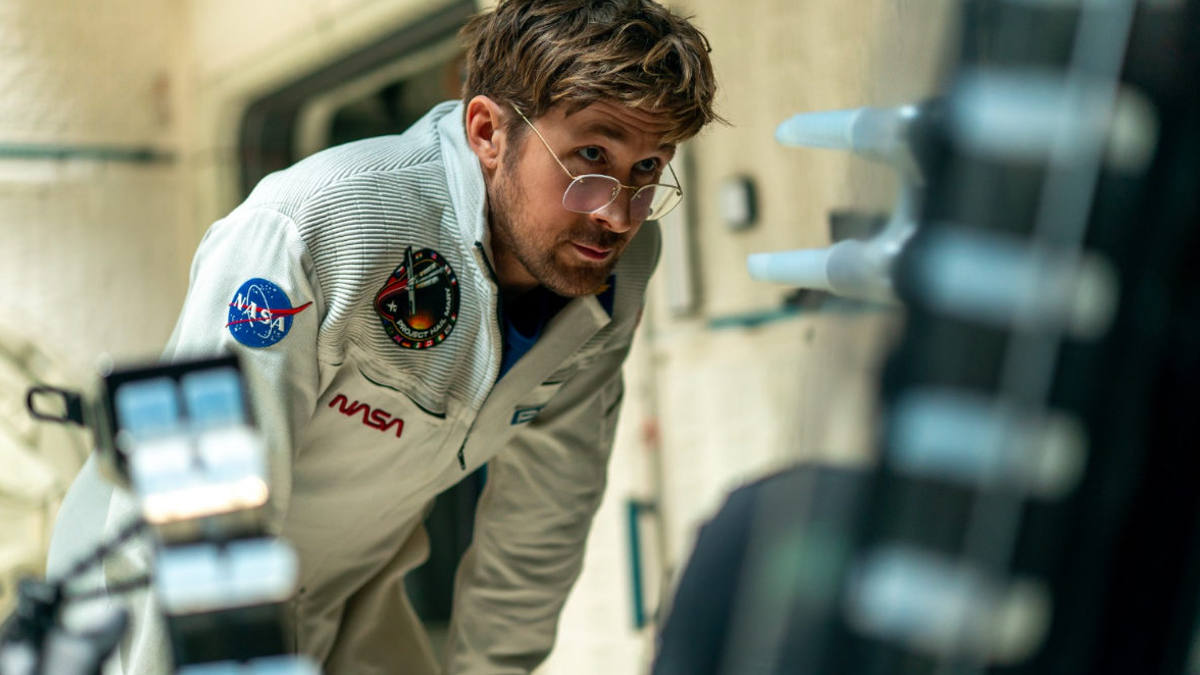
There are good movies. There are great movies. And then there are films that remind you why cinemas still exist. Project Hail Mary has finally arrived on Prime Video after an impressive 105-day theatrical window, following a global box office run that crossed $683 million. At a time when many studios rush blockbuster films to streaming in barely 45 days, this one was allowed to breathe, find its audience and become the theatrical event it deserved to be. And honestly, if there was one movie this year that justified a long run in cinemas, it was this.
Ryan Gosling delivers one of the most heartfelt performances of his career as Ryland Grace, carrying a story that somehow makes science funny, emotional, thrilling and surprisingly easy to understand. Instead of overwhelming audiences with complex theories, Project Hail Mary turns science into an adventure. It’s funny when it needs to be, devastating when it has to be, and constantly reminds you why original blockbuster filmmaking still matters.
The film ultimately earned more than $683 million worldwide, making it one of the biggest original sci-fi successes in recent years. In an industry where studios increasingly rely on sequels, superheroes and familiar franchises, audiences proved they’ll still show up for a completely original story when it’s made with enough ambition.
What makes the film even more impressive is how much effort went into creating its world. The production reportedly featured more than 2,000 visual effects shots, but some of its most breathtaking moments weren’t created by simply throwing everything into a computer.
Take the unforgettable glowing pink Astrophage sequences. Most people would assume those dreamlike visuals were entirely CGI. They weren’t. Cinematographer Greig Fraser and his team built a practical lighting setup using thousands of infrared LEDs, modified cameras to capture wavelengths invisible to the human eye, and even placed moving water between sheets of glass in front of the lens to create the floating, organic movement of the light. Digital effects enhanced the shots later, but the magic began on set. It’s the kind of filmmaking ingenuity that deserves far more appreciation than it gets.
That craftsmanship is visible throughout the film. Every frame feels designed with intention rather than assembled inside a computer. The visual effects never overshadow the story. Instead, they make the universe feel believable, emotional and immersive.
Watching all of that unfold in a packed theatre, with a giant screen and booming sound, was an experience that’s almost impossible to recreate at home. Some films are perfectly fine on streaming. Others are built for cinemas.
Project Hail Mary belongs firmly in the second category.
Of course, it’s wonderful that millions more people will finally get to watch it from the comfort of their homes. Streaming gives great films a second life, and that’s something worth celebrating. But it’s also a reminder that sometimes convenience comes at the cost of experience.
This wasn’t just another sci-fi blockbuster. It was a celebration of imagination, practical filmmaking and the kind of original storytelling Hollywood rarely takes a chance on anymore. It proved that audiences are still willing to embrace fresh ideas when they’re executed with genuine heart and spectacle.
If you skipped it in theatres, now’s your chance to fix that mistake. Just don’t be surprised if, halfway through, you find yourself wishing you’d experienced it on the biggest screen you could find.