Home Blog Page 209

Sabrina Carpenter’s “House Tour” Video Hits Massive Streaming Milestone

0

Global pop star Sabrina Carpenter has just released the official music video for her hit song “House Tour,” and fans are already loving it. The track is part of her latest album Man’s Best Friend, which has been performing extremely well across the world.

The video is co-directed by Sabrina herself along with Margaret Qualley, and it also features actress Madelyn Cline. Together, they bring a fun and engaging visual experience that matches the vibe of the song. The video gives fans a closer look at Sabrina’s creative style and personality, making it a must-watch for her audience.

Man’s Best Friend has already proven to be a massive success. The album received an RIAA Platinum certification, showing just how popular it has become. It also debuted at number one on the Billboard 200 chart, which is a huge achievement for any artist. Beyond the United States, the album reached the top spot in several countries including the United Kingdom, Australia, Canada, France, Germany, and many more. This global success highlights Sabrina’s growing influence in the music industry.

“House Tour” stands out as one of the biggest songs from the album. The song’s catchy tune and relatable theme have made it a favorite among listeners.

Adding to this exciting moment, Sabrina is set to perform at Coachella this weekend. This will be her first time headlining the festival, marking another major milestone in her career. Coachella is known for featuring some of the biggest names in music, and Sabrina’s inclusion as a headliner shows just how far she has come.

With a hit album, a trending music video, and a major festival performance ahead, Sabrina Carpenter is clearly having a standout year. Fans around the world are eagerly watching what she will do next.

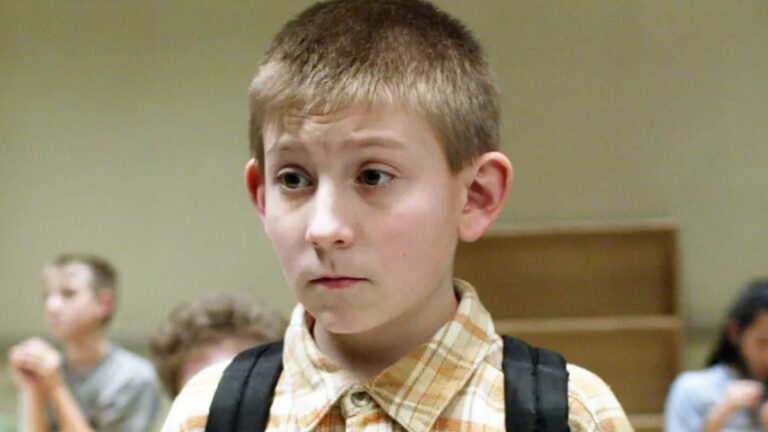
Dewey Said No: Why Erik Per Sullivan Walking Away From Malcolm in the Middle Revival Actually Matters

0

There’s something oddly refreshing about this story. In an industry where reboots are cash machines and nostalgia sells better than anything else, someone just said no. Not quietly. Not reluctantly. Just… no. Erik Per Sullivan, the actor who played Dewey in Malcolm in the Middle, has officially chosen not to return for the revival. And according to Jane Kaczmarek, it wasn’t because of money. In fact, they offered him “buckets of money.”

And he still walked away.

That one detail changes everything.

Because usually when actors skip revivals, there’s drama. Scheduling issues. Creative differences. Quiet fallouts. But this isn’t that. This is someone who has already stepped away from the industry choosing to stay away.

Right now, Erik is studying at Harvard. Reading Dickens. Living a life that has nothing to do with cameras, scripts, or fan expectations. And honestly, that might be the most unexpected plot twist of all.

Think about it. Dewey wasn’t just another character. He was chaos, innocence, and weird brilliance all rolled into one. He was the unpredictable heart of the show. The one who could turn a simple scene into something completely bizarre and unforgettable.

And now, that character is coming back. Just… not with him.

The revival, titled Malcolm in the Middle: Life’s Still Unfair, is bringing back almost everyone. Frankie Muniz returns. Bryan Cranston is back. The family is reuniting for Hal and Lois’ 40th anniversary.

But Dewey? He’s being recast.

And that’s where it gets complicated.

Because recasting works in some shows. But in a series like Malcolm in the Middle, where each character had such a specific rhythm, energy, and identity, it’s not just about filling a role. It’s about replacing a feeling.

Dewey wasn’t written. He performed in a way that felt completely singular.

So when fans hear that Erik turned down the role, it doesn’t just feel like a casting update. It feels like a missing piece.

But here’s the part no one is saying out loud enough.

Maybe this is actually kind of admirable.

He didn’t come back for the money. He didn’t come back for nostalgia. He didn’t come back because fans wanted it. He chose something else entirely. A normal life. A different path.

And in a world where everyone is constantly pulled back into the spotlight, that kind of decision feels rare.

Almost rebellious.

At the same time, it also raises a bigger question about revivals in general. Are we trying to recreate something that can’t really be recreated? Or are we okay with getting a version of it that feels slightly different, slightly incomplete?

Because let’s be honest. Fans will watch this revival. The curiosity alone guarantees that. But somewhere in the background, there will always be that thought.

What would it have felt like if Dewey was really Dewey?

Still, maybe that’s not the point anymore.

Maybe the story here isn’t about what the revival is missing. Maybe it’s about what Erik Per Sullivan chose instead. A life that doesn’t depend on reliving the past.

And in a way, that might be the most grown-up ending Dewey could ever have.

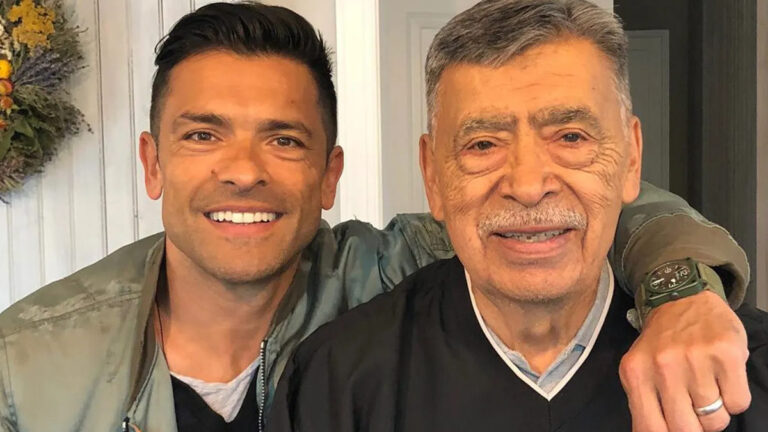
Mark Consuelos Breaks Down On Live TV As He Announces Father’s Death

0

Some moments on television don’t feel like television at all. They feel real, raw, and almost too personal to be watched. This was one of those moments. Mark Consuelos opened Live With Kelly and Mark with something no host ever wants to say. His father, Saul Consuelos, had passed away after a long illness. And you could see it immediately. This wasn’t a scripted segment. This was grief, unfolding in real time. He spoke slowly, trying to hold himself together. He shared that his father passed peacefully two weeks prior. But what followed wasn’t just an announcement. It was a reflection. A son trying to put into words what his father meant to him.

Sitting beside him, Kelly Ripa didn’t just support him as a co-host. She spoke as family. As someone who had known Saul for over three decades. And her words hit just as hard.

She called him the greatest person she had ever known. Not in a dramatic way, not for effect, but with the kind of certainty that only comes from years of shared life. She spoke about how deeply he impacted their family, how their children are experiencing loss for the first time, and how this absence is going to stay with them.

And that’s when it really sinks in. This isn’t just about losing a father. It’s about losing a presence that shaped an entire family.

Mark went on to describe his father’s journey. A young boy from Mexico who moved to the United States, built a life through discipline and service, spent 30 years in the Navy, and continued to educate himself along the way. It’s the kind of story that doesn’t just inspire, it defines what resilience looks like.

But what stood out the most wasn’t the achievements. It was what Mark said he learned from him.

Not through lectures, although there were many, but through observation. By simply watching the kind of man his father chose to be every day.

That line stays with you. Because it’s something so many people relate to but rarely articulate. The quiet influence of a parent. The lessons you don’t even realize you’re learning until much later.

There was also something heartbreakingly human about the smaller details. Talking about taking care of his mother now. Trying to bring her closer. Wanting to keep the family together in a moment when everything feels like it’s shifting.

And then there was that one line. The one that didn’t need emphasis but carried everything.

“He raised three pretty good kids.”

It sounds simple. But in that moment, it felt like the ultimate tribute. Not awards. Not titles. Just the life he built through the people he left behind.

Mark also shared that he was able to say goodbye. That matters. In ways that only people who have experienced loss understand. And he spoke about returning to work, even rehearsing for his Broadway play, as something that helped him keep going.

That balance between grief and routine is something many people struggle with. And seeing it play out so openly, without pretense, made the moment even more powerful.

What makes this story linger is not just the loss, but the way it was shared. There was no attempt to dramatize it. No effort to control how it would be perceived. It was just honesty.

In a world where most things on screen are polished and filtered, this felt different. It reminded you that behind every public figure is a private life. A family. A history. A loss that doesn’t care about cameras or audiences.

And maybe that’s why it resonated so deeply. Because for a few minutes, it stopped being about television. It became about something everyone understands.

Saying goodbye to someone who shaped your entire world.

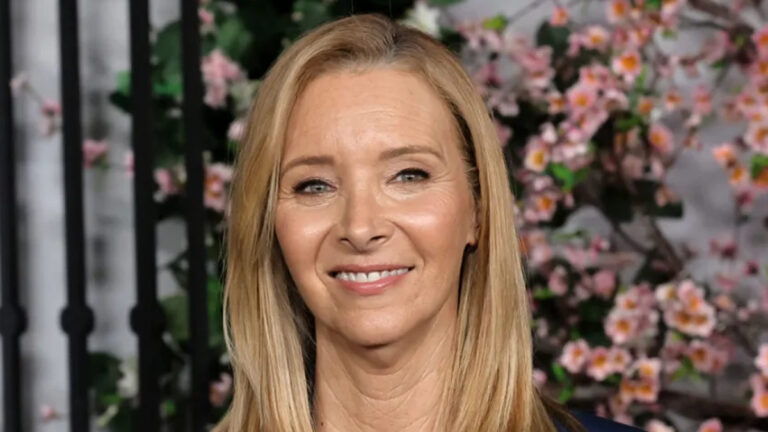
Lisa Kudrow Says Sitcoms Have Lost Their Edge and She Might Be Right

0

When Lisa Kudrow speaks about comedy, people listen. Not just because she played Phoebe on Friends, but because she was part of a generation that defined what mainstream humor looked like. Now she is saying something that feels simple but hits hard. Sitcoms today are too afraid. According to Kudrow, modern multi-camera shows are not pushing boundaries anymore. They are playing safe. The jokes are cleaner, softer, less uncomfortable. And for her, that is exactly the problem. Because comedy, at its core, is not supposed to feel safe.

What Kudrow is really pointing out is a shift in how humor is being created and consumed. Earlier sitcoms like Friends, Seinfeld and 30 Rock were not afraid to say things that made audiences pause before laughing. There was always that one line where you thought, did they really just say that?

That tension was the joke.

Today, most shows avoid that space entirely. Writers are more cautious. Platforms are more sensitive. Audiences are more reactive. The result is comedy that feels polished but predictable.

Kudrow calls it out directly. If a joke does not surprise you, is it even working? There is also a deeper layer to what she is saying. It is not just about jokes. It is about risk.

Old sitcoms thrived on taking risks with characters, situations and punchlines. They were not always perfect, but they were memorable. Phoebe was not written to be safe or likable in a traditional way. She was weird, unpredictable and sometimes completely out of pocket. That is what made her iconic.

Today, characters are often written to avoid backlash rather than create impact. Everyone is more aware of how lines might be interpreted, clipped, shared and judged online. So instead of pushing forward, comedy holds back.

At the same time, it is not entirely black and white. The industry has changed. Audiences have changed. What was acceptable in the 90s may not land the same way today. There is more awareness, more sensitivity and more accountability.

But somewhere in that shift, spontaneity has taken a hit.

And that is what Kudrow seems to be missing. Her perspective also raises an uncomfortable question. Are sitcoms evolving or just adapting out of fear?

Because there is a difference.

Evolution means finding new ways to be bold. Adaptation driven by fear means avoiding boldness altogether.

Right now, a lot of mainstream comedy feels like the second. The interesting part is that Kudrow is not completely dismissing new content. She is just not drawn to it. That says a lot.

When someone who helped shape one of the most successful sitcoms of all time feels disconnected from the current format, it signals a gap. Not just generational, but creative.

Maybe the future of comedy is not about going back to the past. It is about finding a middle ground where humor can still surprise without being careless, and still challenge without being offensive.

But one thing is clear.

Safe comedy might keep everyone comfortable.

But uncomfortable comedy is what people remember.

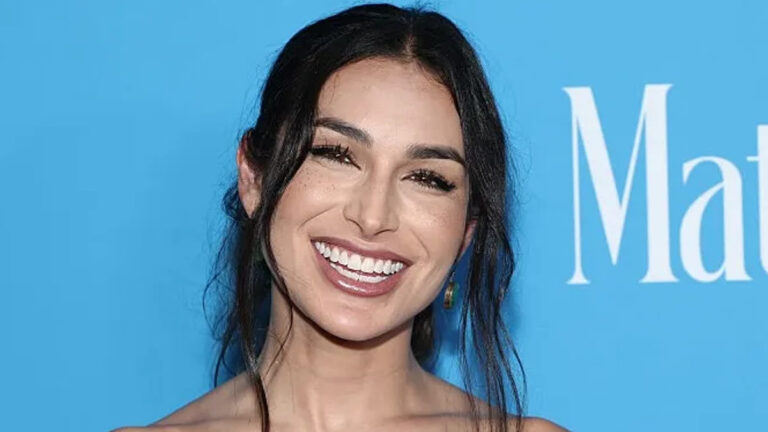
Ashley Iaconetti Calls Out Reality TV Casting While Making Her Return

0

Ashley Iaconetti is back on television, but this time the story is not about romance, heartbreak or even drama. It is about perspective. After building her identity on emotional moments in The Bachelor universe, Ashley is now stepping into The Real Housewives of Rhode Island, a space that is far more rooted in real life than structured reality formats. What she found there surprised even her. She openly admits that the level of conflict and communication shocked her. 

This is not a competition based drama. This is personal, loud and often uncomfortable. Women arguing, raising voices and confronting each other in ways she had never experienced before. For someone who was once known as the emotional center of a show, she now finds herself stepping back and observing rather than reacting.

That is where the irony lies. Ashley Iaconetti, one of reality TV’s most expressive personalities, is now the calmest person in the room. She even acknowledges that fans might find her less dramatic this time. Her life has changed. She is married, she has children and she is in a stable phase that does not naturally create chaos. In a format that thrives on conflict, stability becomes unusual.

But the real moment that has caught attention is not her role in the show. It is her take on Taylor Frankie Paul.

Ashley stated clearly that Taylor should never have been cast as The Bachelorette. Not as speculation, not as gossip, but as a firm opinion. Her reasoning goes beyond headlines and touches on something deeper. She points out that reality television is no longer just about storytelling. It is increasingly about controversy.

Taylor’s past, including highly public personal and legal issues, was already known before casting decisions were made. Ashley questions whether someone navigating that level of personal turmoil should be placed in a position that demands emotional clarity and public accountability. Her concern is not just about optics. It is about responsibility.

This statement reflects a shift in how insiders are beginning to view the industry. Reality television has always been built on heightened emotion, but there is a growing sense that casting is now driven more by shock value than by story integrity.

When audiences watch these shows, they are not just consuming entertainment. They are watching real people go through real situations. When those situations are already volatile, the line between content and consequence starts to blur.

Ashley’s perspective carries weight because she has lived through the system. She understands both the appeal and the pressure. Her words suggest that even those within the industry are beginning to question how far things are going.

Her return to television may bring moments of humor, discomfort and unexpected reactions, but it is her honesty that stands out. Not loud, not dramatic, but direct.

And in an industry that thrives on noise, that kind of clarity might be the most powerful thing of all.

Super Mario Galaxy Movie Just Beat Everything and Proved IP Still Runs Hollywood

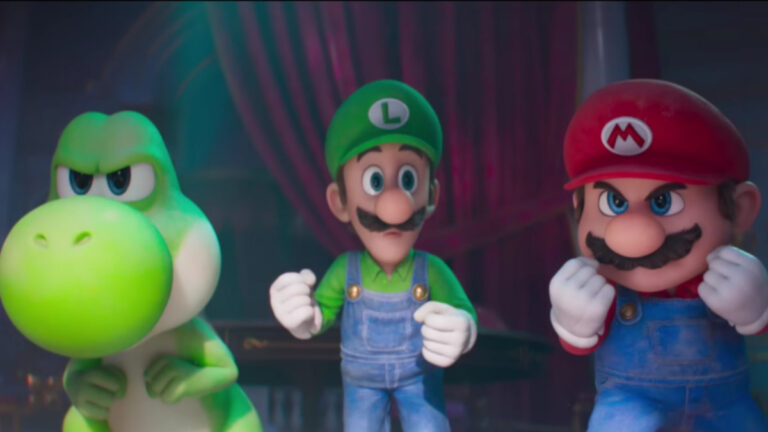
There was a time when original storytelling felt like it could take over Hollywood. That time lasted about two weeks. Because what just happened at the box office is not just a win. It is a reminder of how the industry actually works. The Super Mario Galaxy Movie did not just perform well. It completely dominated, pulling in a staggering $372 million globally in its opening weekend and leaving everything else behind. And the most interesting part is not the number. It is what the number represents.

Just two weeks ago, Project Hail Mary felt unstoppable. It opened big, held steady, and had the kind of word-of-mouth momentum studios dream of. It looked like one of those rare films that could carry itself without relying on nostalgia or an existing fan base.

And then Mario showed up.

Suddenly, the conversation changed. Not because Hail Mary underperformed, but because Mario overperformed at a scale that completely shifts perspective. $131 million domestically. $372 million globally. These are not just good numbers. These are franchise numbers.

And that is the difference. Because Mario is not just a movie. It is decades of familiarity, gaming history, childhood memory, and global recognition packaged into one cinematic experience. You are not selling a story. You are selling something people already love.

That is a huge advantage.

The film, featuring voices like Chris Pratt, Anya Taylor-Joy, and Charlie Day, builds on the success of its 2023 predecessor and pushes it even further. Bigger scale. Bigger world. Bigger audience.

And clearly, it worked.

But what makes this moment even more telling is what is happening around it.

Films like The Drama are still finding their space, pulling in respectable numbers and even recovering budgets. Hoppers continue to hold its ground. Even an Indian film like Dhurandhar: The Revenge is making its presence felt globally.

But none of them are touching Mario. And that is not because they are weaker films. It is because they are competing with something that operates on a completely different level of audience connection. This is where the real conversation begins.

Because every time a film like this dominates, it quietly reinforces a pattern. Studios notice. Investors notice. And slowly, the industry shifts even more toward what feels “safe.” Known characters. Established universes. Recognizable brands.

It is not about creativity disappearing. It is about risk becoming selective.

And audiences, whether consciously or not, are part of that cycle.

We say we want original films. We say we want new stories. But when it comes to buying tickets, familiarity often wins. It is easier. It is guaranteed entertainment. It is something you already trust.

Mario is that trust. And that is why this win matters beyond just numbers.

Because it tells us that Hollywood is still, at its core, driven by recognition. By nostalgia. By intellectual property that can travel across generations and borders without needing introduction.

That does not mean films like Project Hail Mary lose their value. In fact, its $420 million total so far proves that there is still space for strong storytelling. But it does mean that when a giant like Mario enters the race, the rules change instantly.

Now the question is not whether Mario will continue to dominate next weekend. It probably will.

The real question is what comes after. Will studios double down even more on IP-driven storytelling? Or will they find a balance where original films and franchises can coexist without one constantly overshadowing the other? Because right now, the message is very clear.

If you want guaranteed success, build something people already love.

And right now, nothing fits that formula better than Mario.

Kanye West’s $33 Million Comeback Proves Cancel Culture Isn’t What We Think It Is

0

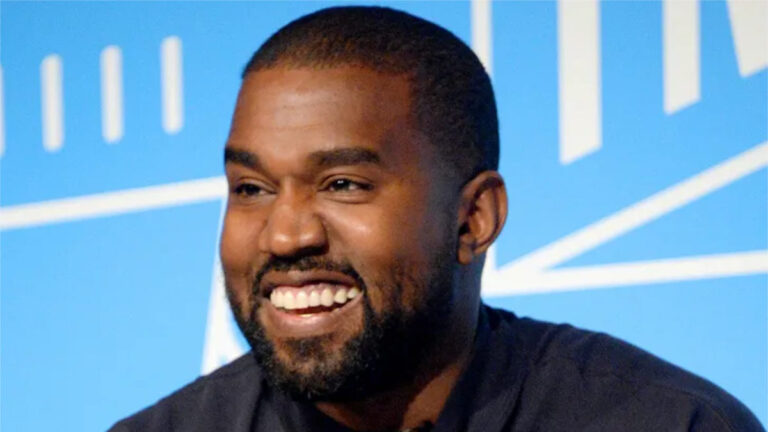
There are comebacks. And then there is Kanye West doing what only Kanye West can do. Because pulling in $33 million from just two shows in Los Angeles is not just a successful weekend. It is a statement. A loud one. After everything that has happened over the past few years, the controversies, the backlash, the industry distancing itself, this was supposed to be the phase where he fades out. That is how these stories usually go. You mess up publicly, brands walk away, audiences move on, and eventually, the spotlight dims.

But that is not what is happening here.

Instead, what we are seeing is something far more complicated. Kanye West is not just returning. He is being welcomed back, at least by a certain section of the audience that never really left him in the first place.

One of those shows alone reportedly crossed $18 million in ticket sales. That is not curiosity. That is demand. That is people actively choosing to show up.

And that is where this whole conversation gets uncomfortable.

Because if the culture was as absolute as people claim it to be, this should not be happening. A career that faced such intense backlash, especially over statements that pushed him to the edge of industry isolation, should not bounce back this quickly. Not at this scale.

But it has.

And maybe that tells us more about audiences than it does about Kanye.

Because the truth is, people separate the artist from the controversy when they want to. Especially when the artist has already built a legacy that is hard to ignore. Kanye is not just another performer trying to break through. He is someone who has defined eras of music, influenced culture, and built a fan base that sees him as more than just headlines.

That kind of connection does not disappear overnight.

There is also the machine slowly turning back in his favor. Platforms like Spotify and curated playlists like RapCaviar brought his music back into mainstream circulation. That is not accidental. That is industry signals shifting, even if cautiously. His new album Bully gaining traction only adds to that narrative. Because in the end, numbers speak louder than statements. Streams, ticket sales, sold-out venues. These are metrics the industry listens to.

But none of this means the controversy is gone.

It is still there. It will always be part of his story now. The antisemitic remarks, the fallout, the fractured relationships. Those are not erased by two successful concerts. And even now, there is a level of skepticism around whether this comeback is sustainable or just a moment driven by curiosity and controversy.

That is the real question.

Is this a genuine return to long-term dominance, or just a spike fueled by attention? Because there is a difference between people showing up once and people staying.

What makes Kanye different, though, is that he has always existed outside the usual rules. His career has never followed a predictable arc. It rises, crashes, rebuilds, reinvents. And every time people think it is over, he finds a way to come back into the conversation.

This time is no different.

But maybe the bigger takeaway is not about Kanye at all.

Maybe it is about how the idea of being “cancelled” works in reality.

Because clearly, being cancelled does not mean disappearing. It means being contested. It means your audience becomes divided, not gone. It means you lose some people, but the ones who stay become even more loyal.

And if that loyalty is strong enough, it can rebuild everything.

Kanye West’s $33 million weekend is not just a comeback headline. It is proof that in today’s culture, relevance is not about being universally liked. It is about being impossible to ignore.


Savannah Guthrie Returns to Today Amid Personal Tragedy and Shows What Real Strength Looks Like

0

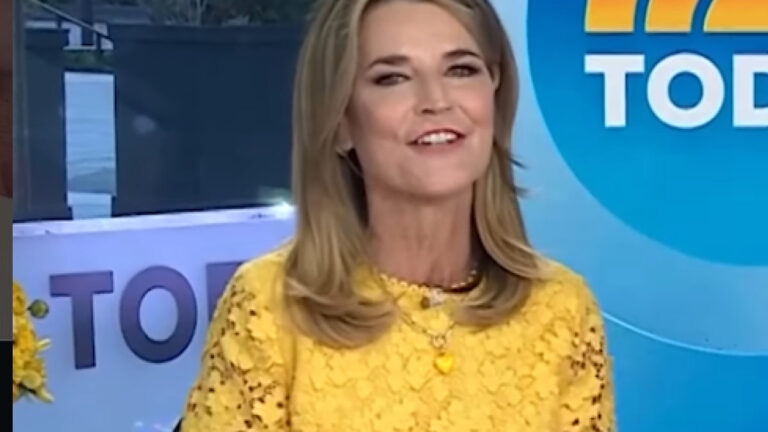
There are some news stories you read, and then there are stories you feel. This one sits in the second category. Watching Savannah Guthrie walk back onto the Today set wasn’t just another television moment. It felt heavier than that. It felt like someone choosing to show up when life has given them every reason not to. For months, Guthrie had stepped away from her role, not because she wanted to, but because her reality had shifted overnight. Her mother, Nancy Guthrie, disappeared from her home in Arizona in January, and what followed was not just a search, but a kind of emotional limbo that most people cannot even imagine.

And yet, there she was. Back in Studio 1A. Sitting beside Craig Melvin. Calm on the surface. Composed. Professional.

“It is good to be home,” she said. Simple words. But they carried everything.

Because what does “home” even mean when a part of your world is still missing?

That is what makes this moment so powerful. It is not just about a return to television. It is about returning to normalcy when normal no longer exists.

In the weeks leading up to this, Guthrie had already given the world a glimpse of what she has been going through. In a deeply emotional conversation with Hoda Kotb, she spoke about waking up every night, imagining what her mother might be going through. The fear. The uncertainty. The helplessness.

“It’s unbearable,” she said. And that word lingers. Because it is.

The investigation itself only adds to that weight. Authorities believe Nancy may have been taken against her will. There is footage of a masked individual removing her doorbell camera. There are timelines that do not fully make sense yet. There are questions without answers.

And that is the hardest part. Grief, in most cases, eventually finds closure. But this is not grief with an ending. This is grief that stays suspended. Every day begins with hope and ends with the same unanswered questions.

Still, Guthrie showed up.

And maybe that is the point.

There is something incredibly human about choosing to continue when everything inside you is asking you to pause. She did not return with a dramatic speech. She did not center herself. She simply said, “Here we go. Ready or not, let’s do the news.”

That line says everything. Because sometimes strength is not loud. It is not performative. It is quiet. It is routine. It is sitting in the same chair, doing the same job, while carrying something completely different inside you.

There is also something telling about how audiences respond to moments like this. We are used to seeing anchors deliver news. We are not used to seeing them live through it.

And in that sense, this moment blurs the line between public and personal in a way that feels real, not curated.

It also raises a bigger question about how people in the public eye deal with private pain. There is always an expectation to return, to perform, to continue. But moments like this remind you that behind the screen, there is a person trying to make sense of something deeply personal.

The search for Nancy Guthrie is still ongoing. The $1 million reward, the involvement of authorities, the public appeals. None of it has brought answers yet.

And that uncertainty continues to hang over everything.

But Savannah Guthrie’s return is not about closure. It is about endurance.

It is about showing that even in the middle of chaos, life does not completely stop. It slows down. It changes. It becomes heavier. But it moves.

And sometimes, moving forward is the only form of strength available. This is not a  comeback story. It is not a resolution. It is something far more real. It is a woman doing her job while carrying a question she cannot answer.

And somehow, that makes this one of the most powerful moments on television right now.

Bobby Deol Gets Emotional Remembering Dharmendra At Awards Event

0

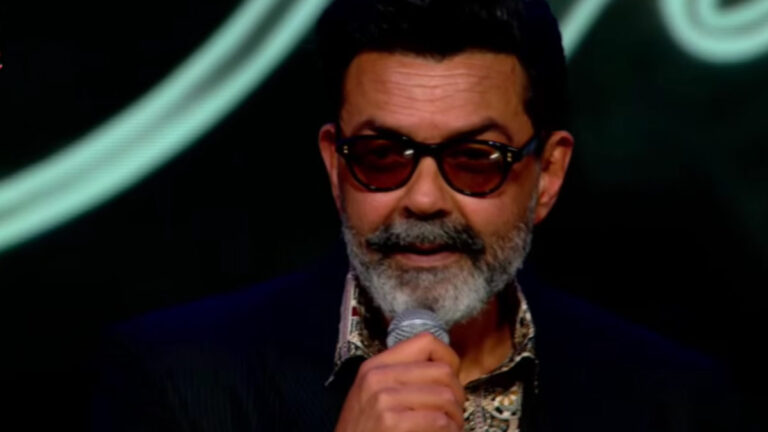
Bobby Deol recently attended an event where he accepted a Lifetime Achievement Award on behalf of his father, Dharmendra. The veteran actor passed away on November 24, 2025, at the age of 89. He had a long and successful career in Indian cinema that lasted for more than six decades.

While accepting the award, Bobby Deol became emotional as he remembered his father. During his speech, he said, “I see my father’s love in all your eyes. My father touched everyone’s hearts through his work and even through his Instagram reels, which had become his new hobby.” His words reflected the strong connection Dharmendra had with his audience, even in recent years.

Speaking further about his father’s outlook on life, Bobby added, “He always wanted people to stay happy and believed that God has given all of us so much in life. He used to say that we all have a special gift within us, and if we believe in it, we can achieve anything.” These lines showed the values that Dharmendra believed in and shared with others.

He also spoke about how he wished to share this moment with his father. “And today, standing here, I feel like I’ll go home and tell him, ‘Papa, you couldn’t come, so I’ve brought your award with me.’ I never imagined I would be here like this, and Anant (Goenka) really wanted me here. I feel very blessed and grateful to God for making me his son. Papa, you are the best,” he said.

Dharmendra passed away at his home in Mumbai after a long illness and a short hospital stay due to breathing related issues. He was widely known as the He Man of Hindi cinema and was one of the most popular actors of his time.

Some of his well known films include Sholay, Seeta Aur Geeta and Mera Gaon Mera Desh. His performances were appreciated for their emotional depth and strong screen presence, making him a respected name in the industry.

His final rites were held at the Pawan Hans crematorium in Mumbai, where many people from the film industry and fans came to pay their respects. His last film appearance was in Ikkis, directed by Sriram Raghavan. The film, based on the life of Arun Khetarpal, was released in theatres on January 1, shortly after his passing.

Overall, the event served as a moment to remember Dharmendra’s contribution to cinema and the impact he had on audiences over the years.

Billy Ray Cyrus, Noah Cyrus – On Our Way Along Song Lyrics

0

Song Name – On Our Way Along Song Lyrics
Singers – Billy Ray Cyrus Noah Cyrus

Check out Billy Ray Cyrus, Noah Cyrus – On Our Way Along Song Lyrics

Where the sun rises on the hill
Put me there, bury me there
And if you see me walking still
I am there, I’ll meet you there

Of all the paths we could have walked
I’m just glad ours crossed
And all the battles we have fought
And all the friends we lost
On our way along

When the sun rises on the field
I hope you’ll see a glimpse of me
And though the wounds they haven’t healed
Just let them be and you’ll be free

Of all the paths we could have walked
I’m just glad ours crossed
And all the battles we have fought
And all the lovers we have lost
On our way along

Times running out I’ve had too much to kill
I feel it everytime when I look at that hill

Of all the paths we could have walked
I’m just glad ours crossed
And all the battles we have fought
And the many lives it cost
On our way along

Times running out I’ve had too much to kill
I feel it everytime when I look at that hill