
Ram Charan’s latest film Peddi has become the center of discussion online, not only because of its box office performance but also due to criticism surrounding the portrayal of Janhvi Kapoor’s character. The debate has reignited conversations about how female characters are represented in mainstream Indian cinema, particularly in commercial films.
Following the film’s release, many social media users expressed concerns about the presentation of Janhvi Kapoor’s character, Achiyamma. Some viewers argued that the character was unnecessarily sexualized, claiming that several scenes focused heavily on her appearance rather than her role in the story. These discussions quickly spread across social media platforms and sparked broader conversations about the portrayal of women in films.
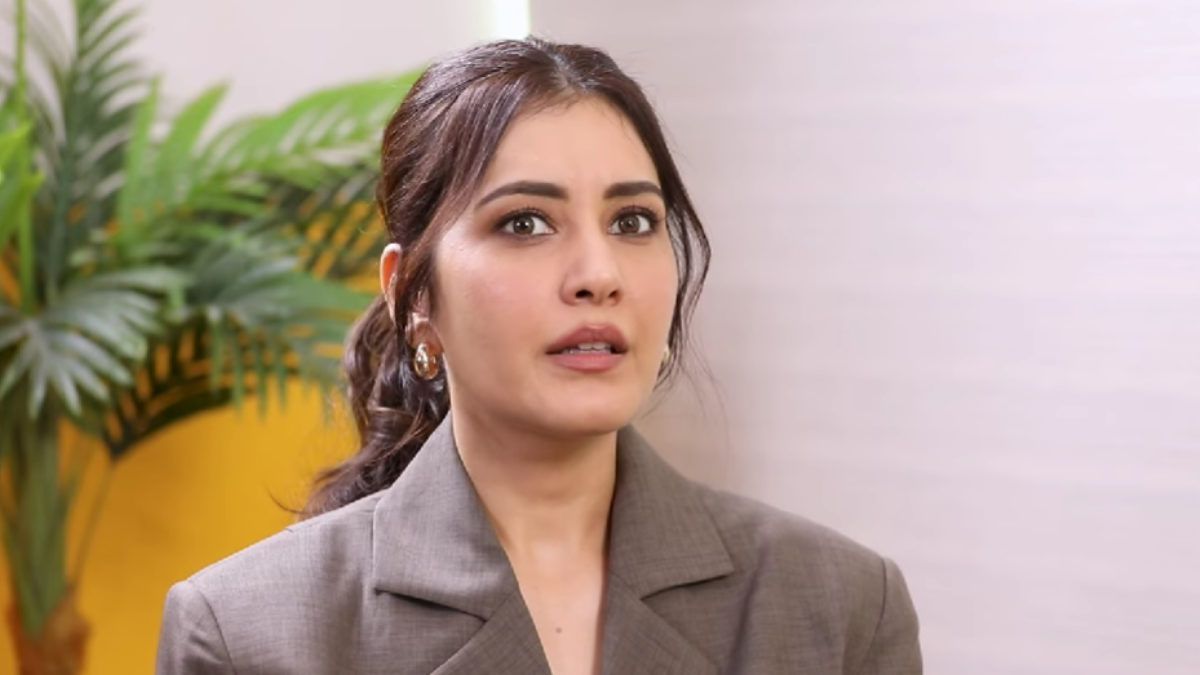
Amid the ongoing debate, comments previously made by actress Raashii Khanna have resurfaced. Last year, while speaking with Zoom, she shared her views on the representation of women in cinema and explained that every actor has their own comfort level when it comes to certain roles and scenes.
“It is very important that I should be comfortable with what I am doing. If I feel like a line is being crossed and I might look cheap in it, I will say no to it. Every actor has a different comfort zone, and I don’t judge.”
Raashii also said that the issue is not limited to one film industry and can be seen across Indian cinema.
“Coming to the projection of women, it is not just a South thing; I see it in the North quite a lot. It completely depends on the choice of the actor. Some people are comfortable with it, some are not. I have done so many commercial films in the South that I feel I should take that step forward in Hindi and get into content. I am okay doing commercial stuff, but I also have a limit. Every actor’s limit is different, and that defines who they are.”
As criticism of Peddi continued to grow, director Buchi Babu Sana addressed the issue publicly. He acknowledged the concerns raised by viewers and apologized to those who felt uncomfortable with certain scenes in the film.
“If any part of the film has been perceived that way, we respect those sentiments, understand the concerns being raised, and sincerely apologize. After reviewing the feedback, we have decided to make changes to the concerned portions. Cinema grows through its connection with audiences, and as storytellers, we have a responsibility to be mindful of evolving perspectives and sensitivities.”
The director’s statement has become a major part of the conversation, with audiences now watching closely to see how the promised changes are implemented. Meanwhile, the discussion around the portrayal of women in commercial cinema continues across social media and the film industry.