
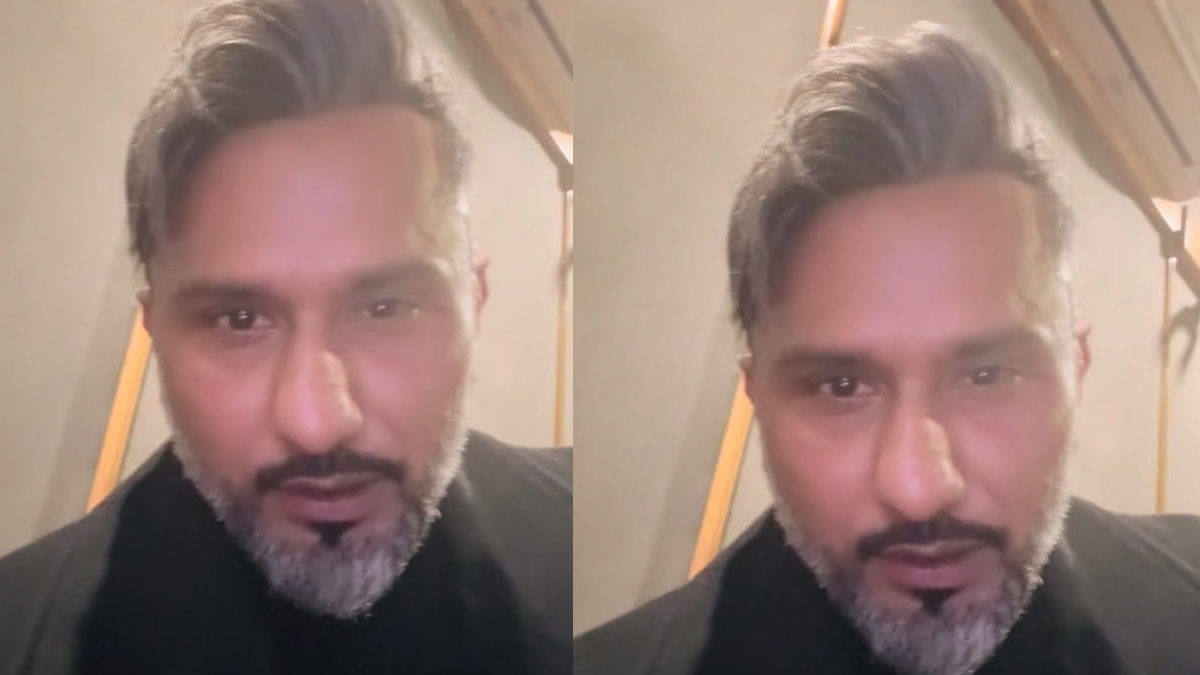
Rapper Yo Yo Honey Singh has issued a public apology after facing widespread criticism for a controversial remark he made during a recent concert in Delhi. The comment, delivered at a live performance by artists Nanku and Karun earlier this week, sparked backlash across social media platforms, with many calling it inappropriate and offensive.
On Thursday, Honey Singh took to Instagram to share a video message addressing the controversy. In the video, the rapper clarified that he had attended the concert as a guest and explained the context in which his remarks were made. He also expressed regret for the language he used and apologised to those who felt hurt by his words.
Honey Singh said that prior to the concert, he had conversations with gynaecologists and sexologists who informed him that a large number of Gen Z individuals are currently suffering from sexually transmitted diseases (STDs) due to unsafe sexual practices. According to the rapper, this information concerned him deeply and motivated him to speak up.
“When I went on the show, I saw the Gen Z audience and thought I’d give them a message in their language—to not have unprotected sex and to use condoms,” he said. He added that his intention was to communicate in a way that would resonate with younger audiences, similar to how content is portrayed in OTT platforms and films. “I thought I’d speak in the language they will understand better,” he explained.
However, Honey Singh acknowledged that his choice of words backfired. He admitted that many people were offended by the language he used during the show. Offering a heartfelt apology, he said in Hindi, “But many were very offended by that language. I apologise to all who felt bad. I had no intention to hurt anyone. Humans make mistakes.”
The rapper further assured his followers that he would be more mindful in the future. “I’ll try not to repeat such a mistake again. I’ll keep control over my language—who I’m talking to and how I’m saying it,” he said, promising greater sensitivity going forward. He concluded the video by apologising once again and signing off affectionately as “your Yo Yo Honey Singh,” asking fans to continue supporting him.
The controversy began after a video clip from the Delhi concert surfaced on social media, including platforms like Reddit. In the clip, Honey Singh is seen making a sexually explicit remark referencing Delhi’s cold weather and suggesting having sex in a car, before adding, “Use condoms, guys, please. Play safe!”
While the rapper maintains that his underlying message was about promoting safe sex, many viewers felt that the explicit language overshadowed any positive intent. Several users criticised him for being insensitive and inappropriate, especially at a public event attended by a diverse audience.
Social media reactions were swift and sharp. One user mockingly referred to him as “Yo Yo Horny Singh,” while another comment accused him of building his career on vulgarity. “His rise to fame began with a vulgar song that reduced Indian women to mere sexual objects. That track brought him money and attention because it catered perfectly to what an Indian perverted audience enjoys. That, essentially, is his core identity,” a comment read.
Another user expressed fatigue with the rapper’s public persona, writing, “I guess it’s time for him to disappear again.” Such reactions reflect a broader debate around accountability, celebrity influence, and the responsibility of public figures when addressing sensitive topics like sex and health.
Honey Singh, who has had a turbulent career marked by massive popularity, long hiatuses, and personal struggles, has often found himself at the centre of controversy. While his apology has been acknowledged by some fans, others remain unconvinced, arguing that intent does not excuse the impact of his words.
The incident has reignited conversations about how messages related to sexual health should be communicated—especially to younger audiences—and whether shock value is an effective or appropriate tool. As the debate continues, Honey Singh’s apology marks an attempt to address the backlash and reset the narrative, though public opinion remains divided.