
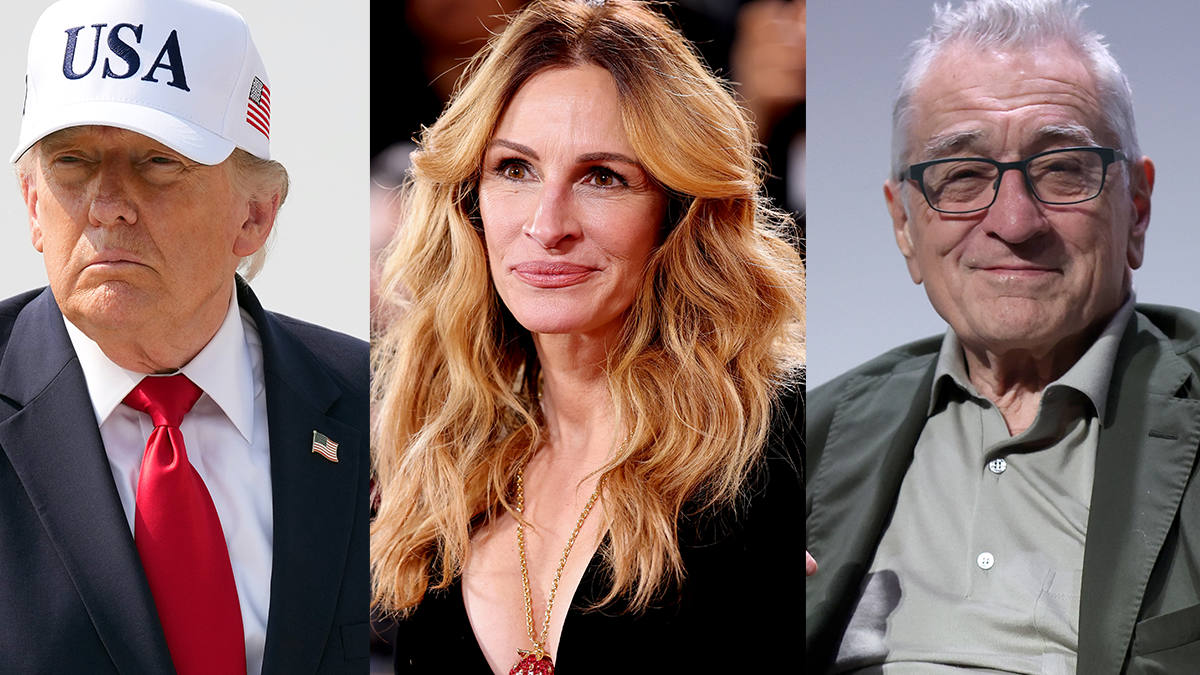
Donald Trump is once again making headlines for his use of artificial intelligence, this time with a satirical video targeting some of Hollywood’s biggest names. The U.S. President recently shared an AI-generated clip on social media in which he appears as “Dr. Trump,” claiming to offer a cure for the fictional condition he calls “Trump Derangement Syndrome” (TDS). The phrase, often used by Trump and some of his supporters to describe what they view as extreme opposition to him, is not a recognized medical or psychological condition.
Styled like a pharmaceutical commercial, the video features AI-generated versions of several celebrities who have publicly criticized Trump over the years, including Julia Roberts, Robert De Niro, Rosie O’Donnell, Whoopi Goldberg, John Leguizamo and Edward Norton.
In the spoof advertisement, the AI avatars deliver fake testimonials about supposedly suffering from TDS before praising “Dr. Trump’s” treatment plan. One AI-generated version of Robert De Niro says he was constantly angry and unable to sleep, while the fake Julia Roberts claims she feels as though she has aged decades because of the condition.
The video concludes with Trump delivering his tongue-in-cheek prescription: “Turn off fake news, say your prayers, and if you ever feel anxious, just have a Diet Coke like me, and you’re gonna see a remarkable difference in your life.”
The Hollywood Reporter noted that representatives for the celebrities featured in the video have been contacted for comment, though no public responses had been issued at the time of publication.
This is far from the first time Trump has used AI-generated content to make political or cultural statements online. In recent months, he has frequently posted digitally created images and videos on his social media accounts, several of which have drawn criticism over their use of manipulated or fabricated imagery.
The latest video also highlights the growing role of artificial intelligence in political messaging. While AI tools are increasingly being used for entertainment, satire and campaign content, they have also sparked broader debates over misinformation, consent and the use of public figures’ likenesses without their involvement.
Regardless of political affiliation, the clip has reignited discussion about how AI-generated content is blurring the line between parody and reality. As the technology becomes more sophisticated, experts continue to warn that audiences should verify the authenticity of videos they encounter online, especially when real public figures appear to be saying things they never actually said.
Trump’s latest AI video may have been intended as political satire, but it has once again placed the spotlight on both his unconventional online strategy and the rapidly evolving challenges surrounding artificial intelligence in public discourse.