
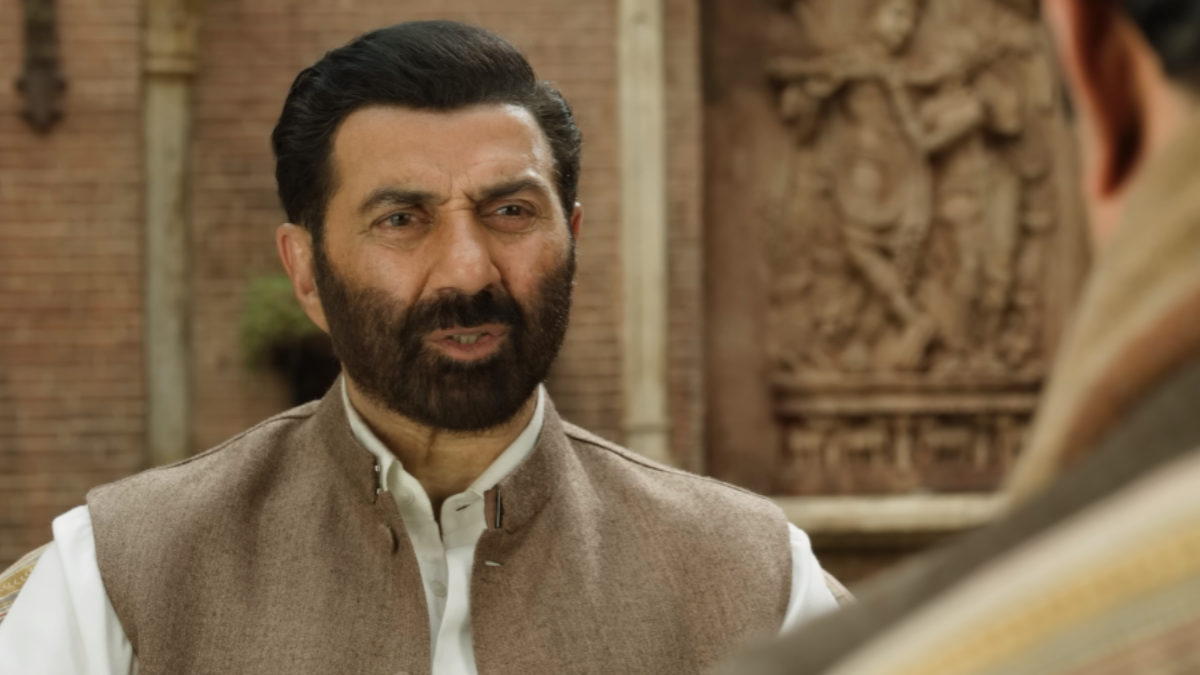
There are some films where the interest begins long before the first show. Batwara 1947 is beginning to look like one of them. Look at what has come together here. Sunny Deol and Rajkumar Santoshi are reuniting after nearly three decades. Aamir Khan is producing the film. A R Rahman and Javed Akhtar are behind the music and lyrics. Preity Zinta is returning to the big screen and Shabana Azmi is part of the cast. And the subject is Partition, one of those subjects that Indian cinema keeps returning to because the wound itself has never really disappeared.
For Sunny Deol, the timing could hardly be more interesting. Gadar 2 reminded the industry just how powerful his emotional connection with audiences could still be when the subject involved India, Pakistan and a deeply personal sense of patriotism. Border 2 followed earlier this year, putting him back into the war film space and, inevitably, bringing memories of the original Border with it. The film released on January 23 and once again had Sunny at the centre of a large scale India Pakistan war story.
Batwara 1947 takes that association somewhere else altogether. There is no war to fight yet. There is a country being divided, families being uprooted and people discovering that a line drawn on a map can suddenly decide where they belong. That makes Sunny’s presence particularly interesting. After Gadar 2 and Border 2, audiences may walk into Batwara 1947 expecting another familiar Deol experience. The material, however, comes from a very different place.
The film is based on Asghar Wajahat‘s acclaimed play Jis Lahore Nai Vekhya, O Jamya E Nai. Its story revolves around a Muslim family that moves to Lahore after Partition and finds an elderly Hindu woman still living in the haveli allotted to them. The conflict is initially about a house, but the house becomes a way of telling a much bigger story about displacement, identity, faith and the difficulty of remaining human when everything around you is pushing people towards hatred.
That is also why the Santoshi reunion matters. Sunny Deol and Rajkumar Santoshi are not simply two familiar names being brought together for nostalgia. Ghayal, Damini and Ghatak created an association that audiences still remember, particularly because Santoshi understood how to use Deol’s intensity without having to constantly turn him into a larger than life action hero. Bringing them together again for a Partition story, after all these years, gives the reunion some genuine weight.
Aamir Khan’s presence makes the combination even more curious. This is not the kind of cast and crew one casually associates with a routine historical drama. The film has Santosh Sivan behind the camera, Resul Pookutty handling sound and Rahman and Javed Akhtar creating the musical component.
But what really stayed with me about Batwara 1947 was the date. August 14. A film called Batwara 1947 arriving in theatres on the eve of Independence Day is quite a statement in itself. August 14 is also observed in India as Partition Horrors Remembrance Day, which makes the timing particularly difficult to dismiss as just another Independence Day weekend release. So much so that the makers themselves have positioned it as a ‘Partition Day’ release!
There is something almost unsettlingly appropriate about it. On one side of the date is the memory of Partition and everything that came with it. On the other is the celebration of independence. Batwara 1947 sits exactly in between.
That gives the film a context before audiences have even judged it. It also makes the film’s connection with Sunny Deol more layered. The actor has spent a significant part of his recent resurgence inhabiting the emotional vocabulary of borders, patriotism and India Pakistan relations. Gadar 2 brought back Tara Singh. Border 2 brought back the soldier. Batwara 1947 goes back to the moment before all of that, to the human upheaval that created the border in the first place.
Whether the film succeeds on its own terms will ultimately depend on Santoshi’s storytelling and how effectively the theatrical scale serves Wajahat’s essentially human story. But as a proposition, Batwara 1947 has arrived with an unusually strong hand.
There is the Deol factor, the Santoshi reunion, the Aamir Khan connection, Rahman and Javed Akhtar, Preity Zinta’s return and Shabana Azmi. There is also a respected piece of literature underneath it all. And then there is August 14.
Sometimes a release date is just a release date. In the case of Batwara 1947, it is almost part of the story.