
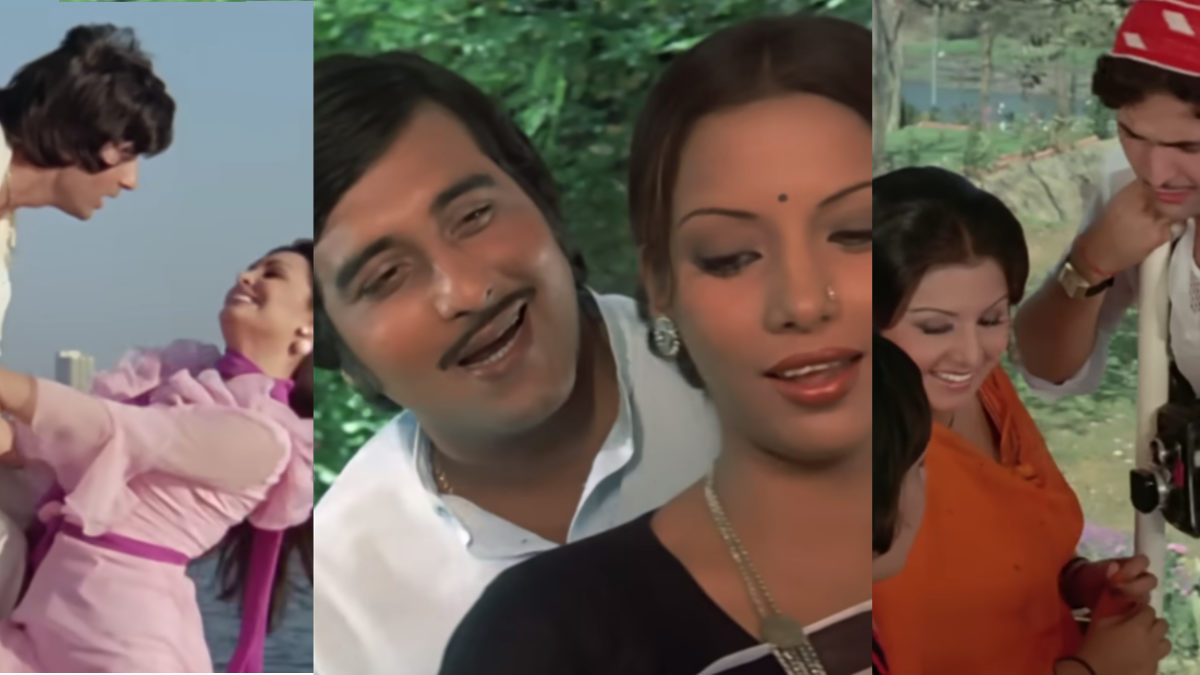
You know what’s funny? I’ve watched Amar Akbar Anthony countless times. Like most of us, I enjoyed the comedy, the action, Amitabh Bachchan’s iconic Anthony Gonsalves act and, of course, the songs. But it was only recently that I realised one particular song had been hiding one of Bollywood’s greatest secrets in plain sight.
I’m talking about Humko Tumse Ho Gaya Hai Pyar.
At first, I thought, “What a lovely romantic song.” Then I looked at the credits and couldn’t believe what I was seeing.
Can you imagine one song featuring Mohammed Rafi, Kishore Kumar, Mukesh and Lata Mangeshkar together?
Four legends. Not over an entire soundtrack. Not in different songs. In the same song.
The more I thought about it, the more unbelievable it became. Today, getting two leading singers together is considered a big deal. Back then, Laxmikant–Pyarelal managed to bring together the four greatest playback voices Hindi cinema has ever known.
Then I realised that wasn’t even the most beautiful part.
Each singer was singing for the actor audiences already identified them with. Mukesh became the voice of Vinod Khanna’s Amar. Mohammed Rafi sang for Rishi Kapoor’s Akbar. Kishore Kumar lent his voice to Amitabh Bachchan’s Anthony. And Lata Mangeshkar beautifully tied together the three heroines.
It’s almost like three different love stories stitched into one melody. Then another thought struck me. This wasn’t just a song. It was Amar Akbar Anthony in musical form. Three brothers. Three religions. One family. Amar represents the Hindu household, Akbar the Muslim household and Anthony the Christian household. Yet when the song begins, nobody is different anymore. They’re simply three people in love.
Even the music seems to follow that philosophy. Amar’s portions have a simple, classic Hindi film melody. Akbar’s sections carry a gentle Hindustani and Urdu flavour. Anthony’s portions feel lighter and have that unmistakable Western touch that suits his character perfectly. Somehow, all of it comes together so naturally that you don’t notice where one ends and the other begins.
And then there’s another beautiful coincidence. Mohammed Rafi, India’s greatest Muslim playback singer, voices Akbar. Mukesh sings for Amar. Kishore Kumar becomes Anthony. It may never have been planned as symbolism, but it somehow adds another layer to the film’s message of unity.
The more I kept thinking about it, the more I admired Manmohan Desai. He never lectured audiences about secularism or national integration. He simply entertained us. While we were laughing, crying and humming the songs, he quietly made us celebrate a Hindu, a Muslim and a Christian as brothers.
There’s one more reason this song feels special today.
When Amar Akbar Anthony released in 1977, Mukesh was no longer with us. He had passed away months earlier. Listening to his voice now feels almost emotional because this song unknowingly became one of the last occasions where his voice stood alongside Rafi, Kishore and Lata in a film that would go on to become immortal.
That’s why I don’t think of Humko Tumse Ho Gaya Hai Pyar as just another hit song anymore. It’s a piece of Bollywood history.
It’s probably the only song where four playback legends came together, three religions found representation, three of the biggest stars of Hindi cinema shared the screen and one melody united them all.
And the funniest part is that most of us have heard it hundreds of times without ever realising just how extraordinary it really is.