
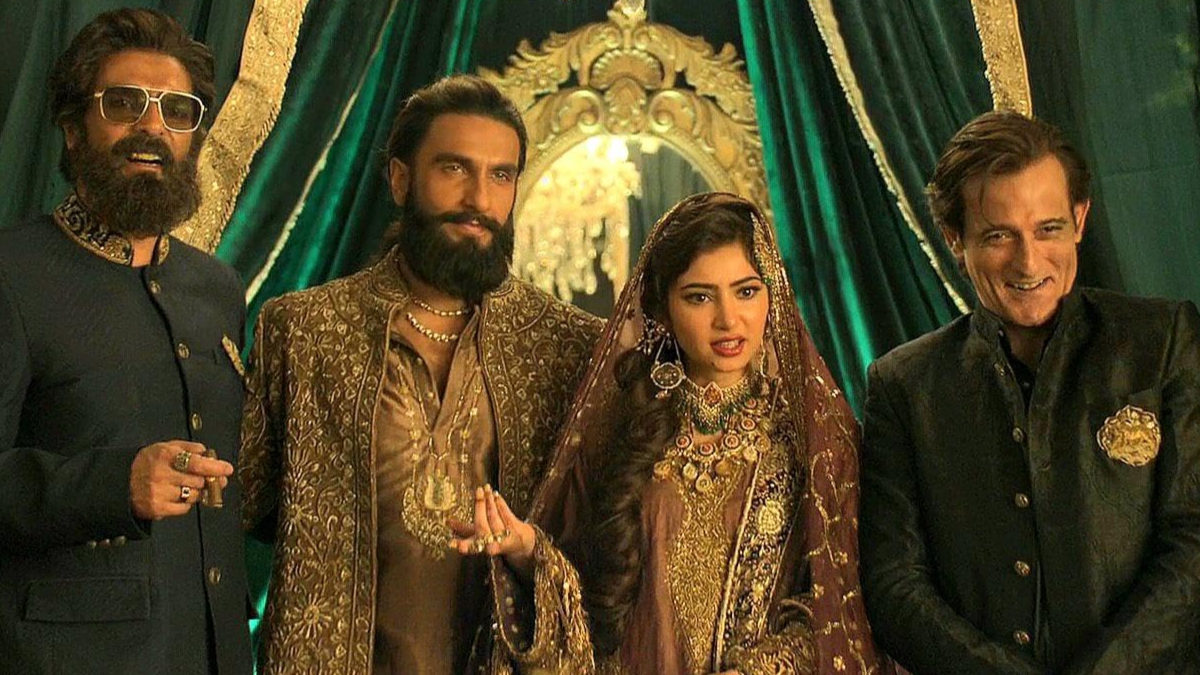
What started as a simple question has now taken a more honest turn. In the earlier piece, we asked who really owns a performance. Is it the actor we see or the director who shapes what we see (Dhurandhar). It was a clean debate. Almost comfortable in the way it framed cinema as a choice between two visible forces. But sometimes, the most accurate answers come from outside the frame we create.
A response from a friend, Nadish Bhatia, from within the industry shifts that lens completely. It refuses to pick a side. It does not choose between Ranveer Singh and Aditya Dhar. It moves the conversation to a place we often overlook.
It says neither, cinema itself is the winner. And that changes everything.
Because before a performance is acted or directed, it has to be allowed to exist.
Take the example of Jio Studios backing a film like Dhurandhar. On paper, it does not scream safe. The length does not fit the current appetite. The casting does not follow the predictable blockbuster template. The idea of building ahead of proven success feels like a risk most studios would avoid.
This is not the kind of decision that comes out of comfort. It comes out of belief. The kind of belief that does not guarantee returns but still chooses to move forward.
And that is where cinema actually begins. Because without that first yes, there is no director shaping performances. There is no actor exploring a role. There is no final cut for audiences to judge.
The risk is invisible when the film releases. But it is foundational.
Then comes the filmmaker. Aditya Dhar does not operate within the usual noise of the industry. There is no constant spotlight around him. No aggressive positioning. He simply arrives with a film and lets the work speak.
That approach reflects in the choices he makes (Uri: The Surgical Strike). A story like this could have easily leaned into loud nationalism. It could have simplified its emotions for easy applause. It could have followed safer, more familiar beats. It does not.
That restraint is not accidental. It is deliberate. It is a filmmaker choosing to hold his ground when it would have been easier to give in.
And then comes the part we began with. The actors.
Yes, Ranveer Singh stands at the centre of it. His performance carries weight. It demands attention. It gives the audience something to hold on to. But stopping there would miss the larger picture.
There are performances around him that complete the experience. Sanjay Dutt, who many had begun to underestimate, finds space to surprise again. Rakesh Bedi, Arjun Rampal, R Madhavan and the supporting cast do not just fill the frame. They add to it. They push the film forward in ways that are not always loud but always important.
Because a film is rarely remembered for one performance alone. It is remembered for how complete it feels. And completeness is never the work of one person. It happens when multiple decisions align.
When a studio chooses belief over caution.
When a director chooses honesty over convenience.
When actors choose to stretch instead of settle.
Individually, these are risks. Together, they become something else. They become a film that feels larger than its parts.
Which is why this perspective feels closer to the truth than the earlier debate.
It is not about choosing between actor and director. It is about recognising the chain that makes both possible.
We still see Ranveer Singh.
We still discuss Aditya Dhar.
But what we are actually experiencing is something that started much earlier and involved far more people than we usually acknowledge.
And maybe that is the shift worth making.
Instead of asking who deserves the credit, we begin to ask what made it possible in the first place.
Because sometimes, when everything aligns the way it does here, the answer is simple. No one wins alone.
Cinema does.
Based on inputs from my friend Nadish Bhatia