
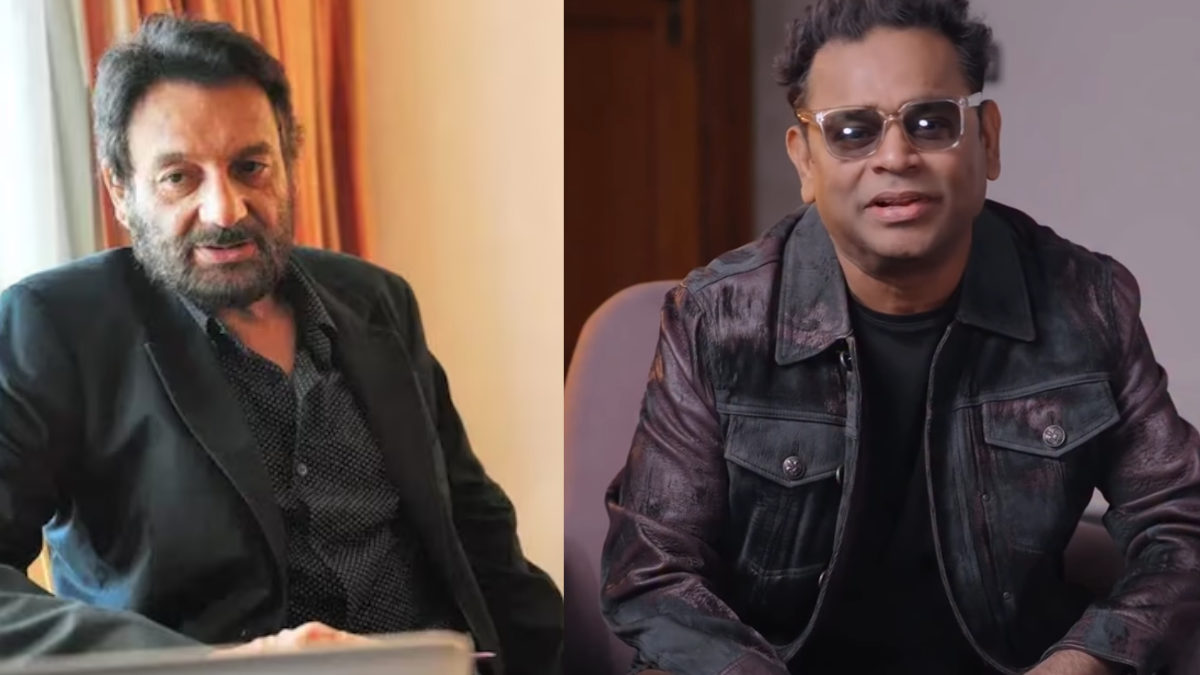
The announcement of Masoom: The New Generation has generated considerable curiosity within the film industry, not least because it reunites two of Indian cinema’s most celebrated creative forces, filmmaker Shekhar Kapur and composer A.R. Rahman. Inspired by Kapur’s acclaimed 1983 classic Masoom, the new film aims to revisit themes of family, identity, love, and migration for contemporary audiences while retaining the emotional essence of the original.
The project also marks a significant creative reunion between Kapur and Rahman, who have previously collaborated on projects including Elizabeth: The Golden Age, Bombay Dreams and Why? The Musical. In addition to composing the music, Rahman will also serve as a co producer on the film.
Speaking about revisiting the world of Masoom, Shekhar Kapur said, “For a long time, I’ve felt that the themes of Masoom deserved to be revisited through the lens of today’s world. Families, relationships, identity; these ideas have evolved so much, and cinema must evolve with them. Rahman has always had the rare ability to create music that speaks directly to the soul of a story and its audience. Having him as both composer and creative partner on this journey makes it even more meaningful.”
Sharing his thoughts on the collaboration, A.R. Rahman said, “Working with Shekhar has always been a deeply enriching experience, he has been a mentor and a creative force in many ways. When he shared the vision for this film, I felt compelled to be involved beyond the music. There’s something timeless about Masoom, and reinterpreting that emotional world for a new generation feels both exciting and necessary.”
While the pedigree of the creative team and the enduring appeal of Masoom are undeniable, the announcement also reignites a larger industry conversation around originality and the growing reliance on familiar intellectual property. In recent years, Bollywood has increasingly looked towards remakes, sequels, reboots and reimaginings as a means of connecting with audiences, often leveraging nostalgia as a commercial advantage in an increasingly fragmented entertainment landscape.
To be fair, revisiting a story as emotionally rich as Masoom offers genuine creative possibilities, especially when social realities, family dynamics and ideas of identity have evolved dramatically since the original’s release more than four decades ago. A thoughtful reinterpretation can provide fresh relevance and open new conversations for a younger generation unfamiliar with the source material.
At the same time, the trend raises questions about whether the industry’s appetite for revisiting proven successes reflects a shortage of fresh ideas. The announcement arrives close on the heels of discussions around a new chapter in the 3 Idiots universe, further highlighting how filmmakers are increasingly turning to established titles with built in audience recall. In many cases, the original premise is being reimagined for contemporary times, but the familiar title continues to serve as a powerful marketing hook.
The challenge for filmmakers lies in ensuring that such projects offer more than nostalgia. Audiences today are arguably more discerning than ever and are looking for stories that feel both authentic and relevant. A successful reimagining must justify its existence by bringing new insight, perspective and emotional depth rather than merely revisiting memories of a beloved classic.
Masoom: The New Generation certainly has the creative talent to achieve that balance. With Kapur at the helm, Rahman as both composer and co producer, and a cast featuring Naseeruddin Shah, Shabana Azmi, Manoj Bajpayee, Nithya Menen and Kaveri Kapur, expectations will naturally be high. Whether the film ultimately emerges as a meaningful contemporary reinterpretation or another example of the industry’s growing dependence on nostalgia will be one of the more closely watched questions as it moves towards its planned 2026 release.